
Custom Woven Fabric Development —
From Swatch to Bulk, on Our Own Looms
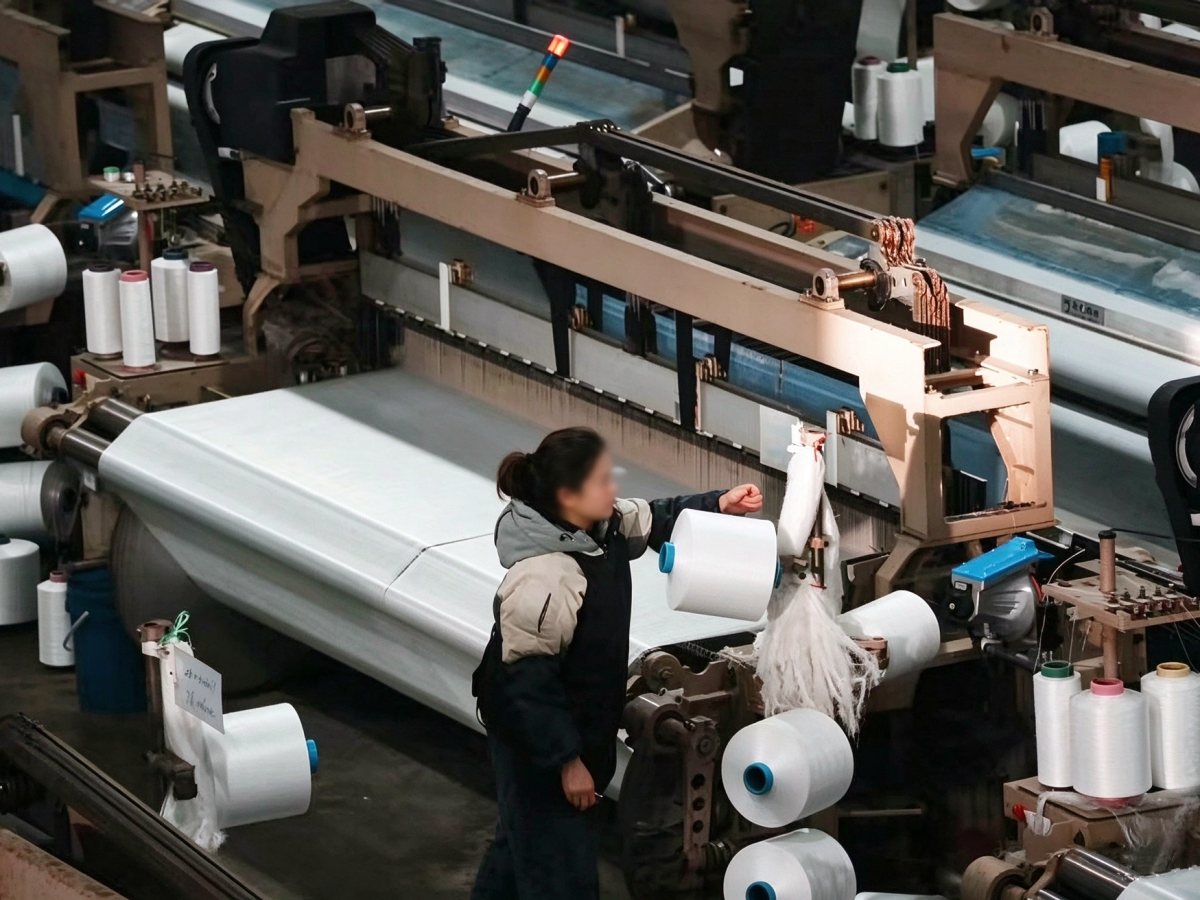
A full-service woven fabric developer: 216 water-jet and 82 air-jet looms weaving polyester, nylon and stretch constructions up to 230 cm, with cam and dobby shedding, in-house dyeing coordination and finishing. Development starts from 200 m of greige — send a swatch, a spec sheet or just the end use, and we quote the route, the timeline and the price before you commit.
Custom Woven Fabric
Development to Bulk
298 Looms In-House
We Own the Looms — 298 of Them
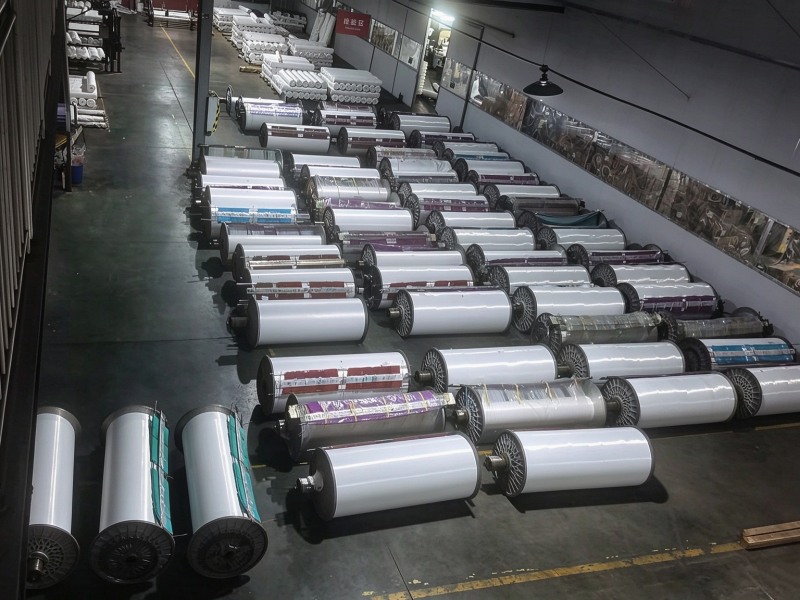
Custom woven fabric development only means something when the mill controls its own machines. Ours run 24 hours: water-jet looms for the polyester series, air-jet looms for nylon and cotton, cam and dobby shedding for everything from plain weave to double-layer structures.
Two loom fleets, two jobs
216 water-jet looms weave the polyester series — oxford, taslan, taffeta, pongee and the mechanical-stretch family. 82 air-jet looms handle nylon and cotton, where gentler weft insertion protects the yarn. Together the fleet puts out roughly 370 m per loom per 24 hours; the more complex the structure, the lower the running efficiency, which is why we quote timelines per construction instead of guessing.
Shedding decides what you can weave
Cam shedding, 8 harnesses covers plain weave, twill and stripes/checks. Dobby shedding, 16 harnesses goes further: twill grounds, checks, mini-jacquard and double-layer fabrics. Both can weave plain — but putting plain weave on a dobby is a wasted harness, and we will tell you so before it costs you money.
Yarn range beyond the basics
Polyester, nylon and spandex blends are the daily bread — see our nylon 4-way stretch range for what the air-jet fleet runs at volume. Tencel, wool and cupro are available on request, and we stock functional yarns — moisture-wicking, UV-protective, high-strength N66 and conductive anti-static — for programs where the function is built into the yarn, not sprayed on after.
Mill Data
| Weaving looms | 216 water-jet + 82 air-jet — 298 in-house |
| Max weaving width | 230 cm |
| Output | ~370 m per loom per 24 h (complex structures weave slower) |
| Shedding | Cam 8 harnesses · Dobby 16 harnesses |
| Core fibers | Polyester, nylon, spandex blends |
| Extended fibers | Tencel, wool, cupro |
| Certifications | GRS · OEKO-TEX · PFAS-Free |
Functional yarns, built in
Moisture-wicking and quick-dry yarns, UV-protective yarn, high-strength N66 and conductive anti-static yarn — function woven into the fabric, not coated onto it.
Width up to 230 cm
Wide constructions cut yield on open-width programs and reduce seams on panels — worth raising at the spec stage, not after greige is on the floor.
24-hour running
Three shifts keep the looms running around the clock, so development slots and bulk capacity are booked against a real machine schedule.
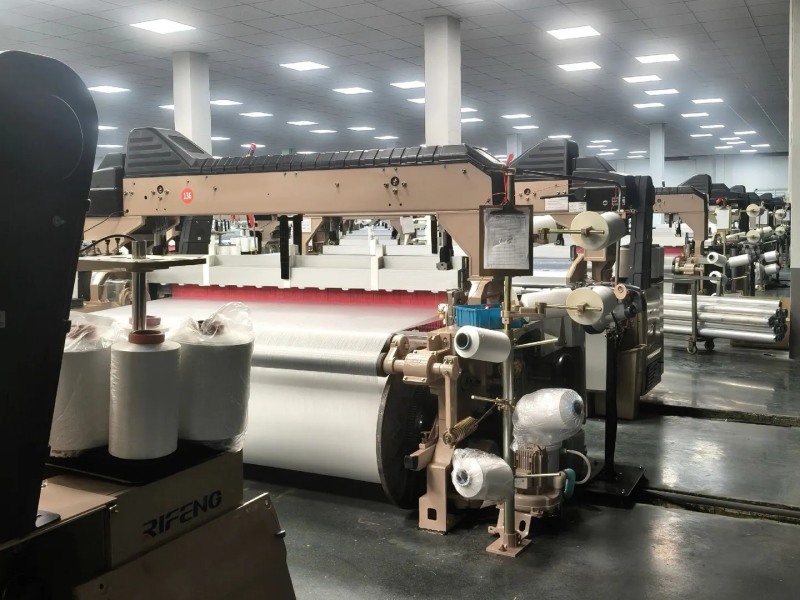
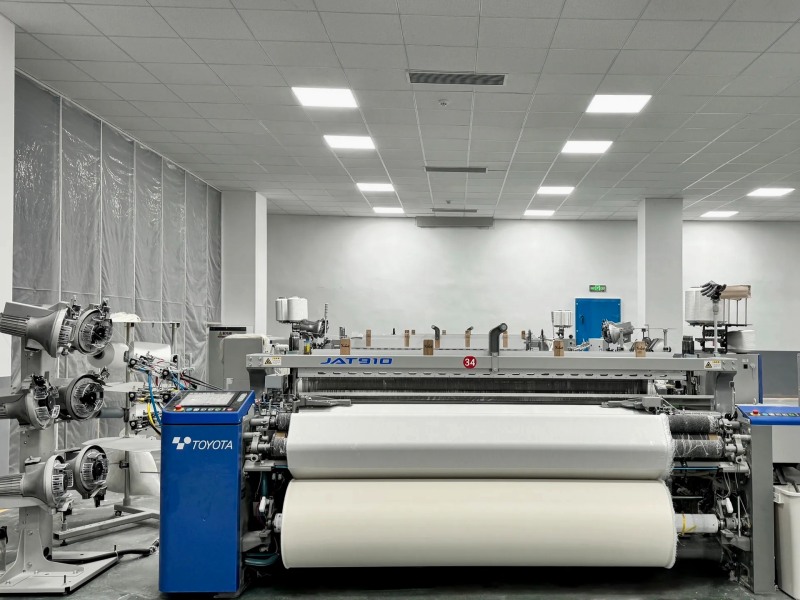
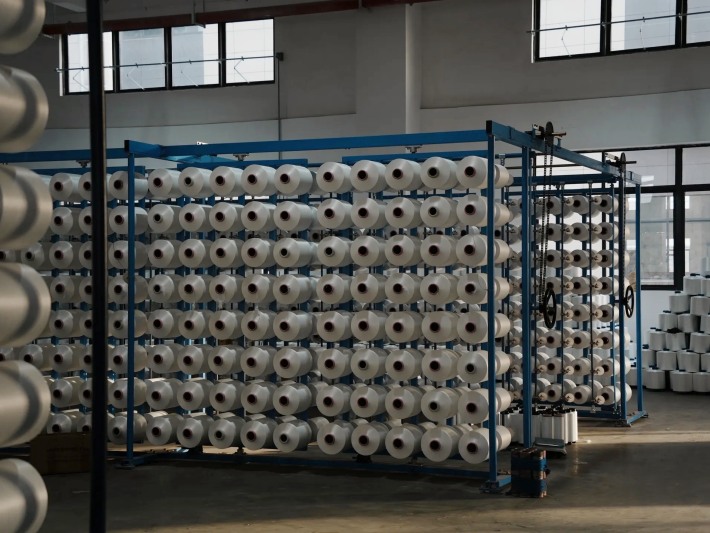
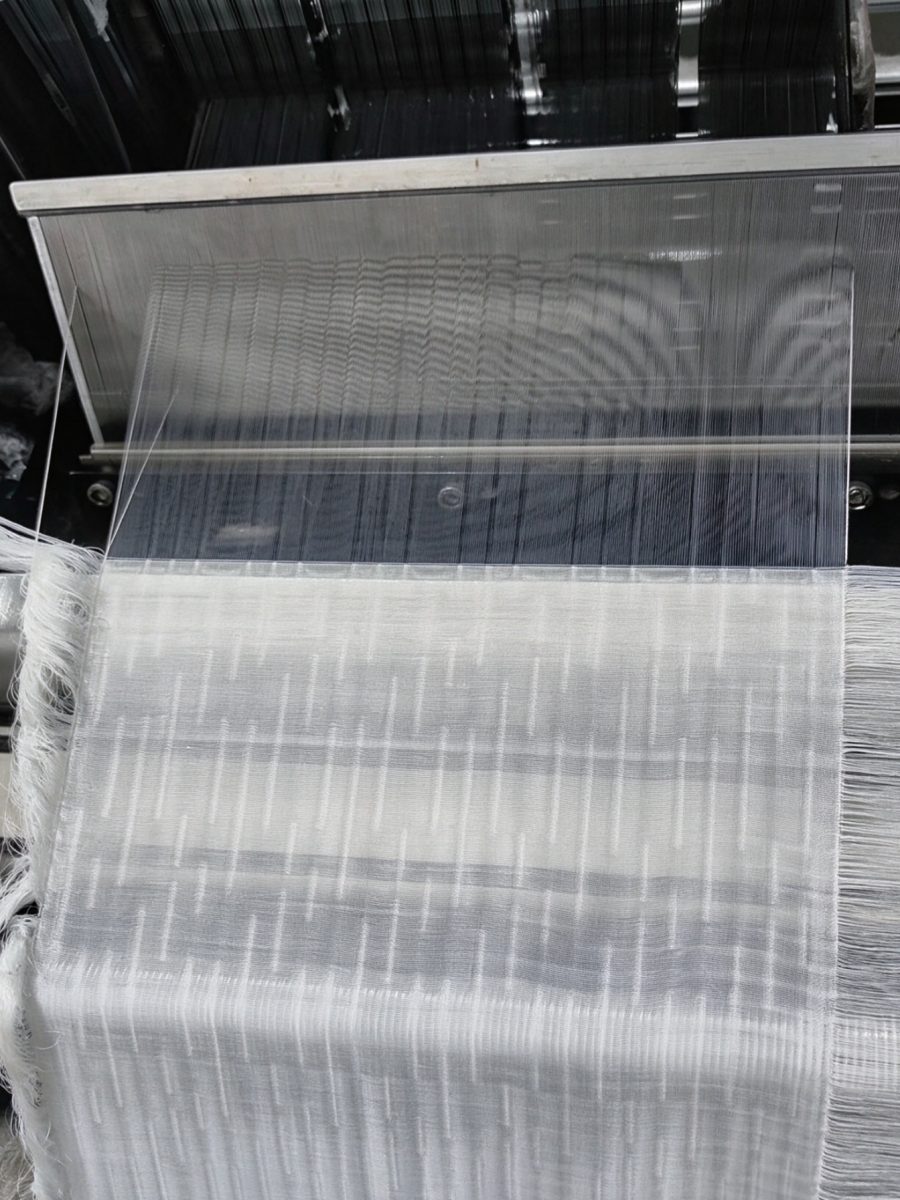
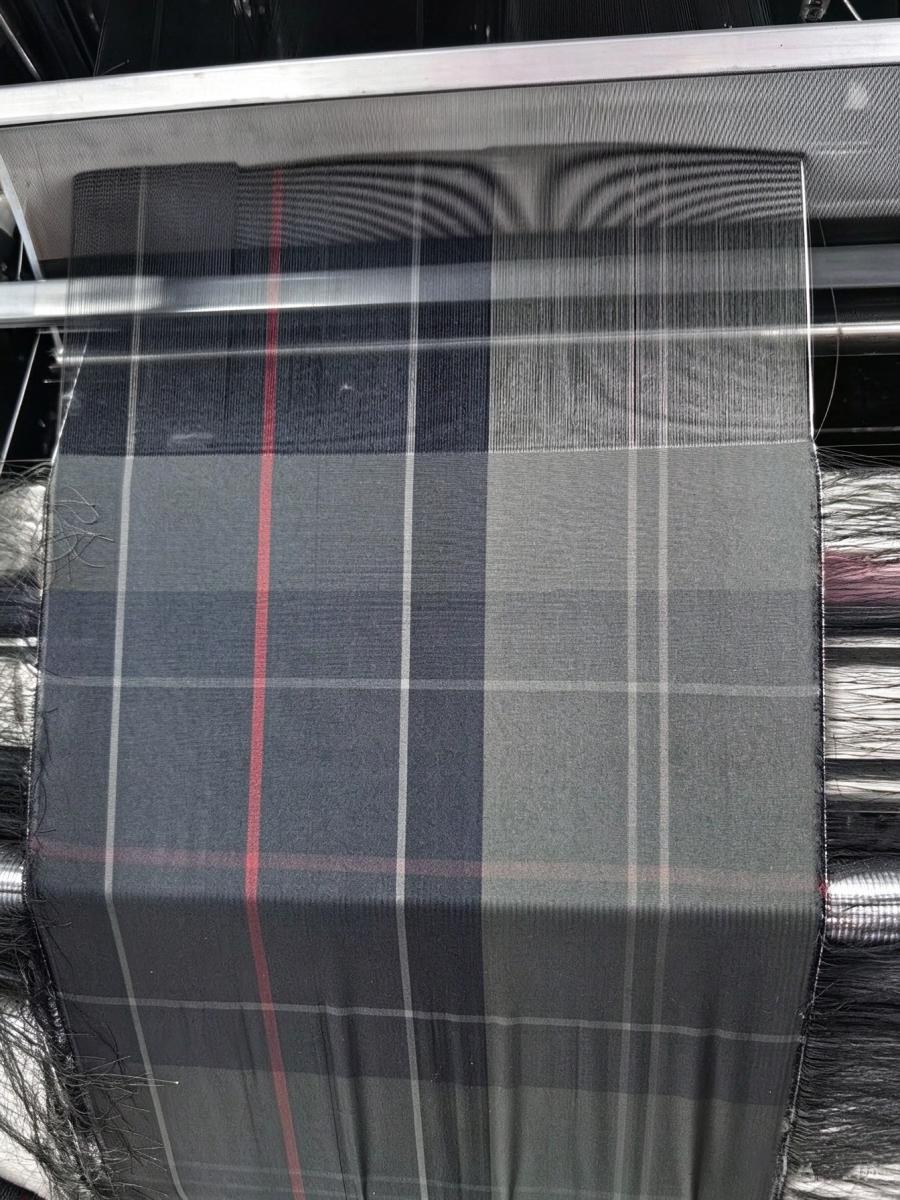
Inside the weaving mill
Two Routes to Your Custom Fabric
There are two honest ways to develop a custom woven fabric: build it from scratch on a fresh warp, or build it on a warp beam that already exists. They differ in MOQ, cost and speed — the full service-mode comparison lives on our custom fabrics page, and the numbers are here.
From-Scratch Development
Yarn sourced to your spec, structure set up on cam or dobby, greige woven from zero.
MOQ: 200 m greige. Sampling fee starts around RMB 8,000 (≈US$1,100) at the minimum quantity — at 200 m the loom setup and waste weigh heaviest — and steps down as the metres grow. The fee is refunded when the bulk order follows, and is waived entirely at 10,000 m and above.
- Greige weaving ~15 days
- Sample dyeing (small bath) ~15 days
- Bulk on approval
Best for: new structures, unique constructions, programs where no existing beam can carry the spec.
Beam-Based Development
Re-weave a new structure on a warp beam that already exists — ours, one in current production, or one sourced for the job.
MOQ: 4,000 m greige. No sampling fee — the trial runs at normal bulk price. Weaving takes about 20 days, dyeing about 10 days; larger metres extend the schedule. The trade-off, stated plainly: a matching beam spec has to exist. We check our own stock and in-weaving beams first, then source from partner mills and the beam market — that sourcing takes time we quote upfront.
- Beam spec match
- Weave on existing warp ~20 days
- Dye & finish ~10 days
Best for: cost-driven programs at 4,000 m+ where the structure can ride on an existing warp — the client saves both money and time.
A note on dyeing small quantities
For the 200 m from-scratch route, dyeing runs on a small-bath sample dyeing setup — internally we treat it as a dye sample order, not a bulk dye run. That is why the dyeing step carries its own timeline and why bulk dyeing economics only appear at larger metres. Tell us the spec and the metreage early; clear numbers come from clear inputs.
Every Variable a Woven Fabric Has
Send a swatch, a spec sheet, or just the garment and the target price — we reverse-engineer from whatever you have.
Fibers & Blends
Polyester, nylon and spandex blends as the core range; Tencel, wool and cupro on request. Functional yarns — N66, conductive anti-static, moisture-wicking, UV-protective — swap in at the yarn stage.
Start from: a swatch or the fiber content you want
Yarn Count, Density & Weight
Count, thread density and finished weight are set together — changing one moves the others. Give us the target spec, or the hand of a fabric you like, and we balance the three on paper before any yarn is ordered.
Start from: target gsm or an existing fabric
Weave Structure
Plain, twill, stripes and checks on cam; mini-jacquard and double-layer on the 16-harness dobby. Mechanical stretch constructions — including our T400/T800 family — are a house specialty.
Start from: a structure sketch or reference fabric
Width, Color & Stretch
Up to 230 cm weaving width. Pantone-based color matching with lab dips before bulk. Stretch percentage engineered through the yarn and structure, not by guesswork at the tenter.
Start from: Pantone numbers and target width
How a Development Actually Runs
Six steps, two of them on the loom. Most of the calendar is greige weaving and dyeing — the parts we schedule against real machines, not optimism.
Development steps
- Spec & swatch review — we confirm construction, color, finish and metreage, then quote both routes where the spec allows.
- Yarn sourcing & prep — count and content locked; functional yarns reserved from stock.
- Loom setup & trial weaving — harness draft, tension and selvedge set per construction.
- Greige sample — about 15 days on the from-scratch route.
- Sample dyeing, small bath — about 15 days, lab dip approved against your Pantone.
- Bulk — weaving, dyeing, finishing and in-house QC on the approved recipe.
From-scratch total after spec confirmation: roughly 30 days to approved sample yardage. Beam-based programs skip the loom setup — about 20 days weaving plus 10 days dyeing.
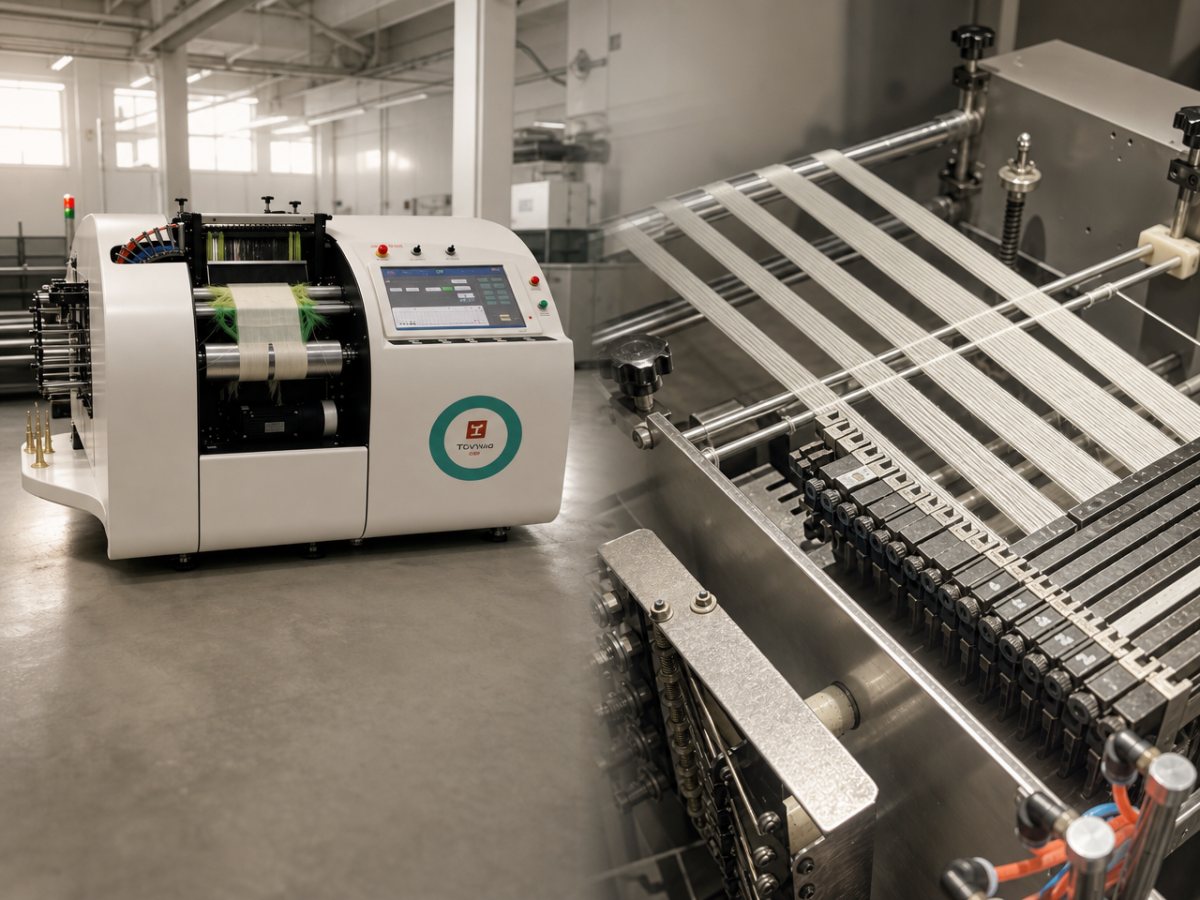
Function Added After the Greige
Woven construction is half the story; the finish is the other half. These run on our lines after dyeing — for custom functional fabric programs, the finish is chosen together with the structure, not after it.
| Finish | What It Does | Typical Programs |
|---|---|---|
| Waterproof treatment | Water-repellent and waterproof finishes matched to the end use and the test standard you sell against | Shells, workwear, outdoor programs |
| Moisture-wicking & quick-dry | Moves sweat off skin and dries fast — paired with our functional yarns or applied as a finish | Sportswear, uniforms, activewear |
| UV protection | Raises the UPF rating for fabrics sold into sun-exposed end uses | Outdoor apparel, awnings, shade programs |
| Laminated | TPU or ePTFE membrane bonded in-house for waterproof breathable builds — full detail on our laminated fabric page | Hardshells, ski, 3-layer programs |
| Custom printing | Placement and continuous prints on greige or dyed ground, from your artwork | Camo oxford, fashion prints, branded programs |
MOQ, Sampling, Lead Time — Stated Upfront
The numbers buyers actually ask about first, in one place. The full Q&A versions live in our custom fabric FAQ part one and part two.
| MOQ — from-scratch | 200 m greige (dyeing by small-bath sample order) |
| MOQ — beam-based | 4,000 m greige |
| Sampling fee | From RMB 8,000, tiered down by metreage — refunded after the bulk order, waived at 10,000 m+ |
| Lead time — from-scratch | ~15 days greige + ~15 days sample dyeing |
| Lead time — beam-based | ~20 days weaving + ~10 days dyeing |
| Certifications | GRS · OEKO-TEX · PFAS-Free |
Payment for first orders
Three stages: 30% deposit to arrange production, 50% progress payment at half completion, 20% balance after your inspection passes. Corporate account transfer recommended.
Payment channels
T/T and L/C for regular foreign trade orders. Trial and sample orders can run flexibly through PayPal or Alipay.
Trade terms & duties
We quote EXW and FOB; under these terms buyers bear import duty and clearance. Our team provides free tariff and anti-dumping inquiry by HS code and destination so landed cost is known in advance.
Custom Development, Documented
Four programs from first enquiry to bulk — including the ones that nearly went wrong. Full write-ups on our portfolio.
0-to-1 Custom Nylon Fabric
A client arrived with a use case, not a spec. Composition, structure and finish developed from zero to a running bulk program.
Custom Weaving Case Report
Iterating a new structure to loom-stable bulk — what broke in the first trials and how the construction was fixed.
Chlorine-Resistant Fabric
Swimwear fabric engineered to hold color and elastane through chlorinated pool water, season after season.
30D Nylon Four-Way Stretch
A fine-denier stretch development taken from sample approval to volume order — precision at both ends of the loom.
Special Constructions Off Our Looms
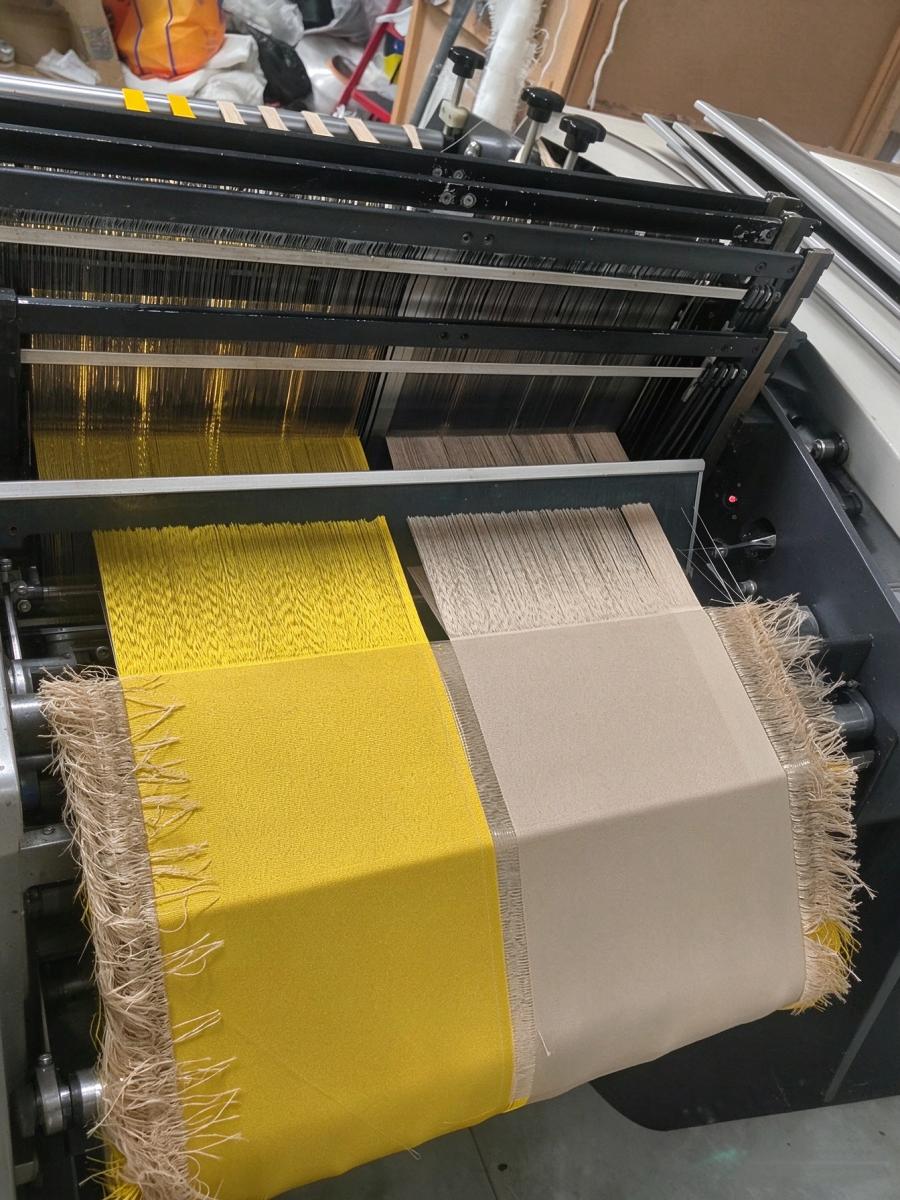
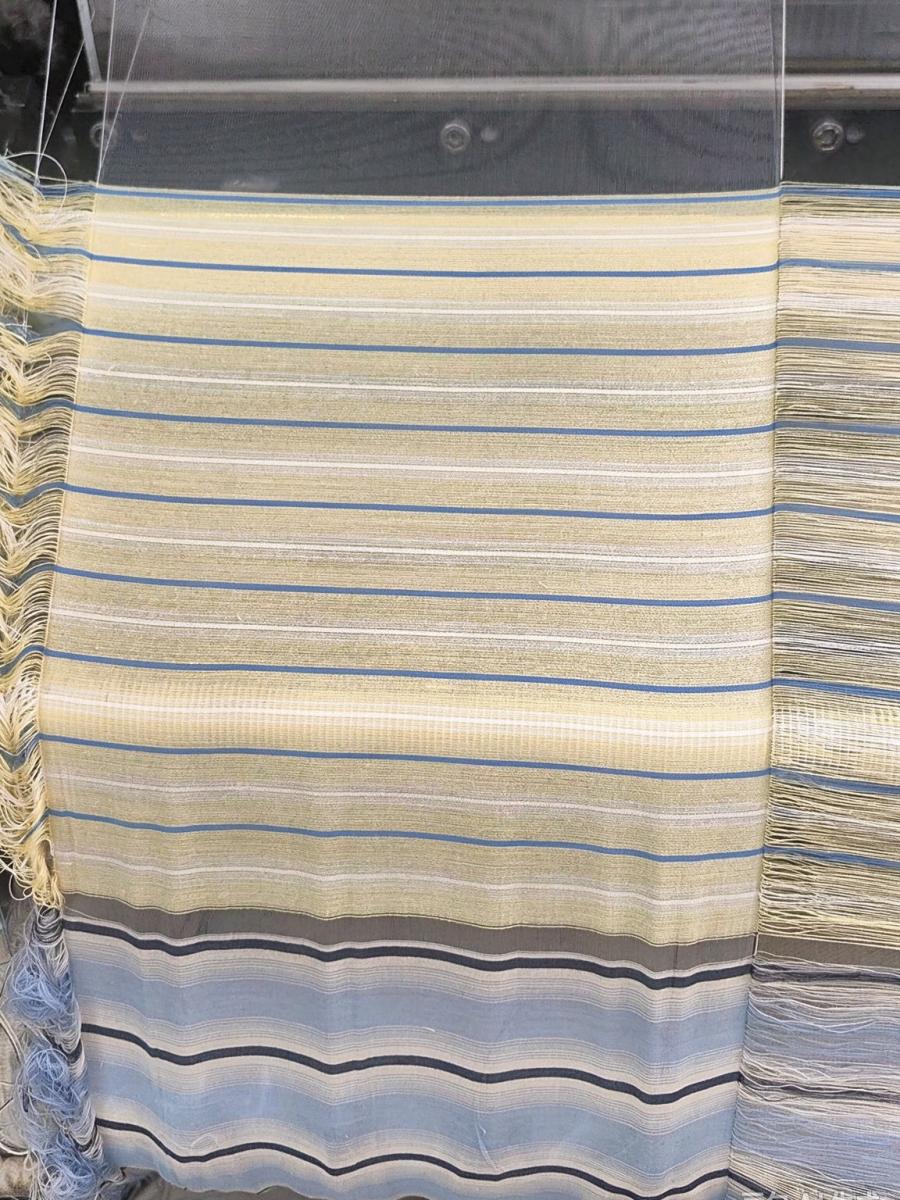
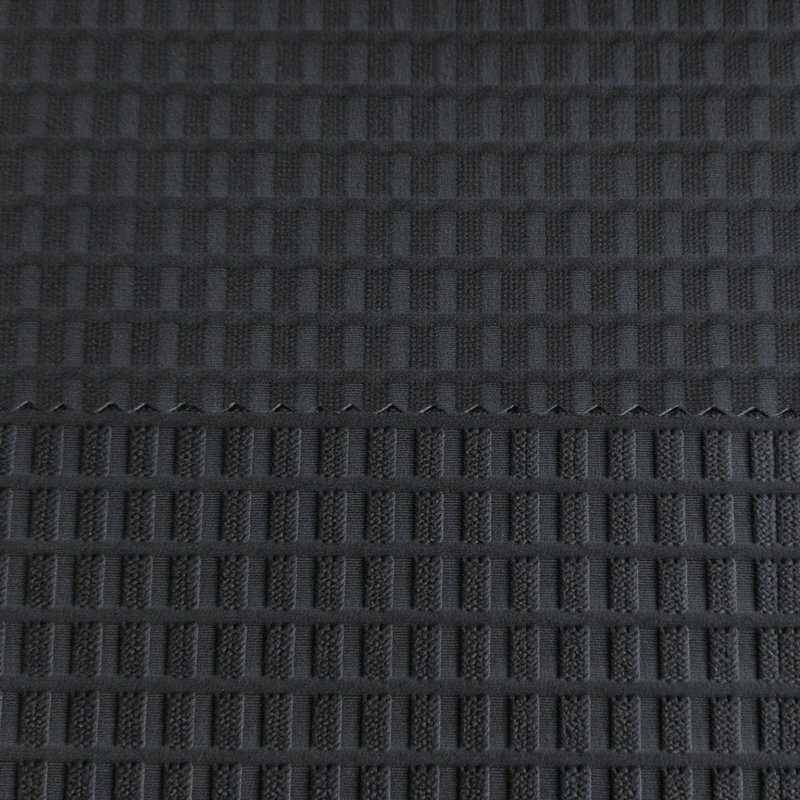
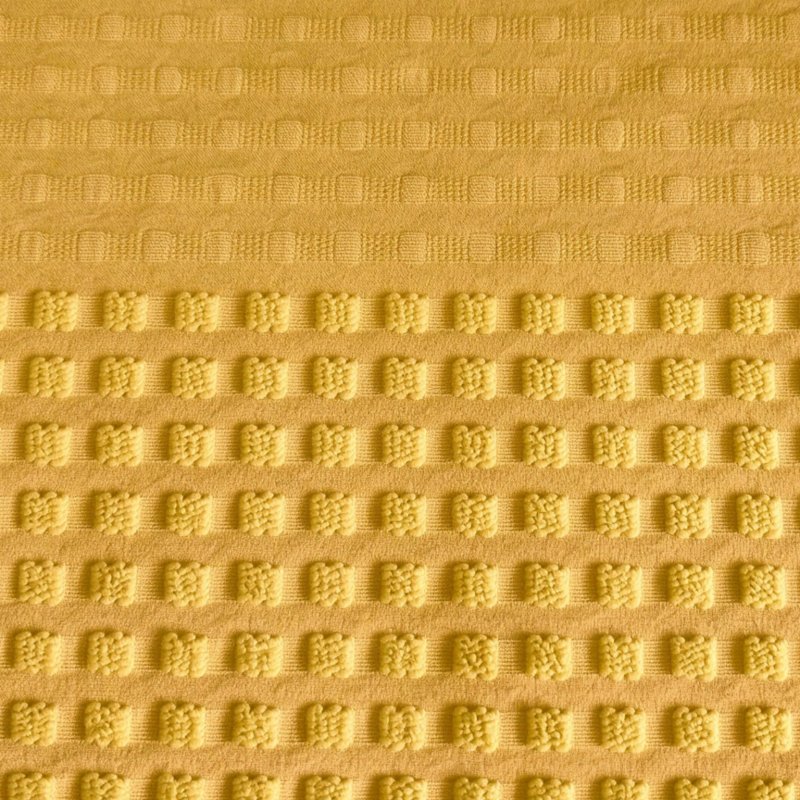
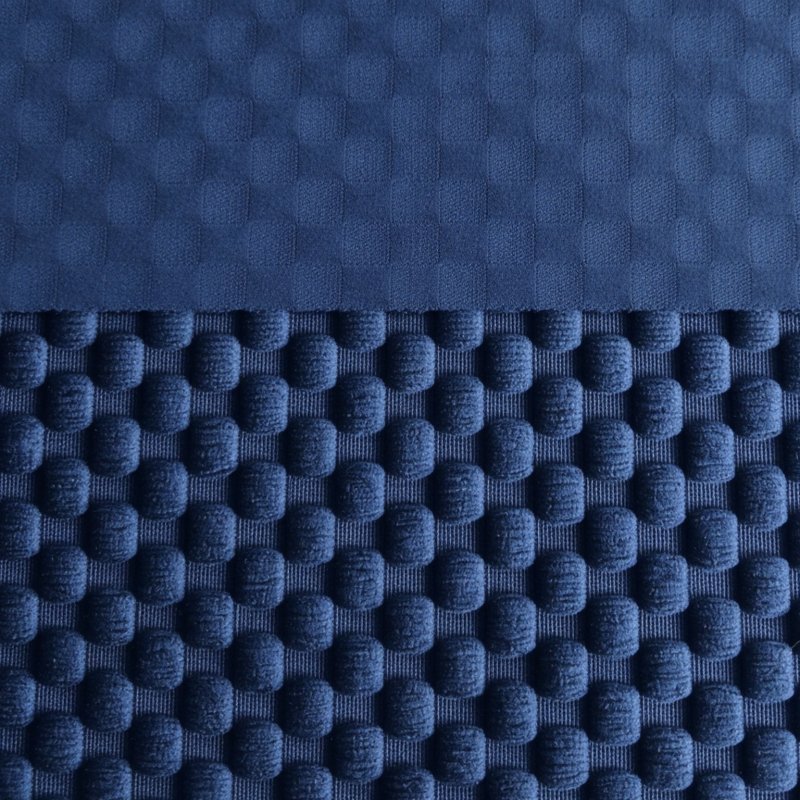
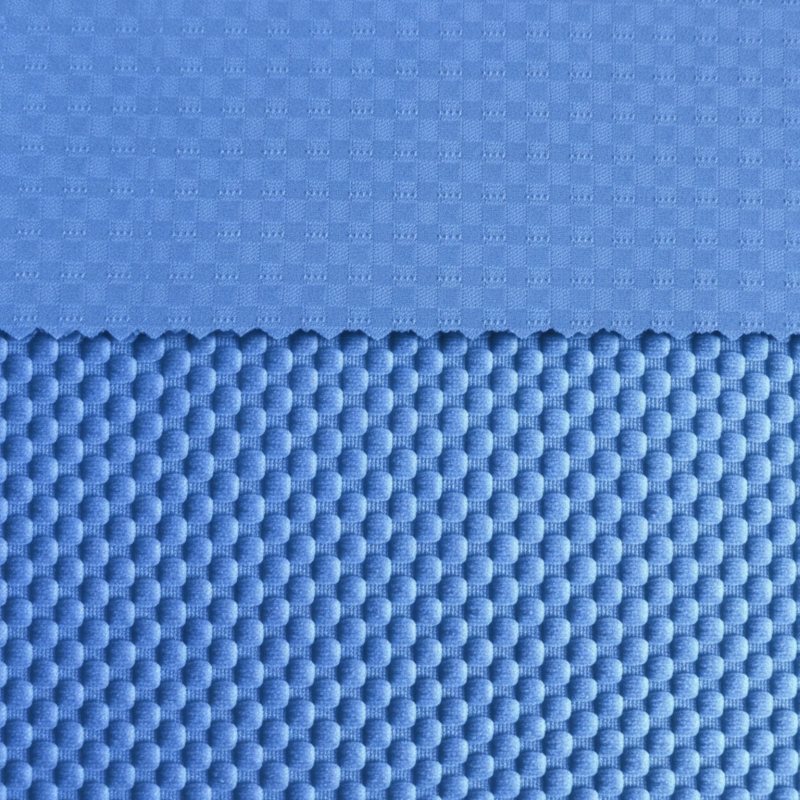
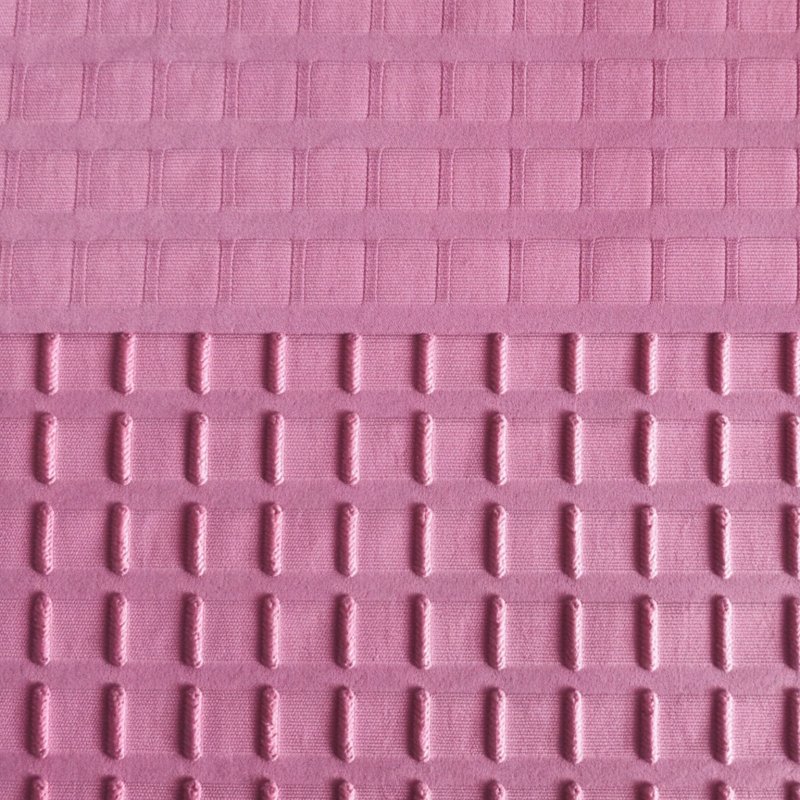
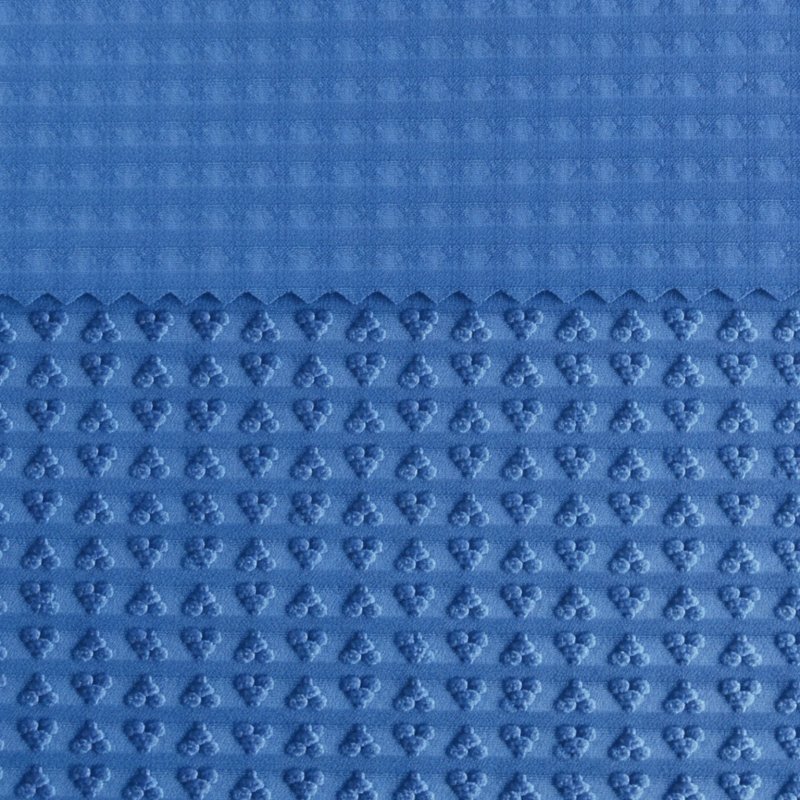
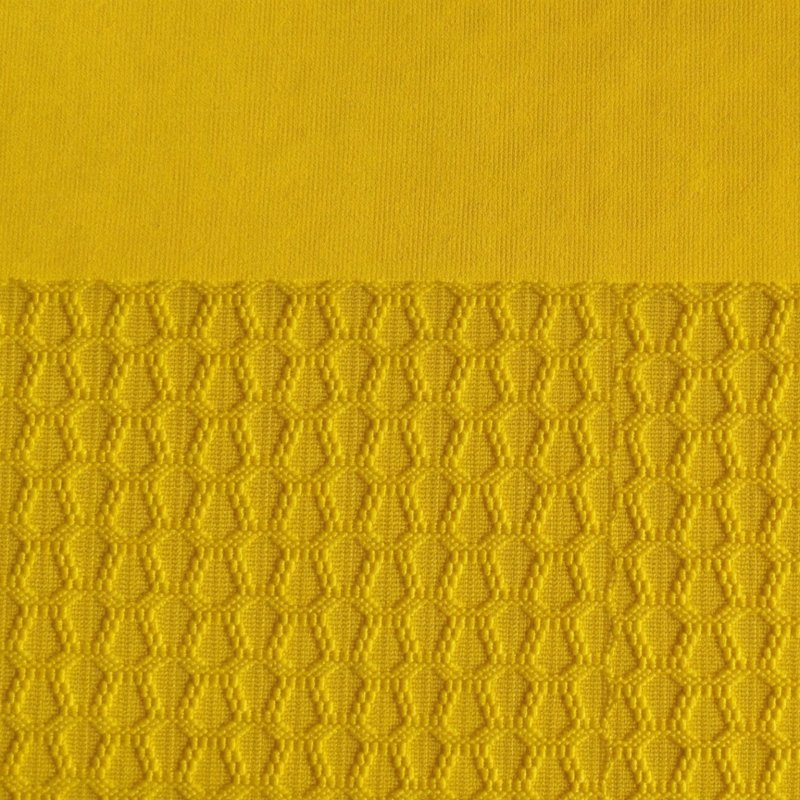
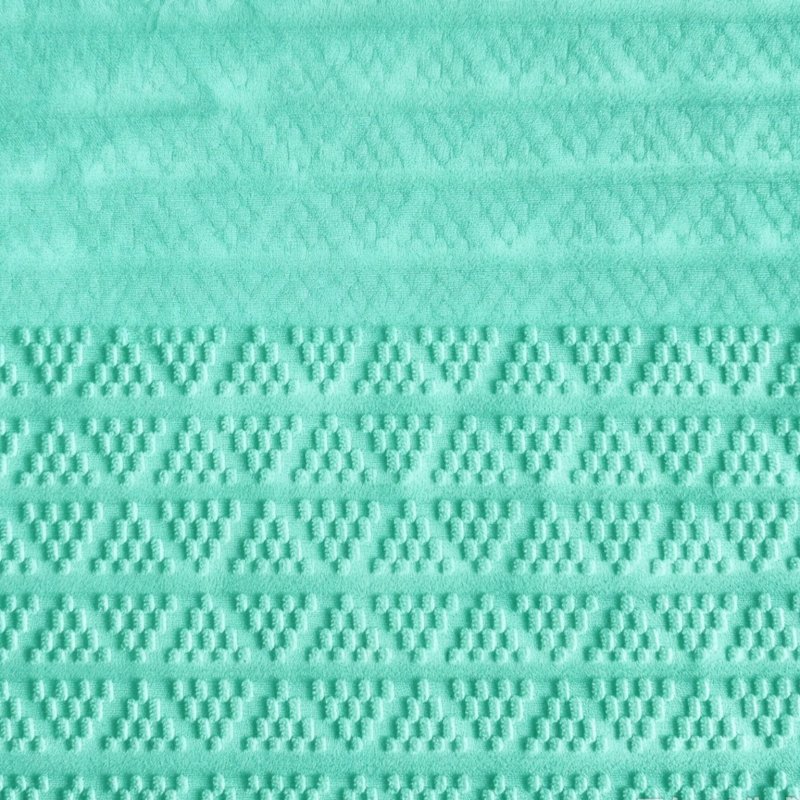
A dozen constructions we have developed for customer programs — double-layer, mini-jacquard, clips and yarn-dyed effects that do not photograph like commodity greige. Hover any swatch to inspect the weave.
The Four Failures We Design Around
Each of these came out of a real program. We would rather show them to you before sampling than explain them after bulk.
A downstream finish that wrecks the dyeing
What happensA spliced down-jacket program on 420T pongee: fabric left us at Grade 4.5 color fastness, then the client’s third-party down-proof coating dragged it to Grade 2.5 — dark dye migrated into the white panels at every splice seam and the whole order stalled. Full case report.
PreventionWe flagged the risk before bulk — coating chemicals and 150–180°C curing attack dye fixing on high-density polyester. When coating was still requested, we split the scope and delivered uncoated semi-finished; after the accident we moved the spliced styles to hot-melt TPU lamination, which held fastness at 4.5, and re-directed the coated yardage to single-color styles so nothing was scrapped.
Selvedge too tight to dye
What happensA tight or curling selvedge tangles in dyeing and finishing, and good body fabric comes out with unusable edges — yield drops after the money is already spent.
PreventionSelvedge structure and tension are set per construction before bulk, and greige is checked flat on the tenter before any dye lot is booked.
Finish parameters that fight each other
What happensSome functional targets physically conflict — a high oil-repellency grade and an easy-wash grade on the same finish pull in opposite directions, and the fabric passes one test by failing the other.
PreventionFunction priorities are agreed before yarn and finish selection; if two targets conflict, we say so at quotation and verify the compromise in the lab before bulk.
Choosing the wrong development route
What happensFrom-scratch development at tiny metres is expensive because setup and waste dominate; beam-based development assumes a matching beam exists — and if it does not, the wait stretches past the season.
PreventionWhen the spec allows both routes, we quote both — cost, MOQ and timeline side by side — and beam availability is confirmed before you commit, not after.
Custom Woven Fabric — Questions We Get Weekly
What is the MOQ for custom woven fabric?
Two routes, two numbers. From-scratch development starts at 200 m of greige — dyeing for that quantity runs on a small-bath sample setup. Beam-based development, re-weaving on an existing warp, starts at 4,000 m of greige at normal bulk price.
How much does sampling cost — and is it refunded?
From-scratch sampling starts around RMB 8,000 (≈US$1,100) at the minimum quantity, because loom setup and waste weigh heaviest at 200 m. The fee steps down as metreage grows, is refunded when the bulk order follows, and is waived at 10,000 m and above. Beam-based development has no sampling fee — trials run at bulk price.
How long does custom development take?
From-scratch: about 15 days of greige weaving plus about 15 days of sample dyeing after the spec is confirmed — roughly 30 days to approved yardage. Beam-based: about 20 days weaving plus 10 days dyeing. Larger metres extend both schedules; we confirm dates against the real loom schedule when quoting.
Can you match my swatch or technical spec?
Yes — send either. We reverse-engineer composition, yarn count, density and weight from a physical swatch, or work directly from a spec sheet. Color is matched to your Pantone references with lab dips before bulk dyeing.
Which loom will my fabric run on?
Polyester series on water-jet looms (216 in-house); nylon and cotton on air-jet looms (82). Plain weave, twill and checks run on cam shedding with 8 harnesses; mini-jacquard and double-layer structures use dobby shedding with 16 harnesses. Maximum weaving width is 230 cm.
What certifications do you support?
GRS, OEKO-TEX and PFAS-Free are supported. Routine quality control runs in-house on every batch, and third-party testing against your standard can be arranged on request.
What are the payment terms?
First-time cooperation runs in three stages: 30% deposit to arrange production, 50% progress payment when mass production reaches half completion, and 20% balance after your inspection passes. Regular foreign trade orders accept T/T and L/C; trial and sample orders can use PayPal or Alipay. Corporate account transfer is recommended for clean reconciliation on both sides.
Which trade terms do you quote — and who handles duties?
We quote EXW and FOB. Under these terms, import tariffs and customs clearance are borne by the buyer. Based on your destination country and the fabric HS code, our team provides free tariff and anti-dumping duty inquiry so the full landed cost is known before you commit.