

In the textile industry, most new fabric development failures stem not from inadequate equipment or immature craftsmanship, but from misaligned preliminary requirement matching.This order, in terms of 30D nylon four-way stretch fabric, is a classic case
Most development misunderstandings arise from a lack of understanding of the underlying functional logic and process boundaries of fabrics. As a professional fabric supplier, our core value lies far beyond order processing and quality delivery. Leveraging in-depth industry technical expertise, we help clients sort out demands, identify contradictions, and avoid ineffective development, ensuring that the functionality, hand feel, style and cost of each fabric precisely match end-use scenarios.
We recently encountered a typical new fabric development inquiry order. The client adopted 30D nylon four-way stretch fabric with a scheduled process of Teflon functional finishing and minor wet coating. The end customer put forward strict dual performance requirements: first, both oil repellency and soil release performance must reach Level 4; second, the coating must pass the national standard hydrostatic pressure test, with a stable hydrostatic pressure of 2000mm water column after 4 washes and tumble drying. As reflected in the end requirements, there are two core professional logical conflicts, which are the most common pitfalls in the development of outdoor and functional fabrics. This article analyzes them based on technical principles for industry reference.
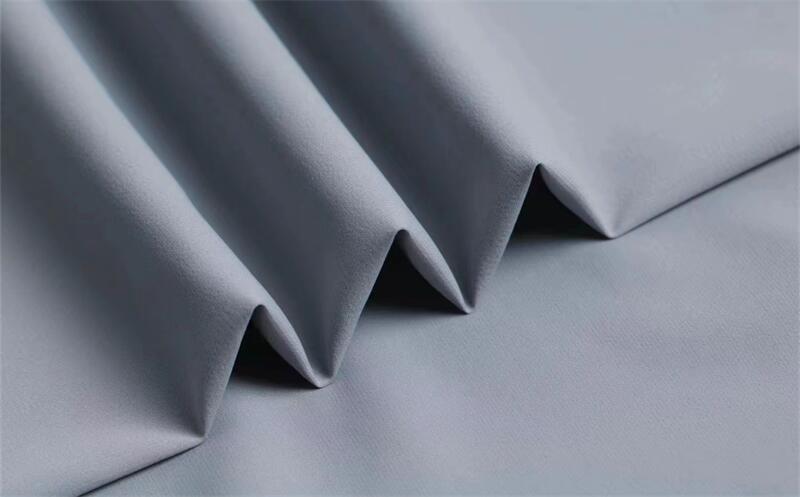
I. Core Pitfall 1: Forced Compatibility of Level 4 Oil Repellency and Level 4 Soil Release
Many clients assume that triple-proof and soil-release functions can be maximized simultaneously. However, in terms of fabric finishing principles, oil repellency and soil release belong to two completely contradictory physical systems and cannot be optimized at the same time.
First of all, Teflon water repellency and oil repellency are homologous and complementary performances, sharing the same core principle of reducing fiber surface tension. Water repellency acts on high-tension liquid water, enabling water droplets to roll off the fabric surface without penetration; oil repellency targets low-tension liquid oil stains, preventing oil from wetting and penetrating into fibers. Therefore, water and oil repellency levels are generally synchronized and positively correlated.
In contrast, the principle of soil release is completely opposite. It improves fabric hydrophilicity to break the closed fiber surface, allowing clean water and detergents to fully wet the fabric and penetrate the gaps between stains and fibers to remove dirt. Currently, there are two mainstream technical approaches in the industry:
1. Mainstream hydrophilic modification technology: Graft hydrophilic groups (such as hydrophilic silicone oil) onto the fiber surface without damaging the fabric structure. The improved surface hydrophilicity enables water to penetrate and strip dirt for efficient stain removal.
2. Dirt adhesion reduction technology: Special finishing agents weaken the bonding force between dry stains and fibers, allowing dirt to fall off easily without damaging the fiber structure.
In short, oil repellency “closes the fiber surface to block stains”, while soil release “opens the fiber surface to remove stains”. Restricted by physical laws, these two fundamentally conflicting functions cannot both achieve high Level 4 performance.
Therefore, mature industrial development relies on reasonable trade-offs. For dark-colored fabrics that are stain-resistant and less visible in dirt, priority should be given to retaining Teflon water and oil repellency while weakening soil release to ensure optimal protection and wash resistance. For light-colored fabrics prone to oil stains and visible dirt, oil repellency can be moderately reduced to balance hydrophilicity and soil release. Forcing 30D nylon four-way stretch fabric to meet dual Level 4 standards will only result in defective fabrics with subpar performance in both functions and stiff hand feel.
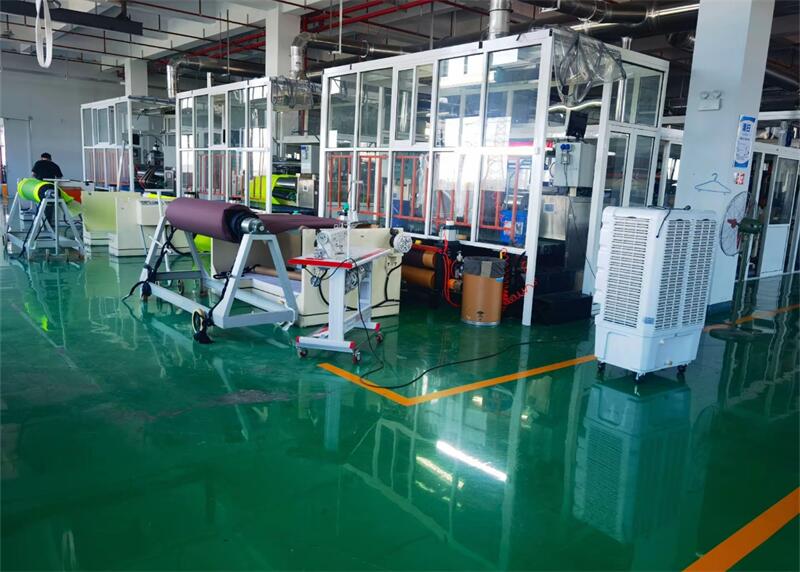
II. Core Pitfall 2: 30D nylon four-way stretch add Minor Wet Coating Cannot Meet 2000mm High Hydrostatic Pressure Requirements
The second core contradiction in this case lies in the conflict between the lightweight positioning of the fabric and the high hydrostatic pressure waterproof standard.
30D nylon four-way stretch fabric is an ultra-light elastic material. The core advantage of minor wet coating technology is to maximize the retention of the fabric’s original properties. After low-pressure minor wet coating finishing, the fabric maintains a soft and relaxed hand feel, uniform elasticity in both warp and weft directions, as well as excellent down-proof performance and air permeability. Its lightweight and breathable style makes it ideal for lightweight outdoor apparel, sun-protective clothing and high-end lining materials.
Nevertheless, this process has clear performance limitations. Prioritizing thin coating and air permeability,minor wet coating is inherently unable to meet the high hydrostatic pressure standard of 2000mm water column.
Forcibly raising the hydrostatic pressure of 30D nylon four-way stretch fabric through process adjustment requires a complete technical overhaul. The lightweight minor wet coating process must be abandoned and replaced with high-density down-proof PU coating combined with multiple water washing and setting finishing, so as to stably achieve the national standard of 2000mm hydrostatic pressure after 4 washes.
This modification brings irreversible changes to fabric style. The thick PU coating sacrifices the original lightweight, highly elastic, breathable and soft characteristics of nylon four-way stretch fabric. The finished fabric becomes stiff with reduced elasticity and air permeability, transforming from a “lightweight elastic functional fabric” to a “dense waterproof protective fabric”, which completely mismatches the end-product texture, wearing experience and market positioning.
The fundamental logic of all fabric development is: It is not that the technology is unachievable, but that physical laws cannot be violated; every process adjustment comes with trade-offs. Blindly stacking high-end parameters will only increase development costs, delay delivery, and produce invalid products inconsistent with end-market positioning.
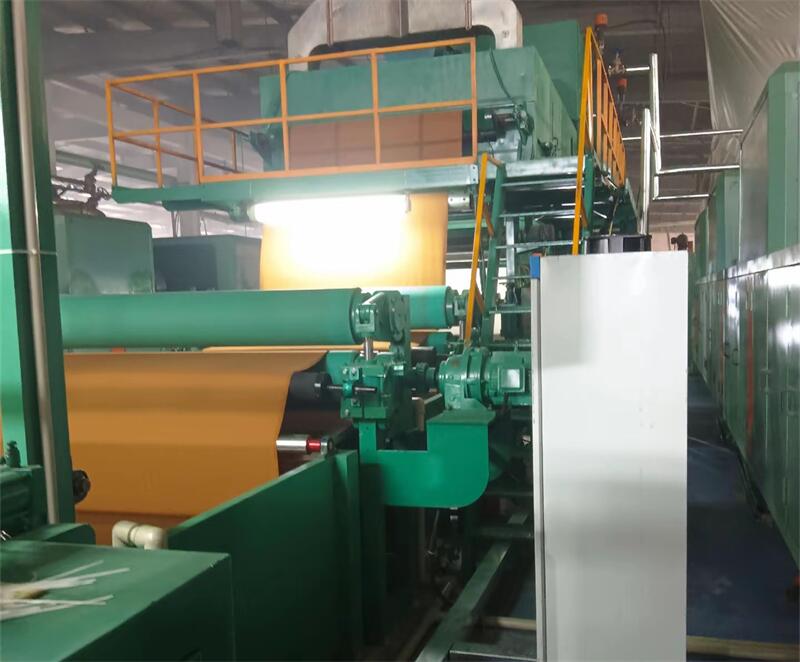
III. Professional Alternative Solutions (Mass-Producible & Practical)
Based on the substrate characteristics, end-user requirements and process pain points of this case, we have customized two sets of mass-producible solutions adhering to the principles of “scenario priority, performance balance, hand feel retention and stable compliance”, adapting to two mainstream positioning priorities: lightweight hand feel and high water pressure resistance.
Solution 1: Lightweight & High-Elastic Version (Prioritize Minor Wet Coating Hand Feel for Lightweight Outdoor & Sun Protective Apparel)
Core Positioning: Abandon the impractical dual Level 4 requirement, retain the fabric’s original lightweight and high-elastic style, suitable for scenarios requiring superior hand feel and air permeability with priority on water and oil repellency over soil release performance.
Process Combination: 30D nylon four-way stretch substrate + modified breathable minor wet coating + high-end Teflon triple-proof finishing
Precision Performance Standards:
1. Stable Level 4 water and oil repellency with performance attenuation ≤10% after 4 washes;
2. Soil release performance optimized to Level 3 or above to meet daily cleaning needs and avoid functional conflicts;
3. Hydrostatic pressure stably reaches 1200-1500mm water column after 4 washes, complying with conventional outdoor waterproof national standards;
4. Fully retain the fabric’s warp & weft elasticity, softness, air permeability and down-proof performance without coating stiffness.
Applicable Scenarios: Spring and summer lightweight outdoor jackets, sun-protective clothing, sports quick-dry apparel, high-end textile linings.
Solution 2: High Water Pressure Protection Version (Prioritize 2000mm Hydrostatic Pressure for Outdoor Protection & Functional Workwear)
Core Positioning: Meet strict high waterproof standards for outdoor and workwear scenarios where waterproof performance is the top priority, at the cost of partial fabric elasticity and slightly increased thickness.
Process Combination: 30D nylon four-way stretch substrate + down-proof thin PU coating + modified Teflon functional finishing + low-damage water washing & setting process
Precision Performance Standards:
1. Hydrostatic pressure stably ≥2000mm water column after 4 washes and tumble drying, fully compliant with national standards;
2. Optimized thin-coating PU formula maximizes basic fabric elasticity and alleviates the stiffness of traditional PU coating;
3. Level 4 water and oil repellency achieved with qualified conventional soil release performance, meeting the usage demands of outdoor protective workwear;
4. Dense and uniform coating delivers excellent down-proof and windproof performance with no water leakage or permeation risks.
Applicable Scenarios: Outdoor softshell jackets, functional workwear, waterproof protective apparel, autumn and winter windproof & waterproof outerwear.
IV. Precise Adaptation Beats Omnipotent Performance in Fabric Development
With years of industry experience, we firmly believe that premium fabric service is not about executing every customer request blindly for example, this order “30D nylon four-way stretch”, but abouthelping clients identify errors and make rational trade-offs with professional expertise.
There is no all-perfect fabric, only fabrics that fit specific application scenarios. Every additional functional parameter corresponds to trade-offs in craftsmanship, hand feel, cost and style. The blind pursuit of full-function high configuration will only lead to technical misunderstandings, increase trial-and-error costs and miss market opportunities.
As a fabric supplier, we are not merely manufacturers, but professional new product development consultants for clients. We provide full-process support from demand sorting, process matching and parameter optimization to mass production, helping clients avoid technical pitfalls, align new products with end-market positioning, and achieve the optimal balance between quality and cost performance.