
Nylon 4-Way Stretch Fabric
Our woven nylon 4-way stretch fabric is supplied directly from Mifu Fabric mill. Fabric weights cover 65gsm to 350gsm, with a wide selection of weave options including twill, dobby mountain cloth, check, hollow-out and satin.
We strictly control stretch recovery, shrinkage and color shading (end-to-end color difference) during production. All fabric can be made 100% PFAS-Free, compliant with upcoming EU regulations. Certifications available: GRS, OEKO-TEX®.
Custom dyeing service is available, with greige goods in stock for fast sampling & quick shipment..
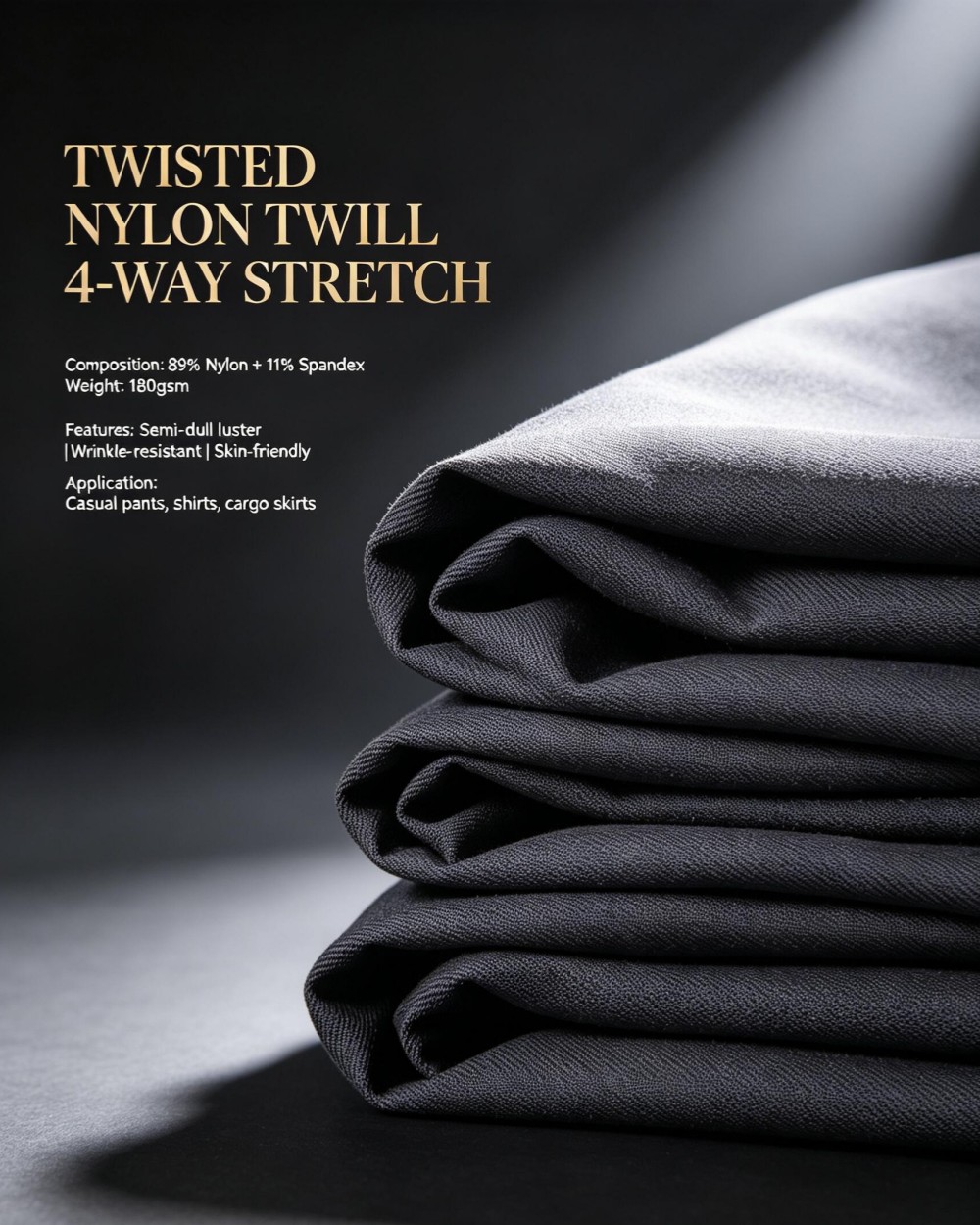
What Is Nylon 4-Way Stretch Fabric?
A mill-direct technical guide for professional apparel buyers and product developers. 100% pure woven construction, no knit blends.
Nylon 4-way stretch fabric is a high-performance woven stretch textile. Each yarn uses a spandex core fully wrapped by nylon DTY filaments in both warp and weft directions, then relaxed and heat-set on a stenter. This structure delivers great stretch and reliable recovery across the entire fabric, avoiding the sagging and deformation common in knitted stretch fabrics.
At Mifu Fabric, we supply multiple weave options: twill, dobby mountain cloth, check, hollow-out and satin. Each weave is engineered for a unique balance of hand feel, surface texture, opacity and stretch strength, making them ideal for outdoor apparel, workwear, athleisure trousers and tailored bottoms. The same mill engineering runs across our sister lines — polyester 4-way stretch, T400 mechanical stretch and laminated waterproof fabric.
We build our core advantage around high color fastness and stable size control. We strictly manage end-to-end color shading throughout production to eliminate head-to-tail color difference. Our pre-shrink process (steam felt compactor + overfeed) keeps washing shrinkage ≤ ±4% and heat shrinkage ≤ ±2%. All bulk goods are inspected per the American Four-Point System before shipment.
We offer full custom fabric development services — we can engineer fabrics to your target weight, weave, hand feel and functional specifications. We also roll out new items on a regular basis, with ready greige stock supporting fast sampling and quick turnaround for trial orders.
Our entire nylon 4-way stretch range can be produced as 100% PFAS-Free, fully compliant with the latest EU textile regulations. GRS and OEKO-TEX® certifications are available on request.
Construction Families Inside the Nylon 4-Way Stretch Range
Six weave families, six different hand feels — pick the one that matches the end product.
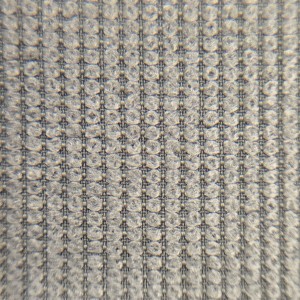
Nylon Dobby 4-Way Stretch Fabric
Dobby weave creates a signature peak-valley micro-texture, with a dense nylon surface and strong fiber cohesion.Ideal for outdoor jackets, hiking pants and hardshell outerwear.
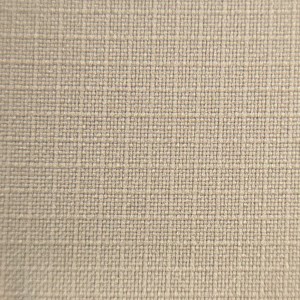
Nylon Checkered 4-Way Stretch Fabric
Jacquard-controlled warp & weft floats form clear check patterns on a mid-weight construction.Can increase tear resistance.Suitable for fashion outerwear, cargo pants.
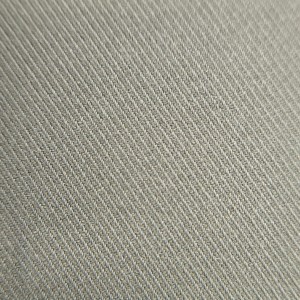
Nylon Twill 4-Way Stretch Fabric
Twill fabric is known for its excellent drape, which allows it to hang smoothly and elegantly. It also features a high density, making it durable and substantial while remaining flexible.
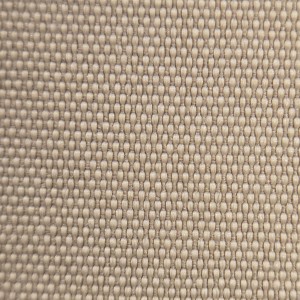
Nylon Plain Weave 4-Way Stretch Fabric
Maximum interlace points per unit area bring the firmest hand feel, minimal shrinkage and excellent dimensional stability.Used for structured shells, linings and base layers.
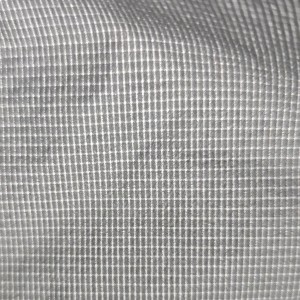
Nylon Hollow-Out 4-Way Stretch Fabric
Open structure with uniform controlled apertures, lightweight and highly breathable. Used for sun-protective clothing.The Hollow-Out design makes the garment lightweight and quick-drying.
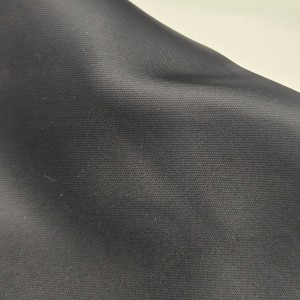
Nylon Satin 4-Way Stretch Fabric
Long warp or weft floats create a lustrous, supple face — the most fluid drape in the family. The longest floats also mean gentlest care: reserved for fashion shells and premium athleisure.
Compliance & Certifications
Every batch ships with traceable documentation. Compliance is not a marketing line at our mill — it is a procurement requirement from European and American buyers, and we treat it that way.
Global Recycled Standard
GRS-certified recycled nylon options are available across the series, with chain-of-custody documentation for recycled-content claims.
PFAS-Free Chemistry
Finishing formulations are 100% PFAS-free — aligned with tightening EU and US regulatory expectations on forever chemicals.
OEKO-TEX® Standard 100
Products are tested against harmful-substance limits, supporting safe, export-ready apparel for your target market.
Documentation included with every shipment: GRS Transaction Certificate (when recycled), OEKO-TEX® Standard 100 certificate, third-party mill-side QC report (American 4-Point System), and optional SGS / ITS lab testing on request. All fabrics comply with EU REACH, US CPSIA and Southeast Asia environmental access standards. HS code assistance is provided free of charge to optimize customs tariff classification.
Finishing & Custom Development
Finishing is what brings commercial value to nylon 4-way stretch fabric, not just the greige weave.
The six finishing routes below cover more than 90% of the B2B inquiries we receive.
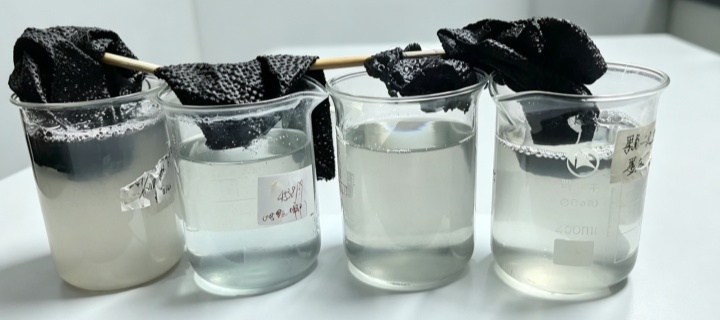
High Color-Fastness Dyeing
Acid-dye system for nylon, staged setting temperature (pre 210–220 °C / final 150–160 °C), thorough CPB cold-pad-batch pre-treatment and post-dye acid fixing agent — the combination that prevents “spandex flash” and washing fading.

100% PFAS-Free DWR
Water-repellent finishing for sustainable product lines. Zero PFAS residue, with lotus-effect beading performance reaching Grade 4 spray rating before washing. Fully meets the latest mandatory EU PFAS standards for textiles.

Wicking & Quick-Dry Finish
Hydrophilic finishing agent combined with capillary-channel yarn geometry — engineered to push moisture from skin side to outer surface. Note the inherent tension with waterproof finishing; choose based on end use.
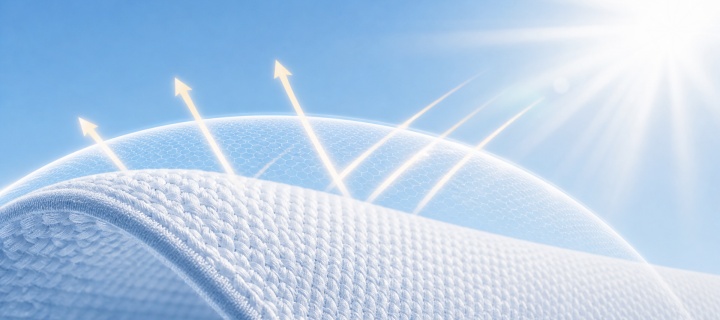
UV Protection · UPF 50+
Auxiliary-finishing route applied through padding–drying–setting. Stable UPF 40+ with UVA transmittance < 5% per GB/T 18830-2009 and EN 13758-2. Pair with dark base color and 50–100 gsm substrate for optimal results.

TPU / ePTFE Lamination
PUR hot-melt adhesive lamination with TPU or modified-PTFE membranes for outdoor jackets. Water pressure resistance up to 10,000 mm with moisture-permeable comfort. Solvent-glue lamination is not offered — only PUR for export programs. Membrane options and 2/3-layer builds are detailed on our laminated fabric page.
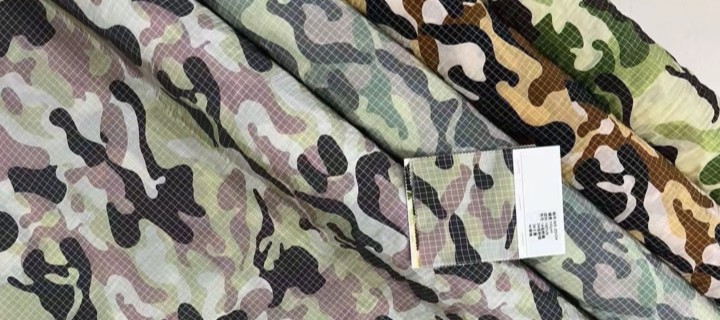
Acid-Dye Printing (Nylon-Specific)
Digital direct printing with specially formulated acid-dye ink for nylon substrates, plus water-transfer printing for cost-efficient mass orders. Sublimation heat-transfer printing is strictly avoided — temperatures above 180 °C damage nylon fibers.
From sample to bulk — the production sequence we run on every custom order
Every step is recorded on the production sheet; each transition has a sign-off before the next stage starts.
Common Problems & Mill-Side Solutions
The six problems we hear most from buyers who have already been through one failed bulk. Every diagnosis here comes from a real production-line cause — not from a generic “high-quality” claim.
Problem: Severe Pilling on Thigh & Seat of Nylon 4-Way Stretch
In woven nylon four-way stretch fabrics, the most common cause of pilling is not yarn grade — it is silicone softener over-dosed in the finishing bath. Excess silicone acts as a lubricant between fibers and the spandex core, breaking yarn cohesion and letting surface fibers slip out of the weave. Once slipped, they form pills that no amount of home laundering can remove.
Why Does Nylon Spandex Fabric Shrink After Washing?
The fundamental driver of excessive washing shrinkage in woven stretch fabric is residual stress in the spandex — and that stress is locked in or released at the pre-setting stage. If pre-setting temperature is too low or skipped, or if the mill forcibly stretches the fabric on the stenter to add meterage, the spandex will retract the moment it meets warm water and agitation in the laundry.
Why Nylon 4-Way Stretch Fabric Bleeds Color After Washing
Insufficient dyeing temperature: Dye fails to fully penetrate nylon fiber cores, leaving excess surface floating dye that bleeds into wash water. Poor pre-scouring: Residual spinning oil on yarns blocks uniform dye absorption, weakening fiber-dye bonding. High-saturation color risk: Bright shades require heavy dye loading; even minor dye loss causes visible fading and water discoloration.
Problem: Batch-to-Batch Color Drift in Nylon 4-Way Stretch Bulk Orders
Fluctuations in dye bath parameters: Variations in temperature, heating rate, pH and holding time trigger color shifts along fabric length and across batches. Missing pre-shipment QC: This defect often remains undetected until cutting or sewing, leading to wasted fabric and labor costs.
Defect: Uneven Selvedge Tension (Tight/Loose Edges) in Nylon Stretch Fabric
Uneven selvedge tension is typically detected at the cutting stage. 90% of cases stem from mismatched left-right tension settings during fabric finishing, causing skewed weft, bowed weft and uneven edge tightness. The remaining 10% occur when fabric is rolled before full cooling after high-temperature finishing — uneven spandex shrinkage then distorts selvedge tension. This defect leads to misaligned pattern pieces, fabric waste and even production schedule delays.
“Shine Marks” on Twisted Nylon Four-Way Stretch
Twisted (high-twist) nylon four-way stretch has tightly packed, rigid surface fibers. During dyeing, the high-frequency friction inside the dye vat and the drag of the assembly line can cause local yarn compression and slippage, producing irreversible shiny reflective marks. The defect is invisible on flat inspection at receipt but shows up under angled light — and it cannot be repaired by washing or pressing.
Sourcing Intelligence — Nylon vs Polyester 4-Way Stretch
The most common substitution trap in stretch fabric sourcing. The two fibers look similar on a hand-feel checklist — they behave very differently on the production line, on the cutting table and on the finished garment after wash.
| Comparison Dimension | Nylon 4-Way Stretch Most Inquiry | Polyester 4-Way Stretch |
|---|---|---|
| Hand feel | Soft, smooth, supple drape; closer to “second-skin” | Crisper, slightly stiffer; more paper-like |
| Elastic recovery | Fast spring-back at low tension; ideal for close-fit | Good recovery but slower; better for tailored shapes |
| Color brightness | Wide gamut, especially deep jewel tones | Vivid brights, especially fluorescent and neon shades |
| Dye system | Acid dyes · 100–110 °C · ionic bond | Disperse dyes · 120–130 °C · high-pressure |
| Heat resistance | Poor above 180 °C — fiber damage, shrinkage | Better high-temp tolerance, suitable for transfer print |
| Printing compatibility | Digital direct printing (acid dye) or water transfer — never sublimation | Sublimation transfer / digital transfer — fastest and cheapest |
| Moisture regain | Higher (3.5–4.5%) — better skin comfort | Lower (0.4%) — quick-dry but clammy in heat |
| UV resistance | Lower — needs UV finishing for outdoor shells | Higher inherent UV resistance |
| Cost positioning | Higher raw material cost, premium positioning | Lower cost, broad-market positioning |
| Best-fit end products | Dress pants, fashion shells, premium athleisure, lingerie-adjacent | Uniform programs, schoolwear, mass casual wear |
What Is the Best-Selling Nylon 4-Way Stretch in 2026?
The “Lulu crinkle” style is the top-selling line, first developed and popularized by Lululemon. It has two core woven specifications: 40D nylon + 20D spandex (~120gsm, 87–88% nylon) for lightweight summer apparel, and 70D nylon + 40D spandex (~140–150gsm, 90% nylon) for all-season outerwear and bottoms. Its signature matte wrinkled texture, balanced stretch and durable hand feel make it a staple for athleisure and light outdoor collections.
What Is the Finest Denier of Woven Nylon 4-Way Stretch?
The finest woven microfiber nylon 4-way stretch uses 10D nylon filament fully wrapping 20D spandex, with ~65% nylon and 35% spandex composition, weighing as low as ~45gsm. This ultra-fine grade is reserved for premium lingerie, base layers and linings. Most commercial lightweight styles adopt 20D–30D yarns, while 10D is a high-end custom specification.
Is Nylon 66 Used for Woven 4-Way Stretch Fabric?
Yes, nylon 66 (polyamide 66) is widely applied in high-performance woven 4-way stretch fabrics. Compared with standard nylon 6, it features higher tenacity, better abrasion/tear resistance and superior dimensional stability. Common specs include 40D, 70D, 140D and 160D blended with spandex, ideal for workwear, hiking fabrics and premium activewear. It carries a higher cost than nylon 6 for its upgraded mechanical properties.
Application Matrix
Each application has a different weight and finish target. Match your program to a construction rather than chasing a single “best” fabric.
Outdoor & Hiking
Workwear & Uniform
Athleisure & Sportswear
Fashion Bottoms & Dresses
Most-Requested Picks
Five individual nylon 4-way stretch fabrics our buyers re-order most often — different yarn counts, weights and weaves, all in stock and ready to sample.
| Construction | Composition | Weight | Width | Stock | Lead Time | Recommended For |
|---|---|---|---|---|---|---|
| 40D Hollow-Out Mesh | Nylon 88% / Spandex 12% | 105 g/m² | 152 cm | Yes | 15 days / sample 4–7 d | Sportswear lining, breathable panels |
| 70D SD Check Stretch | Nylon 90% / Spandex 10% | 155 g/m² | 155 cm | Yes | 15 days / sample 4–7 d | Fashion outerwear, cargo pants |
| 160D Dobby Mountain Cloth | Nylon 92% / Spandex 8% | 160 g/m² | 155 cm | Yes | 15 days / sample 4–7 d | Outdoor jackets, hiking pants |
| 70D SD 2/2 Twill | Nylon 91% / Spandex 9% | 180 g/m² | 155 cm | Yes | 15 days / sample 4–7 d | Uniform programs, slim-fit pants |
| 260D-eq Blended Stretch | Nylon 87% / Spandex 13% | 260 g/m² | 150 cm | Pre-order | 25–40 working days | Winter shells, premium bottoms |
Frequently Asked Questions
The nine questions that come up on every inquiry call, answered the way we answer them on the production floor — no marketing gloss.
What’s the difference between 2-way and 4-way stretch in woven nylon?
+Why does my previous nylon four-way stretch shrink so much after washing?
+Can nylon 4-way stretch fabric be sublimation-printed?
+What’s the MOQ for custom dyed nylon 4-way stretch?
+Can you match a physical sample from another supplier?
+Do you offer PFAS-Free DWR without sacrificing water repellency?
+We provide two distinct water-repellent solutions to match your compliance and performance priorities:
100% PFAS-Free fluorine-free finish: Zero PFAS residue, fully compliant with the 2026 EU mandatory PFAS ban. It delivers a Grade 4 initial spray rating with a soft hand feel, built for sustainable and eco-focused product lines.
C6 short-chain fluorinated finish: Not classified as zero-PFAS, but offers stronger water repellency and superior wash durability. It reaches a Grade 4–5 initial spray rating, maintains Grade 4 performance after repeated laundering.
For outdoor applications requiring hydrostatic water pressure resistance, we recommend PUR hot-melt lamination with TPU or modified-PTFE membranes to form a complete waterproof system.