

I. Custom Weaving fabric Project Background and Cooperation Overview
This classic rectification case of Custom Weaving fabric dates back five years. It serves as a highly valuable practical case for cross-fabric factory collaboration, process optimization, and solving the adaptability problems between weaving and dyeing processes, which is applicable to team training, industry exchanges and business review.
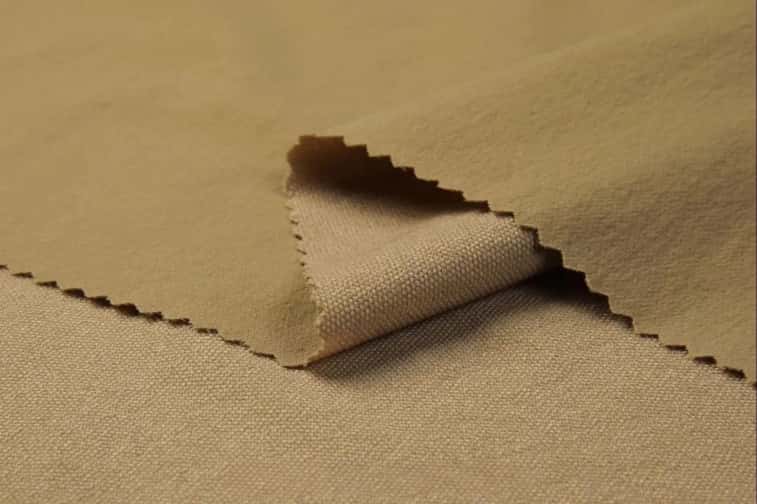
Fabric Specification: 70D Nylon DTY+40D Spandex * 70D Nylon DTY+40D Spandex * 160D Nylon ATY
Composition: 90% Nylon + 10% Spandex
Finished Weight: 190g
Finished Width: 142cm
Grey Fabric Specification: 21*2*208*26; Weave Structure: Double-layer Mini Jacquard
Weft Yarn Circulation: 3pcs 70D Nylon DTY+40D Spandex + 1pc 160D Nylon ATY
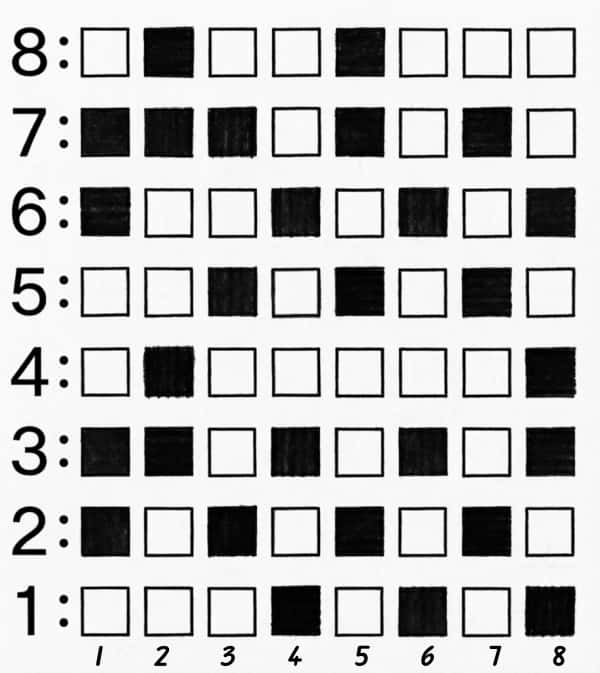
Drafting Structure: Straight Draft 1 2 3 4 5 6 7 8 (8-harness weaving)
The end customer is a Korean fabric enterprise, which customized 160D matte mountain cloth four-way stretch fabric for branded sports suits. The order requires extremely high finished product quality, with the core mandatory standard of high color fastness dyeing, including strict indicators of washing fastness, rubbing fastness, perspiration fastness and light fastness. No color fading, color migration or color difference is allowed.
In accordance with the customer’s supply chain arrangement, the grey fabric weaving of this order was undertaken by our peer manufacturer. As a traditional weaving factory with years of industry experience, our peer has mature equipment and stable production capacity, and is proficient in basic weaving processes to meet standard requirements of fabric weight, density, width and texture. However, the factory only focuses on grey fabric weaving without professional dyeing and finishing production lines, and lacks technical experience and refined management capabilities for high color fastness dyeing, making it unable to meet the customer’s high-standard dyeing requirements.
Therefore, a tripartite cooperation mechanism was confirmed by the customer, the peer manufacturer and our company. The peer is responsible for grey fabric weaving, and all woven grey fabrics are delivered to our factory. Our company takes full charge of the subsequent whole-process processing including high fastness dyeing, color fixation, finishing and quality inspection to ensure the finished fabrics meet the customer’s acceptance standards.
II. Problem Discovery: Fabric Edge Curling Blocking Dyeing Processing
After completing the weaving in accordance with the order specifications, the peer manufacturer delivered bulk grey fabrics to our workshop. Before dyeing and machine loading, we conducted strict incoming quality inspection on fabric appearance, width, flatness and surface tension to prepare for high-standard fastness dyeing.
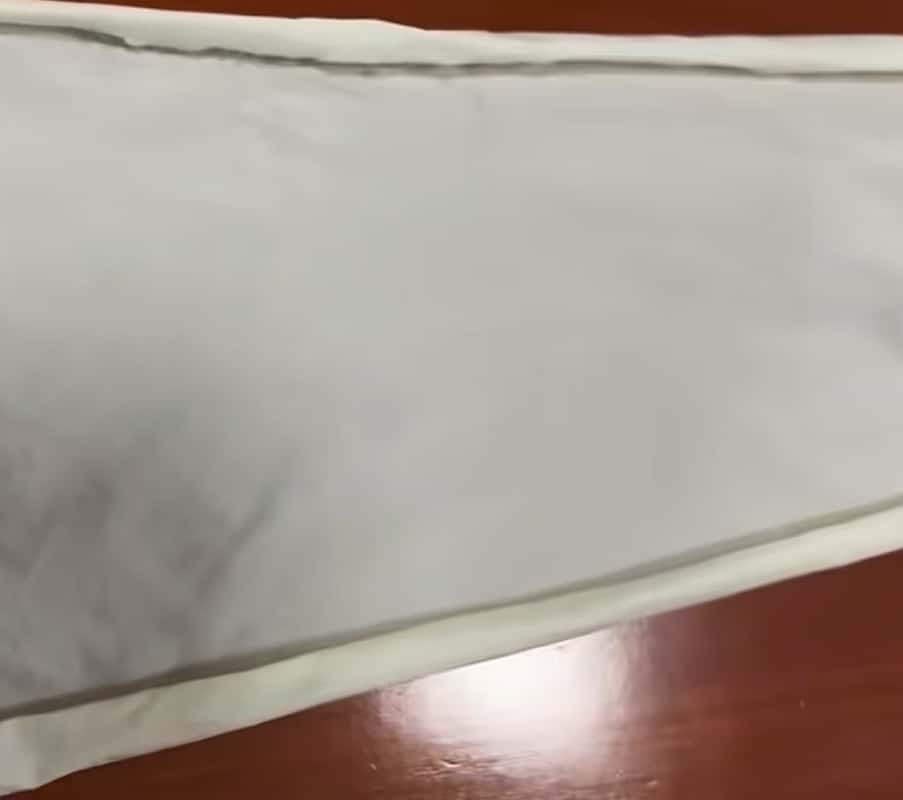
Severe edge curling was found on bulk grey fabrics during the inspection, with specific problems as follows:
1. Problem Performance: The fabric edges curled inward and outward unevenly with large and rigid curling radian, failing to lay flat naturally. Severe curling appeared at the head and tail of fabric rolls while slight curling in the middle section, resulting in extremely poor overall flatness of the bulk grey fabrics.
2. Processing Impact: High fastness dyeing requires extremely high flatness and uniform tension of grey fabrics, which need to be fed into the dyeing machine stably and evenly. Curled fabrics cause uneven edge stress, feeding deviation and wrinkle accumulation, directly leading to dyeing defects such as color mottle, edge color difference, uneven color fixation and local fading. These defects completely fail to meet the high fastness acceptance criteria of customer-specified Custom Weaving fabric and cannot be repaired by subsequent reprocessing.
3. Production Suspension Decision: Joint tests by our company’s craftsmen and workshop supervisors confirmed that the curled grey fabrics were unavailable for direct dyeing. Forced processing would lead to full-batch fabric scrapping, massive waste of raw materials, dyestuffs and working hours, as well as order delay and customer compensation risks. We immediately suspended the dyeing process and locked the defective grey fabrics.
III. Root Cause Analysis of Edge Curling
We promptly communicated with the peer weaving factory and analyzed the weaving process, equipment parameters and fabric setting conditions to identify the fundamental cause of edge curling:
1. Inadaptable Weaving Process: The peer traditional weaving factory is experienced in conventional grey fabric production with edge locking processes adapted to low-end ordinary fabrics. It failed to design targeted edge structures for this double-layer mini jacquard fabric containing spandex. The unsynchronized shedding of fabric edges and ground structures caused unbalanced edge warp tension, ultimately resulting in fabric edge curling.
IV. Customized Improvement Solutions (Implementable)
To avoid order delay and completely solve the edge curling problem for smooth high fastness dyeing of Custom Weaving fabric, we formulated a complete improvement plan of first rectification, then mass production and standard establishment based on the fabric structure, weaving principle and pre-dyeing requirements, and optimized the weaving edge structure process to eliminate curling from the source.
1. Emergency Rectification: Redesign and Optimize Weaving Process (Custom Weaving fabric)
The original process parameters including 8×8 floating-sinking rule, straight drafting sequence (1,2,3,4,5,6,7,8) and total 8 harness frames remained completely unchanged with no additional edge harness added. Only the edge threading structure was optimized.
Comparison of old and new processes:
Custom Weaving fabric . Old Process Scheme:
- Drafting Mode: Straight drafting 1 2 3 4 5 6 7 8
- Edge Structure: Left and right edge warp threads threaded on Harness 1 and Harness 2
- Total Harness Frames: 8 (no extra edge harness)
New Process Scheme:
- Drafting Mode: Straight drafting 1 2 3 4 5 6 7 8
- Edge Structure: Left and right edge warp threads threaded on Harness 3 and Harness 8
- Total Harness Frames: 8 (no extra edge harness)
2. Multi-dimensional Comparative Analysis of Process Optimization
2.1 Opening Friction and End Breakage
Defects of Old Scheme (Edge on Harness 1 & 2)
Harness 1 and 2 are the front two harness frames with the maximum lifting stroke and longest reciprocating movement. The fabric edge features much higher warp density than the ground weave, leading to intensive edge warp threads concentrated on Harness 1 and 2:
- Severe friction between edge warp threads, heddles and steel reeds sharply increases edge end breakage rate;
- Double load on Harness 1 and 2 causes rapid wear, deformation and fuzzing of heddles;
- Unstable edge warp tension during high-speed weaving leads to frequent edge breakage, repeated machine stops for yarn splicing and reduced effective production time.
Advantages of Optimized Scheme (Edge on Harness 3 & 8)
- Harness 3 (middle harness) has moderate movement stroke while Harness 8 (last harness) has the minimum stroke;
- Edge warp threads are evenly distributed on one middle and one rear harness, avoiding overloading on single heddle;
- Shorter lifting stroke of edge yarns greatly reduces friction, cutting edge breakage by over 60% and extending heddle service life;
- Harness 1 and 2 only bear normal ground warp load with balanced stress, reducing the overall machine end breakage rate.
2.2 Edge Forming and Finishing Effect((Custom Weaving fabric))
Problems of Old Scheme (Edge on Harness 1 & 2)
- The large movement stroke of Harness 1 and 2 causes edge warp threads to fluctuate far more drastically than ground warp threads, resulting in unstable edge tension and easy curling/rippling edges;
- Large shrinkage difference between edge and fabric body after washing and setting leads to inconsistent width on both sides and increased trimming loss;
- Severe edge yarn fluctuation causes uneven and rough fabric edge appearance.
Advantages of Optimized Scheme (Edge on Harness 3 & 8)
- The stroke of Harness 3 and 8 matches that of ground warp threads, realizing synchronous lifting and consistent tension between edge and body yarns;
- Flat grey fabric without curling ensures consistent width after setting and reduced cutting loss;
- Tight and smooth fabric edge without loose edges, requiring no additional edge locking reinforcement.
2.3 Loom Load and Maximum Speed
Old Scheme (Edge on Harness 1 & 2)
Overloaded front harnesses cause uneven stress on loom opening cams and severe vibration during high-speed operation. The weaving speed has to be limited, resulting in insufficient production capacity. Long-term operation accelerates wear of cams and connecting rod accessories.
Optimized Scheme (Edge on Harness 3 & 8)
Even load distribution on 8 harness frames balances the overall machine stress and reduces vibration. The weaving speed can be increased by 5%~10% with lower equipment wear and prolonged maintenance cycle.
2.4 Machine Debugging Difficulty(Custom Weaving fabric)
Old Scheme (Edge on Harness 1 & 2)
Repeated adjustment of edge warp tension and harness stroke compensation is required to avoid continuous edge breakage and curling. Batch replacement and yarn adjustment consume much time with high technical requirements for operators.
Optimized Scheme (Edge on Harness 3 & 8)
High matching degree of movement rhythm between edge and ground yarns enables one-time successful debugging. The order replacement debugging time is shortened by 50%, easy for novice operators to master.
2.5 Impact on Fabric Style (Completely Consistent)
The optimization only adjusts the harness position of edge warp threads, with no changes to the ground warp floating-sinking rule, structure diagram, float length and lattice texture:
- 100% consistency in lattice size, color arrangement, fabric luster, hand feel and draping performance;
- Only the edge forming quality is optimized with no difference in fabric body vision and texture.
2.6 Heddle Wear and Production Cost(Custom Weaving fabric)
Old Scheme: Heddles of Harness 1 and 2 wear rapidly and need monthly replacement, leading to high consumable costs. Optimized Scheme: Even stress distribution realizes synchronous wear of all heddles, greatly extending replacement cycle and reducing overall consumable costs.
V. Intuitive Comparison Table of Old and New Processes
| Comparison Dimension | Old Process (Edge 1 & 2) | New Process (Edge 3 & 8) | Optimization Effect |
| Opening Friction & End Breakage | Heavy heddle load, severe friction, frequent edge breakage and repeated machine stops | Balanced harness load, short edge yarn stroke and greatly reduced friction | Edge breakage reduced by over 60%, effective production time greatly increased |
| Edge Forming & Finishing Performance | Unstable tension, easy curling & rippling edges, large width deviation and high trimming loss | Synchronized edge & ground yarn movement, balanced tension and flat fabric without curling | Unified fabric width, reduced cutting loss, smooth and firm edges suitable for high-end Custom Weaving fabric finishing |
| Loom Load & Production Capacity | Unbalanced equipment stress, severe vibration, limited speed, low capacity and fast accessory wear | Balanced overall stress, stable operation and 5%-10% higher weaving speed | Higher production capacity, prolonged equipment maintenance cycle and lower operation cost |
| Machine Debugging Difficulty | Repeated tension & stroke adjustment, time-consuming order replacement and high operator requirements | High movement rhythm matching and one-time successful debugging | 50% shorter debugging time and higher production fault tolerance |
| Finished Fabric Style | Clear double-layer mini jacquard texture with normal hand feel and luster | Original process completely retained with unchanged fabric style | 100% restoration of customized Custom Weaving fabric style with zero deviation |
| Production Consumable Cost | Rapid heddle wear, frequent replacement and high long-term cost | Balanced heddle stress, synchronous wear and prolonged service life | Significantly reduced consumable cost and improved production stability |
VI. Implementation Results and Customer Value
After finalizing the optimized edge structure process(Custom Weaving fabric), we timely synchronized the scheme to the peer weaving factory and supervised the whole process of machine modification, debugging and trial production. The mass-produced grey fabrics achieved qualified flatness, completely solving the curling problem of Custom Weaving fabric. The subsequent batch dyeing was implemented smoothly with uniform coloring and excellent color fixation. All fastness indicators including washing, rubbing, perspiration and light fastness fully met the export acceptance standards of Korean high-end sports suit fabrics.
This process optimization achieved zero order delay and zero customer complaints, successfully eliminating order quality risks. With our professional pre-dyeing process capability, we made up for the process adaptability shortcomings of traditional weaving factories in high-end Custom Weaving fabric production and broke the cross-factory technical barriers integrating weaving and high-fastness dyeing. The customer fully recognized our problem-solving capability and process R&D strength, and has since entrusted us with all high-fastness and high-difficulty customized fabric orders, establishing a long-term in-depth strategic partnership.
VII. Summary and Review
This Custom Weaving fabric curling case reflects the typical connection blind spot between traditional weaving and high-end dyeing processes. Traditional weaving manufacturers only focus on basic grey fabric parameter compliance, ignoring the edge structure adaptability of double-layer jacquard spandex elastic fabrics and failing to conduct pre-optimization for subsequent high-fastness dyeing processing, resulting in unprocessable defective grey fabrics.
Relying on years of high-end fabric dyeing experience, we accurately located the core cause of the defect. Without changing the customer’s customized fabric style and original structure, we solved the curling problem efficiently and cost-effectively only by optimizing the edge warp harness matching, balancing quality, production capacity and cost control. This rectification not only guaranteed order delivery and customer trust, but also formed a standardized cross-factory cooperation process for weaving and dyeing of elastic jacquard Custom Weaving fabric.
In future production, we will incorporate this optimized process into the standard cross-factory cooperation system. For all high-fastness and high-end customized fabric orders, we will conduct advance process review and edge structure adaptability verification to eliminate grey fabric defects from the source. We will continue to provide stable, professional and high-quality fabric deep processing solutions and consolidate our core competitiveness in the field of high-fastness Custom Weaving fabric dyeing and finishing.