
Spandex-Free Mechanical Stretch Fabric Manufacturer — T400, T800 & Elastomultiester
Spandex-free mechanical stretch fabric, woven mill-direct: bicomponent polyester yarn — T400 and T800, generic fiber name elastomultiester (EME) — delivers spring-like crimp elasticity with zero elastane. 30D to 300D, 50 to 300 gsm, 15–30% weft stretch with crisp shape retention, woven for pants, workwear, uniforms and outdoor programs.
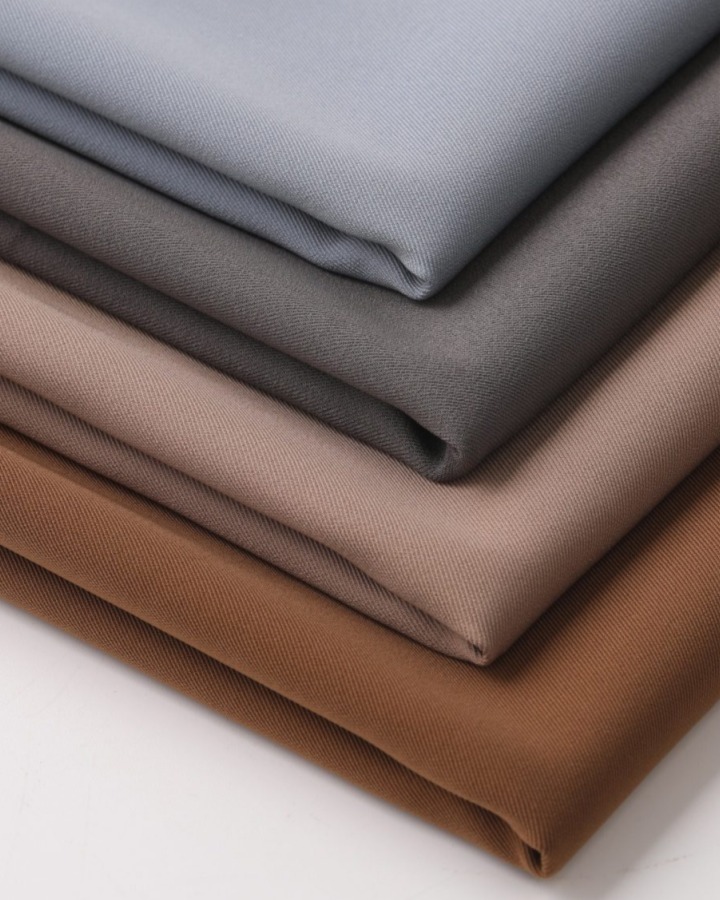
Spandex-Free
Mechanical Stretch
T400 · T800 · EME
What Is Spandex-Free Mechanical Stretch Fabric?
Spandex-free mechanical stretch fabric is a woven fabric whose elasticity comes from the yarn’s physical structure, not from any elastane content. The best-known yarn family is T400 — generic fiber name elastomultiester (EME) — a 100% polyester bicomponent filament: two polyester polymers (PET and PTT) spun side by side into a single yarn, each with a different thermal shrinkage rate.
The bicomponent spring inside every filament
After heat setting, the two polymers shrink at different rates. The result is a permanent three-dimensional helical crimp running along every single filament — in effect a tiny built-in micro spring. When the fabric is stretched the helix is pulled straight; when released it coils back. Because the elasticity is structural, it does not degrade with washing, UV or chlorine the way a polyurethane elastane molecule does.
Why buyers move pant programs from spandex to T400
For trousers, workwear, uniforms and outdoor garments, the stretch budget a designer actually needs is modest: 15–30% weft stretch with full recovery is the working range of a standard T400 woven. Within that range it outperforms spandex blends on the metrics that decide repeat orders: no knee bagging, dimensional stability through industrial laundering, colour fastness that reaches Grade 4 without doubling the dye bill, and a greige cost 10–20% lower because T400 yarns run directly on air-jet, water-jet and rapier looms — no covered-yarn or core-spun preparation step.
The full engineering comparison — including the 100 m greige shrinkage math and a nine-point sourcing checklist — is in our blog post on T400 fabric vs spandex, and the broader category is covered in our spandex-free stretch fabric guide.
Two generations we run
T400 polyester fabric (T400 in weft, regular polyester warp) is the volume workhorse for pants and uniforms. Its upgraded sibling, T800 fabric, pairs PET with PBT in the same side-by-side spinning — mostly drawn as DTY with a double-helix figure-8 cross-section — for more recovery, a softer hand and a higher greige cost. Both generations share our looms and dyeing lines, so moving a program between them is a spec change, not a retooling.
As a spandex-free mechanical stretch fabric manufacturer we run the whole chain in-house — spinning, warping, weaving, heat setting, dyeing and finishing — so the recovery figure on the spec sheet is a measured value, not a marketing claim.
T400, elastomultiester (EME) — same fiber, different names
In spec sheets and lab reports the same yarn often appears under its generic name: elastomultiester (EME). T400 and T800 are brand codes for bicomponent polyester stretch yarns within that family — regions and documents differ in which word they use, but the fiber, the crimp mechanism and the care rules are identical. When a customer brief says “T400” and a test report says “elastomultiester”, they describe the same spandex-free mechanical stretch fabric.
T400 Fabric · Basic Data
| Spec | Value |
|---|---|
| Composition | 100% polyester (PET + PTT bicomponent T400 yarn) |
| Yarn spec | 30D / 50D / 75D / 150D / 300D T400 |
| Stretch type | Mechanical (structural) — 0% elastane |
| Weft stretch | 15–30% (standard woven constructions) |
| Elongation range | 20–50% depending on weave & density |
| Elastic recovery | >85% after 500 repeated stretch cycles |
| Weight range | 50–300 gsm (production scope) |
| Width | 57/58″ (finished ~150 cm; greige 160 cm for sublimation) |
| Colour fastness | Standard Grade 3–4; Grade 4+ with high-fastness process |
| Weave options | Plain, twill, check, jacquard, double weave |
| Finishing | Sublimation print / C0 DWR / lamination / wicking |
| MOQ (custom colour) | 1000 m per colour |
| Eco-friendliness | 100% recyclable, mono-material polyester |
T400 vs T800: Two Generations of Mechanical Stretch
Both T400 and T800 are 100% polyester bicomponent weaves that stretch without any elastane — the difference is how hard the built-in spring works. T400 is the cost-effective classic for pants, uniforms and shirts; T800 upgrades the formula to PET + PBT for higher recovery, a softer hand and premium outdoor programs. The production sequence below is what we actually run on the floor for both.
T400 — PET + PTT, Cost-Effective
Two polyesters — PET and PTT — spun side by side into one bicomponent filament. Heat setting triggers their differential shrinkage, locking the permanent helical crimp into the finished cloth. The stretch is structural: 15–30% weft stretch that snaps back wash after wash, no elastane to age out.
Typical output: weft stretch 15–30%, elongation 27–32%, recovery >85% after 500 cycles; breaking strength ~10 cN/dtex.
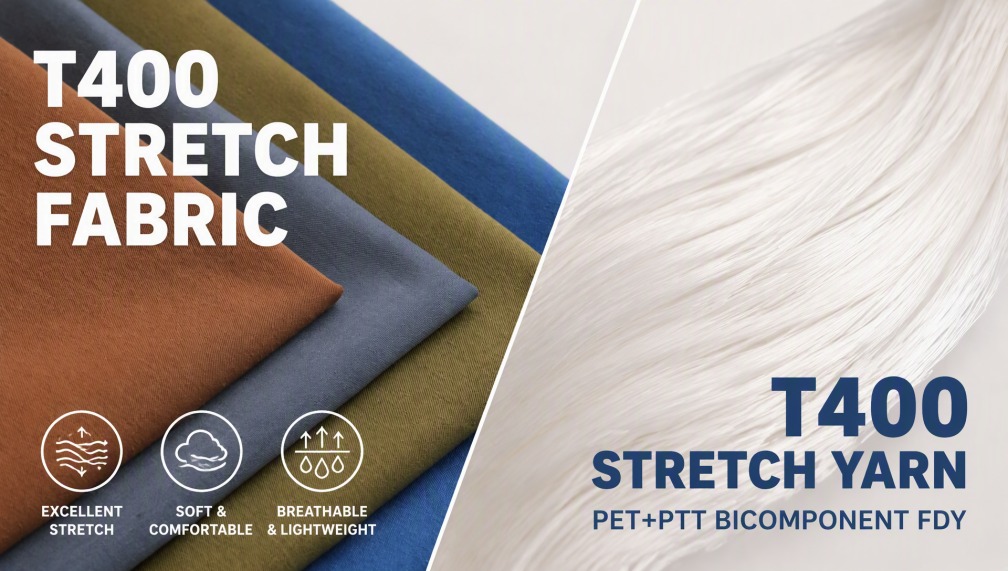
- PET + PTT spinning
- Warping
- Weaving
- Heat setting
- Dye & finish
T800 — PET + PBT, Premium
The same side-by-side bicomponent principle, upgraded: T800 pairs PET with PBT, is spun mostly as DTY, and carries an innovative double-helix figure-8 grooved cross-section. That spring works harder: recovery climbs past 92%, breaking strength nearly doubles, and after 50,000 stretch cycles T800 fabric keeps permanent deformation under 3% — the reason ski-suit and softshell brands pay the premium.
Typical output: stretch 20–30%, recovery ≥92%, breaking strength ~18 cN/dtex (1.8× T400), permanent deformation <3% after 50,000 cycles; matte, cotton-like hand feel.
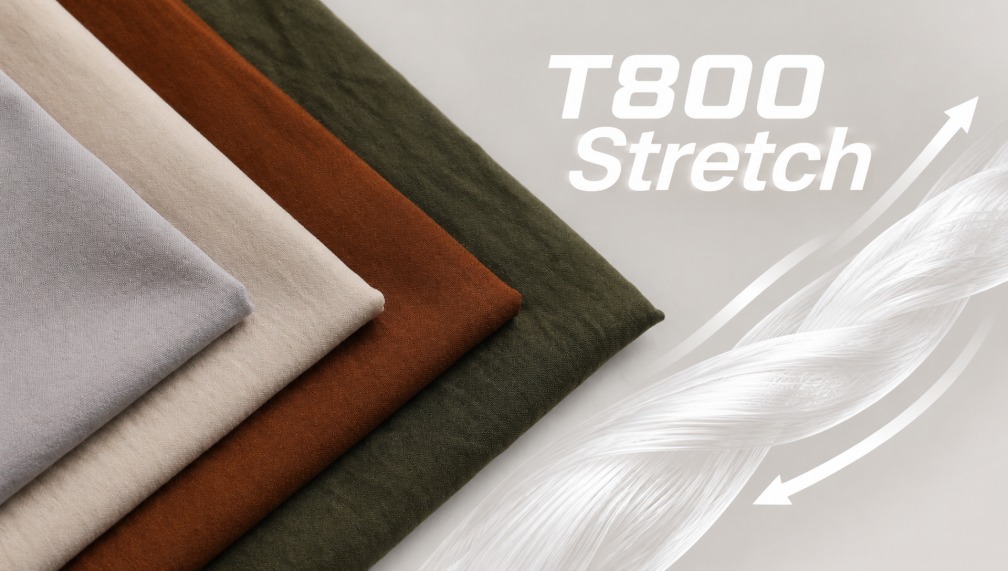
- PET + PBT spinning
- Warping
- Weaving
- Heat setting
- Dye & finish
Where each generation wins
The T400 generation is the workhorse when the spec calls for stable 15–30% stretch at the best greige price: pants, chinos, uniforms, stretch shirts, everyday outdoor. T800 is the upgrade when recovery and hand feel sell the garment: softshell jackets, 3-in-1 laminated ski suits, down-proof shells, athleisure and commuter wear. Same looms, same dyeing line — switching is a spec change, not a retooling.
Weave decides how much stretch survives
Both T400 and T800 yarns deliver different stretch depending on how tightly the structure grips them. Ranked from most elastic to most stable: double weave > jacquard > twill > check > plain weave. A tight plain weave with high warp density can lock the crimp almost dead — which is exactly the failure mode buyers describe as “weak T400” (see the sourcing pitfalls below).
T400 vs Nylon 4-Way Stretch vs Polyester 4-Way Stretch
Three stretch systems compete for the same garment programs: spandex-free mechanical stretch fabric (T400), nylon + elastane 4-way, and polyester + elastane 4-way. The table compares them on the nine points we get asked about most; the full T400 vs spandex engineering breakdown is in our T400 vs spandex blog post.
| Property | T400 (Mechanical Stretch) | Nylon 4-Way Stretch (Nylon + Spandex) | Polyester 4-Way Stretch (PES + Spandex) |
|---|---|---|---|
| Stretch direction | 2-way (weft); 4-way optional | 4-way by construction | 4-way by construction |
| Stretch power | 27–32% actual elongation — right size for pants & shirts | 35–43% each direction — movement with a soft, fluid drape | 29–35% weft-led — the budget 4-way workhorse |
| Recovery after 500 cycles | >85%, structural — stays there | Declines as elastane ages, washes, UV-exposes | Declines as elastane ages, washes, UV-exposes |
| Knee / seat bagging | No bagging — shape-memory effect | Bagging and sagging grow over the garment’s life | Bagging and sagging grow over the garment’s life |
| Abrasion resistance | Good — polyester face | Best — nylon face outlasts both | Good — comparable to T400 |
| Chlorine & chemicals | Withstands 500+ h chlorine exposure | Chlorine attacks the elastane chain — yellowing, snap loss | Chlorine attacks the elastane chain — yellowing, snap loss |
| Hand feel | Crisp, structured, tailored drape | Softest of the three, fluid drape | Crisp-to-peached, cotton-touch options |
| Weaving preparation | Direct on air-jet / water-jet / rapier looms | Covered or core-spun yarn preparation first | Covered or core-spun yarn preparation first |
| Greige cost | 10–20% lower than comparable spandex fabric | Highest — nylon yarn premium on top of elastane | Baseline |
| End-of-life recycling | 100% polyester — closed-loop recyclable | Nylon + elastane cannot be separated at scale | Elastane fraction cannot be separated at scale |
Choose T400 for pants, uniforms & shirts
Choose T400 fabric when the garment needs 15–30% stretch that survives industrial laundering, chlorine exposure or long sun hours: hiking pants, golf and travel trousers, workwear, school uniforms, stretch shirts, board shorts. Need a T400-family construction woven to your own spec? That runs through our custom woven fabric development route.
Choose nylon 4-way for softest hand + abrasion
Choose nylon 4-way when drape and abrasion sell the garment and the budget allows: premium softshells, tactical and ski outerwear, fitted jackets — categories where the nylon face earns its yarn premium. Spec details on our nylon 4-way stretch page.
Choose polyester 4-way for budget movement
Choose polyester 4-way when four-direction stretch is required at the lowest fabric cost: windbreakers, ski pants, casual jackets — accepting elastane-aging in exchange for the price point. Full range on our polyester 4-way stretch page.
Applications & Recommended Construction
B2B marketplace listings tell the story plainly: the volume inquiries are waterproof laminated shell and down-jacket fabrics, trousers and uniform jackets — and the fastest-growing T800 inquiries are 3-in-1 laminated ski suits and softshell. The four profiles below are where the mechanical-stretch advantage over spandex is worth real money on a repeat order.
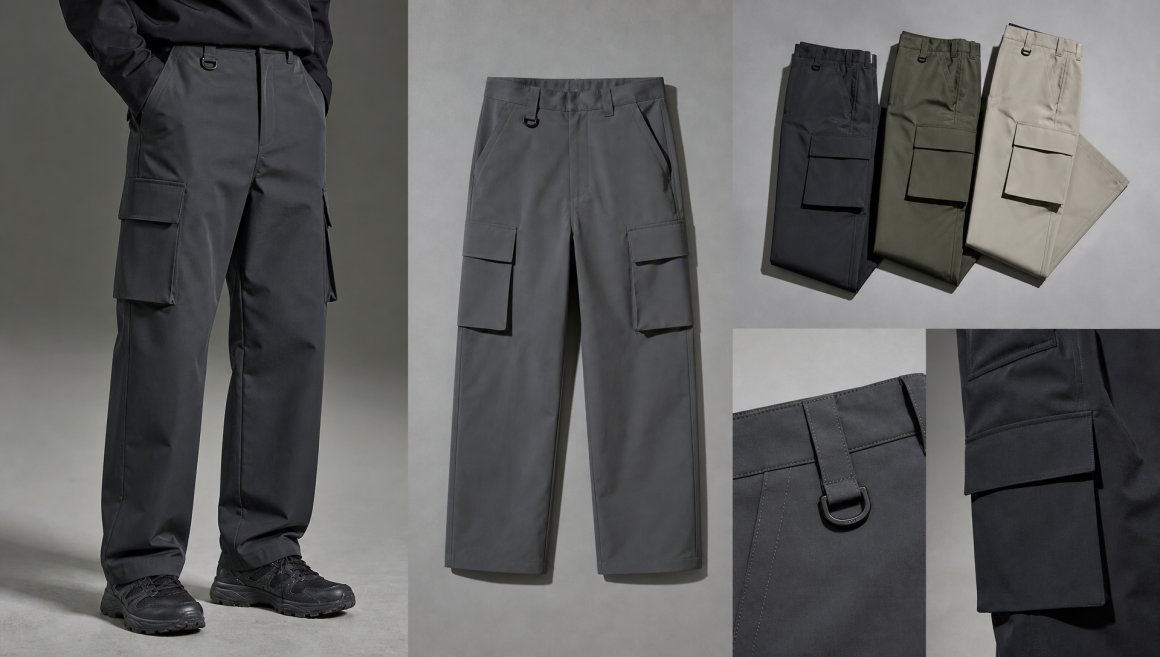
Casual Pants · Chinos · Travel Trousers
The flagship application. Enough weft stretch for a full stride, zero bagging at the knee after a season, dimensional stability that keeps tailored drape through repeated washing. No bagging means no returns — the single most common spandex-trouser complaint.
Recommended spec: 75D T400 twill, 150–180 gsm, 15–25% weft stretch
Waterproof Shells · Down Jackets
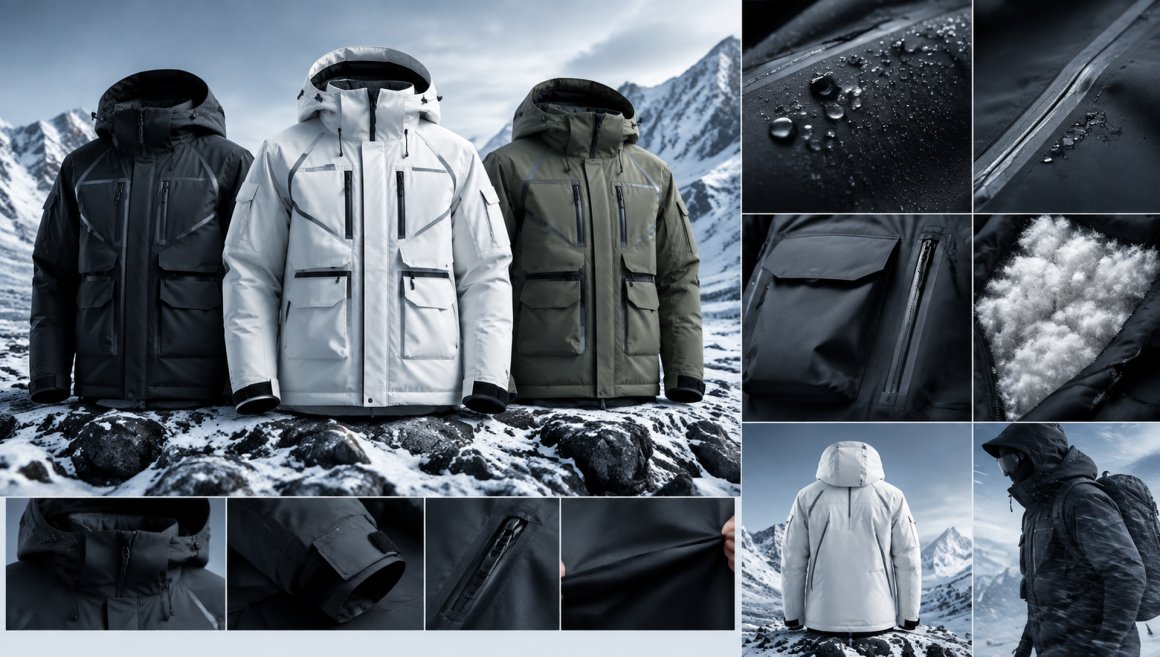
The listing pattern on every B2B platform: “T400 laminated TPU membrane, waterproof, windproof, downproof, outdoor jacket fabric.” Mechanical stretch lets the shell move without popping seams, while 100% polyester takes TPU lamination, C0 DWR and down-proof calendering without an elastane layer to delaminate. Pairs naturally with our laminated fabric line.
Recommended spec: 50D×75D T400 dobby, 140–170 gsm, TPU lamination or C0 DWR
Workwear · Uniforms · School Wear
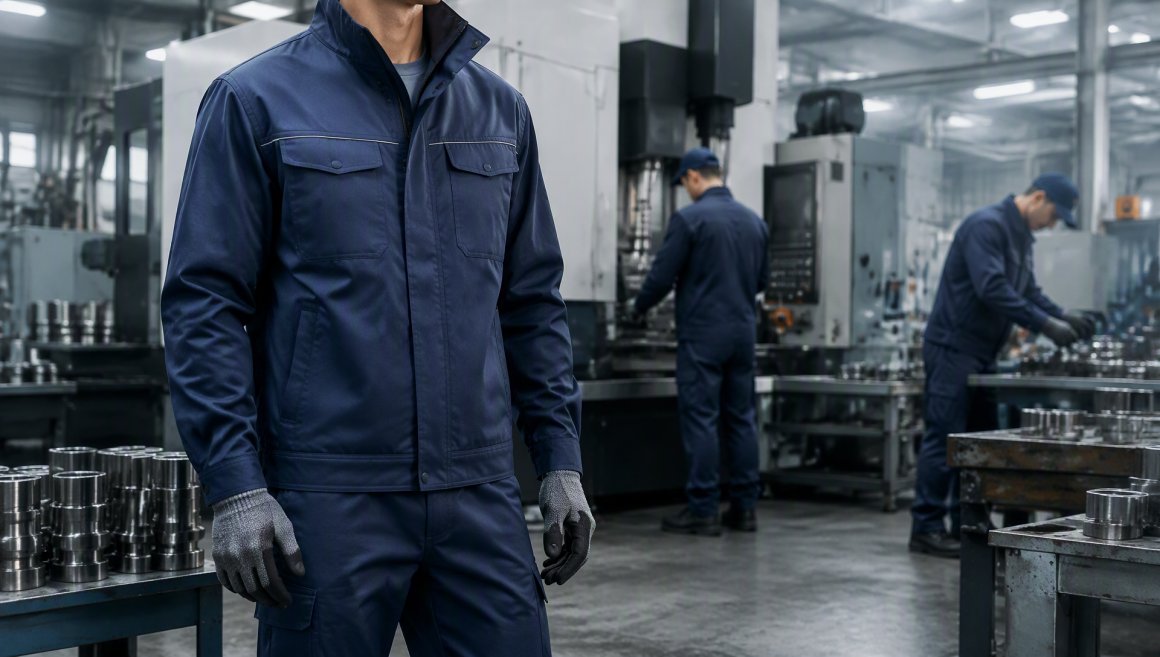
Industrial laundering is where elastane dies young — heat, bleach and alkali break it down season by season. Structural T400 stretch shrugs off the whole wash program, and Grade 4 colour fastness keeps uniforms looking issued, not washed-out. Greige costs 10–20% under the spandex equivalent.
Recommended spec: 150D T400 plain/twill, 180–220 gsm, C0 DWR option
Ski Suits · 3-in-1 Softshell (T800)
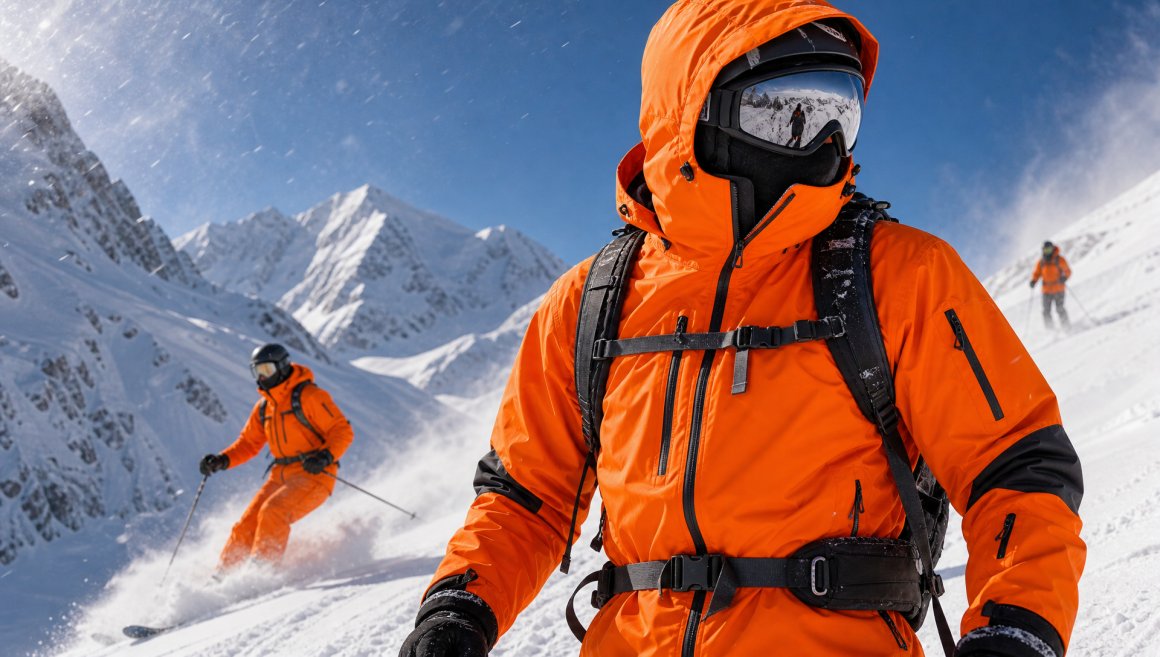
The T800 premium program: 75D T800 face fabric laminated with a breathable PU film and polar fleece into 3-in-1 ski and cold-proof workwear — the exact construction behind the best-selling “75D T800 softshell 3-in-1” listings. T800’s low creep keeps the silhouette through a full ski season, and the all-polyester build lets a T800 fabric program recycle where nylon-spandex shells cannot.
Recommended spec: 75D T800 plain, 140–160 gsm face; 3-in-1 laminated to ~310 gsm
Best-Selling Mechanical Stretch Fabrics
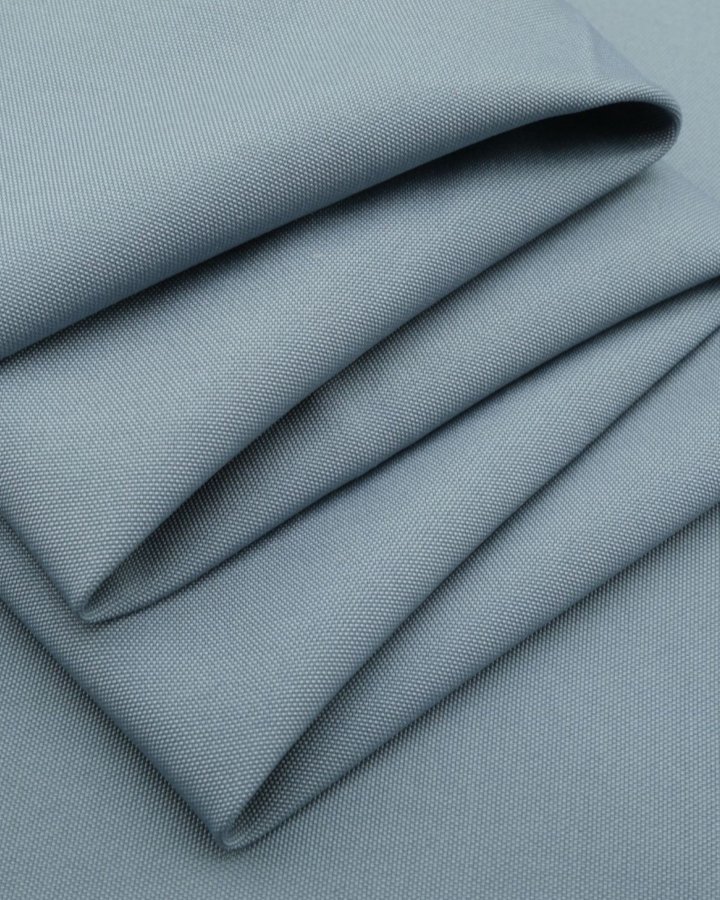
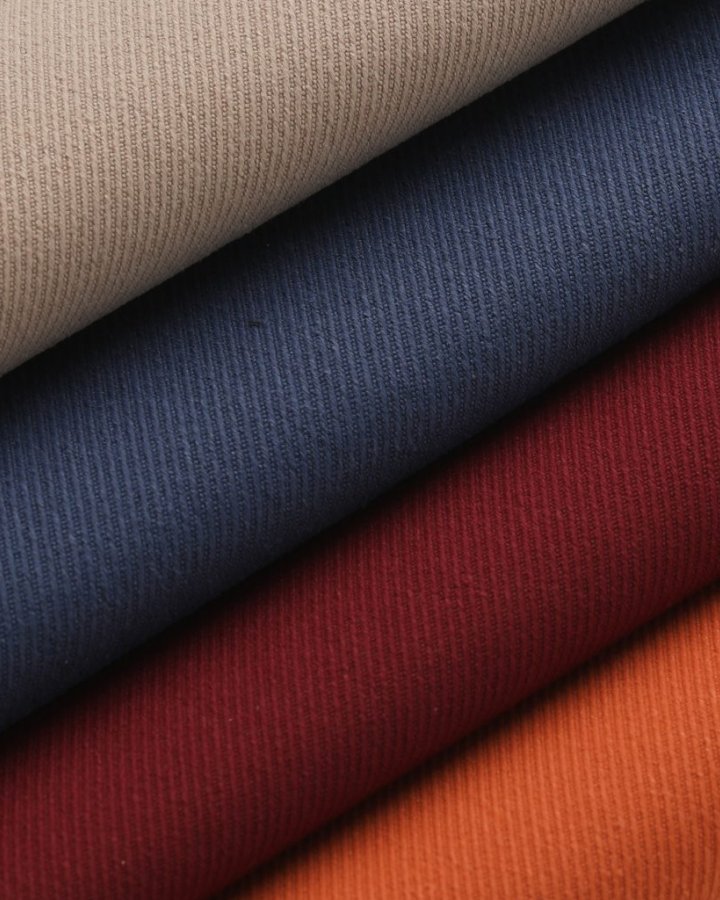
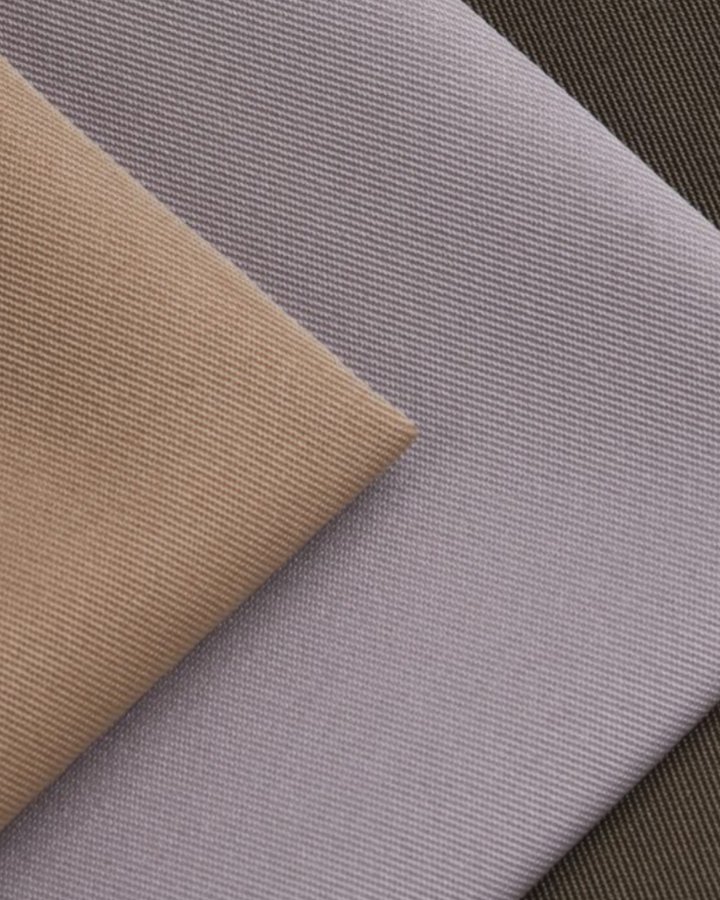
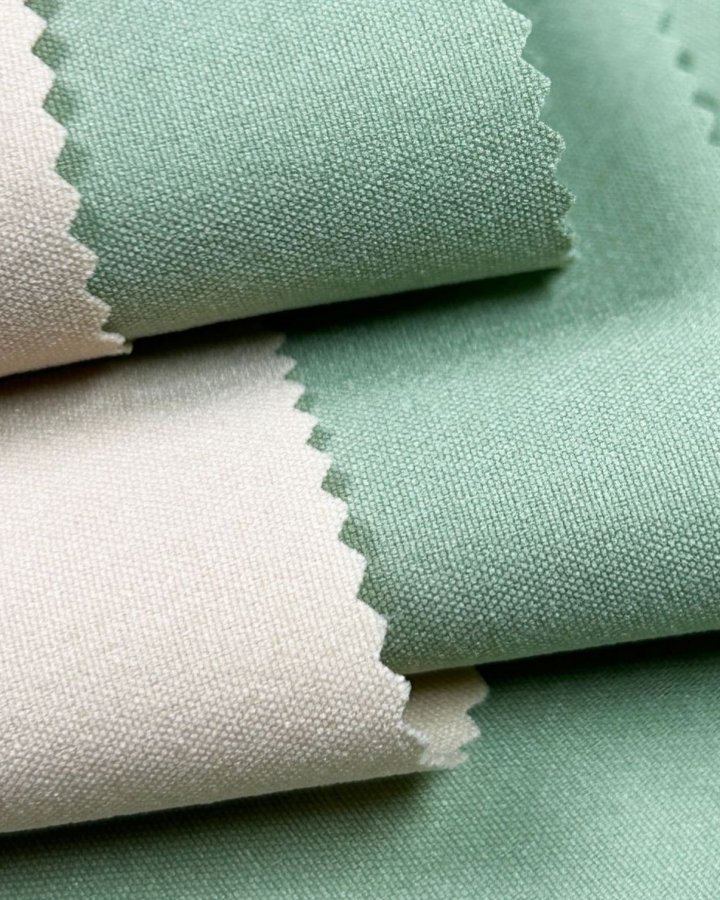
The five constructions that move the largest repeat volume on our mechanical stretch programme. Full specifications, greige availability and current stock lots are available on request — just name the item when you contact us.

T400 Sourcing Pitfalls — and the Mill Fix
Almost every “T400 didn’t stretch” complaint we audit comes down to construction and density decisions made before the loom, not the fiber itself. Five failure modes cover most of them.
Recovery is weak right off the roll
The complaintSample stretches fine but sags back slowly; garment testing fails the recovery spec.
Why it happensCost-cutting, not the fiber. Budget “T400” swaps in ordinary polyester warp and cuts the T400 share to a minimum — for example 98 ends/inch of regular polyester warp locking down just 30 picks/inch of T400 weft. The over-dense warp pins the crimp, so the little bicomponent weft never gets to coil and recover.
Mill fixWe declare the T400 share and the ends/picks per inch before sampling, and keep T400 in the weft where the stretch budget lives — what you approve is what ships.
Sublimation print shrinks the width
The complaintPrinted panels come back narrower than the marker planned — cutting waste climbs, and in severe lots the print pattern itself distorts.
Why it happensAt 210–220 °C the helical crimp pulls the weft in — the same mechanism that gives stretch also shortens the width under heat.
Mill fixTell us the finished width you need after printing. Before shipment we run a simulated print-temperature test on every lot and release only the lots that pass. For sublimation programs we recommend having us produce the fabric — greige, test and finish under one roof.
Width and stretch drift inside a single roll — 140 cm vs 160 cm
The complaintA T400 or T800 roll arrives at 140 cm at one end and 160 cm at the other, with stretch varying along with the width. Marker planners cannot lay it efficiently, and the elastic hand shifts between panels cut from the same roll.
Why it happensTwo root causes, usually stacked. (1) Inferior bicomponent yarn with uneven PET/PTT (or PET/PBT) ratio along the package — the two polymers shrink by different amounts, so the crimp forms unevenly across the cloth. (2) Heat-setting temperature or line speed drifting during finishing — the fabric does not receive enough, or receives uneven, thermal input, and the crimp locks in inconsistently along the roll.
Mill fixBefore every dye lot we cut a 20 m greige trial and check the raw shrinkage curve — only lots with stable shrinkage are released into production. During heat-setting our QC merchandiser is on the line, logging stenter zone temperatures and line speed so the thermal profile is held constant roll to roll.
The whole size run drifts out of tolerance after the first wash
The complaintA garment factory spreads fabric straight off the roll, sews the full cut — and after the first garment wash every panel shrinks back and the size run falls out of tolerance. Bulk claims, not sample disputes, are where stretch fabric gets expensive.
Why it happensA stretch woven carries residual relaxation shrinkage until it has been fully relaxed and pre-shrunk. Cutting floor-fresh goods bakes that residual shrinkage into every panel — and once the garments are sewn, the loss cannot be reclaimed.
Mill fixEvery lot is pre-shrunk and relaxed before dispatch and ships with its measured wash-shrinkage data; we advise 24 h relaxation on the cutting floor before spreading. Programs cut to our data stay in tolerance wash after wash.
Fastness misses on deep shades
The complaintBlack, bright red and other highly saturated shades miss the wash/perspiration fastness grades the brand spec requires.
Why it happensT400 is dyed with disperse dyes, and finishing heat-sets the fabric at 185–190 °C. At that temperature disperse dye can migrate back out of the fibre — which is exactly where deep, saturated shades lose their fastness margin first.
Mill fixHigh-fastness dye routing closes the gap to Grade 4+ at a ~1.3× dye upcharge — versus roughly double for the same grade on spandex blends.
The recyclable stretch fabric
Because T400 fabric is 100% polyester, the whole fabric — stretch included — enters the same recycling stream as regular PET textile. No elastane fraction to separate, no downgrading penalty. If your program requires recycled content, that comes from fabrics woven with GRS-certified recycled polyester — a different yarn system. What T400 itself guarantees is mono-material recyclability, and it still takes C0 fluorine-free water-repellent finishing for PFAS-free programs.
For brands auditing green claims, this is the difference between a stretch fabric that is less bad and one that is structurally circular: mechanical stretch keeps the mono-material promise that spandex blends cannot make.
Recyclable polyester share by stretch system
Recyclable share of fibre weight — the polyester fraction that closed-loop lines can actually process.
Frequently Asked Questions
What is T400 fabric and how does it stretch without spandex?
T400 fabric is a woven fabric made from a 100% polyester bicomponent yarn: PET and PTT polymers spun side by side. Heat setting makes the two shrink at different rates, creating a permanent helical crimp inside each filament — a micro spring that stretches and recoils structurally, with no elastane anywhere in the yarn.
T400 vs spandex: which is better for pants?
Depends on the design brief. For structured pants — trousers, chinos, uniforms — T400 is the fit: 15–30% stretch with 85%+ recovery, no knee bagging, and greige cost 10–20% below the spandex equivalent. If your design calls for a softer, more fluid hand feel or a high-elasticity, body-hugging fit, spandex blends are the better tool — that is exactly what they are made for. We weave both, so tell us the garment and we will recommend the system. Full comparison in our T400 vs spandex post.
Does T400 fabric bag at the knees like spandex fabrics?
No. Bagging in spandex blends happens as the elastane molecule ages and stops recoiling. T400 elasticity is the yarn’s physical structure, so recovery stays above 85% after 500 repeated stretch cycles — the fabric keeps the shape it was heat-set to.
Does T400 fabric yellow or lose stretch in chlorinated pool water?
No — chlorine resistance is a core T400 advantage: 500+ hours of exposure without yellowing, stiffening or snap loss. That is why it suits linings, board shorts and poolside apparel that sees chlorinated water all season. For tight, compression-fit competitive swimwear, elastane blends remain the standard — their stretch profile matches those silhouettes better.
How does T400 behave in sublimation printing?
It prints well — the watch item is width. At 210–220 °C the crimp pulls the weft in, so we ship sublimation greige at 160 cm to finish at 150 cm and pre-shrink every lot. Confirm the finished width with us before your marker is cut.
What is the difference between T400 and T800?
Both are spandex-free bicomponent stretch yarns. T400 pairs PET with PTT and is the mature, mass-produced workhorse. T800 pairs PET with PBT via DTY processing — higher recovery (≥92%), roughly 1.8× the breaking strength, and a fit for premium outdoor. T400 remains the volume answer on price and availability.
Is T400 fabric recyclable or GRS-certifiable?
On recyclability, yes — T400 fabric is 100% polyester, so the whole fabric stays mono-material recyclable at end of life, and it takes C0 fluorine-free DWR for PFAS-free programs. If your program requires recycled content, that comes from fabrics woven with GRS-certified recycled polyester, which is a different yarn system from T400.
What is your MOQ and lead time for T400 fabric?
Custom dyeing runs from 1000 m per colour. Lab dips take about 4 days for approval, bulk dyeing 10–15 days after confirmation, and finishing adds roughly 3 days. Hand samples ship in 4–7 working days, quoted against your real specification.
Is T400 the same as elastomultiester (EME)?
Yes — elastomultiester (EME) is the generic fiber name; T400 is a brand code for one bicomponent PET/PTT yarn in that family, and T800 is its PET/PBT sibling. Mills, labs and customs paperwork may use either term for the same spandex-free mechanical stretch fabric, so check the bicomponent content rather than the name on the label.