

1. Basic Fabric Specification Introduction
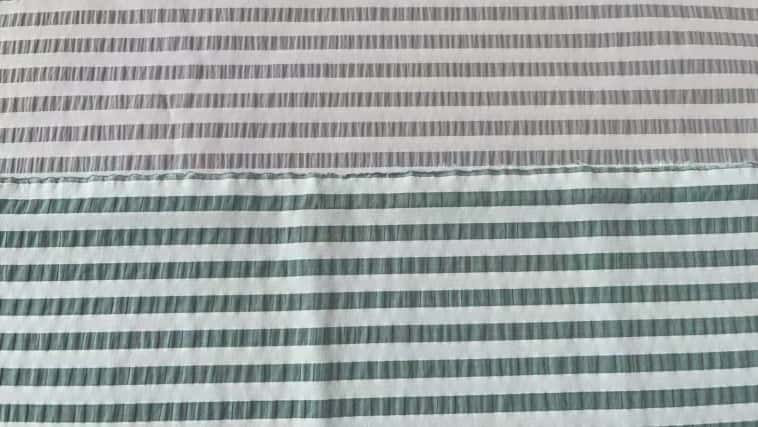
This case focuses on an upgraded Chlorine-resistant Fabric — polyester-nylon double-color bubble stripe fabric. The detailed warp & weft yarn configuration, weaving arrangement and finished fabric style are listed as follows:
- Warp Yarn: 75D Full-dull Polyester DTY
- Dual-component Weft Yarn: Weft A: 70D Full-dull Nylon DTY; Weft B: 75D Full-dull Polyester DTY covering 40D Spandex elastic yarn
- Weft Yarn Circulation Arrangement: Woven in a cycle of 20 pieces of Weft A + 20 pieces of Weft B, forming regular vertical double-color stripes
- Unique Finished Fabric Style: Clear polyester-nylon double-color contrast stripes after dyeing; natural wrinkled bubble texture on fabric surface formed by elastic shrinkage of spandex yarn
2. Complete Project Timeline & Project Background—Chlorine-resistant Fabric
Time Node 1: Initial Cooperation (3 Years Ago)
We took the initiative to recommend this featured double-color bubble stripe fabric to our long-term apparel customer. The customer recognized its unique surface texture and comfortable elastic handfeel, and adopted this fabric for mass production of men’s casual long-sleeve shirts.
Time Node 2: Repeat Order Placement (March 10 This Year)
Three years later, the brand designer selected this vintage double-color bubble fabric again for a repeat order, which was used for new summer outdoor beach shorts. The customer did not update the terminal application scenario, swimming pool water contact requirement, nor propose upgrading chlorine-resistant performance throughout the whole communication process.
Time Node 3: Mass Production & On-time Delivery (March 12 – March 25)
We followed the original mature production process without any technical adjustments. Two core indicators were strictly controlled during production: C0 fluorine-free waterproof finishing and level-4 water washing color fastness. All quality inspections passed, and bulk fabrics were delivered on time with no quality complaints from the customer after receiving goods.
3. Sudden Quality Problem & Root Cause Analysis
3.1 Sudden Quality Complaint (April 28, 33 Days After Delivery)
The customer sent real photos of discolored finished garments unexpectedly, reporting that large-area uneven severe discoloration occurred during the wear test of finished beach shorts. Obvious color difference appeared on garments, making them unsalable and bringing huge new product launch risks to the customer.
3.2 Primary Self-inspection & Preliminary Screening (April 28)
We launched traceability inspection immediately after receiving the complaint. The reserved fabric samples before delivery were retested for water washing fastness, dry rubbing fastness and wet rubbing fastness. All conventional color fastness indicators remained stable at Level 4 and met export standards with no abnormality in basic fabric physical properties. We drew a preliminary conclusion: The fabric has qualified conventional quality, and the discoloration is not caused by daily washing, but triggered by special environmental factors.
3.3 In-depth Communication & Confirmation of Root Cause (April 29)
After rounds of detailed communication, we restored the actual wearing scenario: The fabric was used for outdoor beach shorts. When consumers wore the garments in swimming pools, the fabric contacted chlorine-containing water added for water purification, resulting in rapid oxidative discoloration.must use Chlorine-resistant Fabric .
| Supplementary Technical Principle: Nylon fiber has extremely poor natural chlorine resistance, whose dye chromophore is easily oxidized and damaged by active chlorine in pool water. Besides, spandex-containing fabric requires high-temperature heat setting, which further weakens the binding force between dye and fiber. With a complex double-color dyeing system, the original polyester-nylon blended fabric has no Chlorine-resistant Fabric protection function, leading to irreversible fading and color shift once contacting chlorine water. |
3.4 Core Contradictions of This Complaint
- The customer changed garment style from daily shirts to pool beach shorts, without updating application scenarios and chlorine-resistant performance requirements;
- We reproduced fabrics based on previous mature orders without proactive risk reminder or targeted upgrade to professional Chlorine-resistant Fabric process;
- Official new product promotion materials had been released in advance with fixed launch schedule, so order delay was not allowed and urgent supplementary fabric production was required;
- The original polyester-nylon & spandex blended fabric has inherent defects: limited color fastness of dual polyester-nylon components, plus high-temperature setting requirement for spandex yarn. It is technically impossible to reach Level 4 chlorine resistance and achieve zero discoloration based on the original formula.
4. Multi-party Negotiation & Customized Rectification Solution
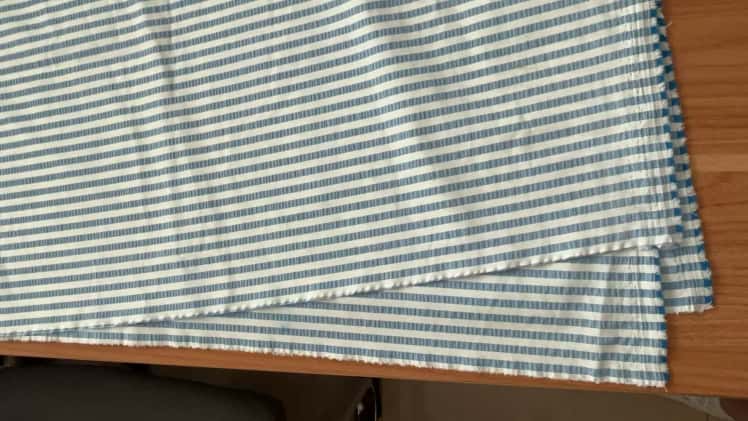
We timely informed the customer of the inherent technical limitations of the original fabric, and held three rounds of online special negotiation meetings. Both sides finally reached a consensus: Completely replace fabric yarn components to upgrade to qualified Chlorine-resistant Fabric, while retaining the original double-color stripe appearance and surface bubble wrinkled texture without any visual difference, so as not to affect finished garment version and official promotion images.
4.1 Yarn Component Optimization Scheme (Unchanged Appearance, Updated Raw Materials Only)
- Unchanged Warp Yarn: Still adopt 75D full-dull polyester DTY to keep identical fabric base handfeel, weight and width as original samples
- Updated Weft A: Replace chlorine-sensitive 70D full-dull nylon DTY with 75D cationic polyester yarn
- Updated Weft B: Cancel spandex-covered yarn, replace with 75D full-dull polyester T800 elastic yarn (spandex-free)
- Unchanged Weft Circulation: Keep the original weaving cycle of 20 pieces of Weft A + 20 pieces of Weft B to ensure consistent stripe density and spacing
4.2 Optimized Dyeing Process (Guarantee Consistent Double-color Effect)
Adopt low-temperature differential dyeing process: Only dye cationic yarn under low temperature condition, while conventional polyester yarn will not be colored at low temperature. The double-color stripe effect consistent with original polyester-nylon fabric is realized via different dyeing properties of two types of polyester yarns.
4.3 Reproduction of Bubble Wrinkled Texture
Abandon the original spandex shrinkage wrinkling mechanism. Rely on the unique thermal shrinkage performance of T800 polyester elastic yarn, we precisely control setting temperature and machine speed during finishing process. The same natural bubble wrinkled surface is reproduced by differential yarn shrinkage with zero texture difference.
4.4 Rectification Result & Delivery Schedule (Completed Delivery on May 8)
The optimized fabric passed third-party professional chlorine resistance test and reached Level 4 chlorine fastness standard, becoming qualified Chlorine-resistant Fabric with stable performance against chlorine water discoloration. It is 1:1 identical with original fabric in stripe appearance, bubble handfeel, fabric weight and width. We completed supplementary delivery successfully, helping the customer launch new products on schedule without order loss or brand public opinion risks.
5. Project Review & Industry Experience Sharing
This emergency rectification case of Chlorine-resistant Fabric reflects the critical importance of pre-order communication and scenario-based fabric selection. Fabrics with identical appearances have totally different functional indicators for different application scenarios. Daily wear garments require no chlorine resistance, while outdoor water-contact and swimming pool garments must takeChlorine-resistant Fabric as a mandatory performance indicator in advance.
The core cause of this quality problem is not unqualified fabric production, but asymmetric information after garment style and usage scenario adjustment. The customer only focused on appearance restoration but ignored special functional requirements for water-contact scenarios; we reproduced fabrics strictly following historical orders without proactive scenario risk inquiry.
Fabric production is never simple repetitive processing according to old orders. Professional fabric suppliers with rich industrial experience should proactively predict potential terminal risks and remind customers of performance upgrading based on actual garment application scenarios. Adequate pre-order communication can avoid huge losses such as bulk garment scrapping, urgent supplementary production and delayed product launch. We can further upgrade our service from simple fabric supply to one-stop full-scene fabric risk control solution.