Preface: Overview of Three Major Fabric Waterproofing Technologies
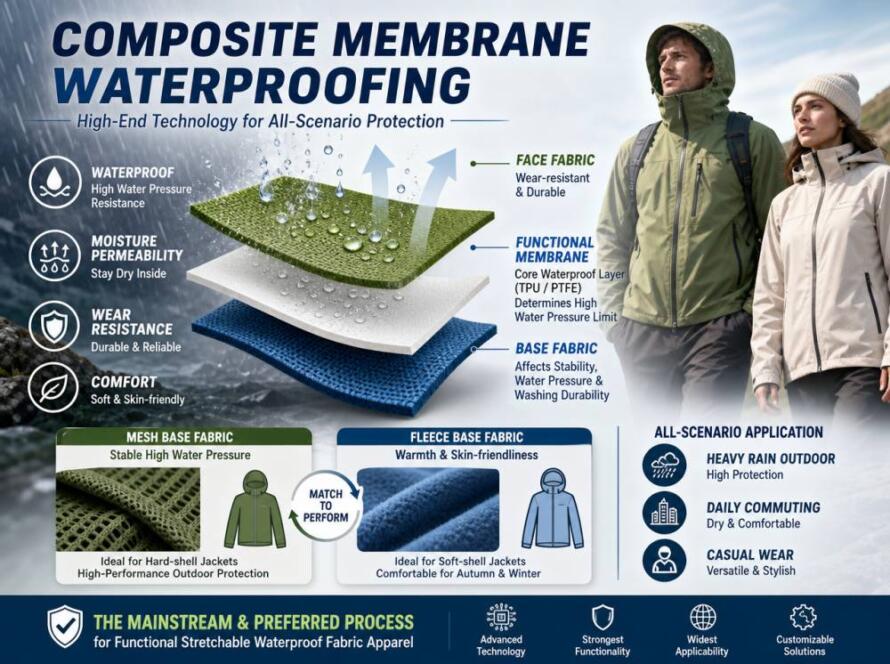
waterproof stretch fabric technologies are mainly divided into three core systems: auxiliary waterproofing, film lamination waterproofing, and coating waterproofing. Each system differs greatly in air permeability, hand feel, hydrostatic pressure resistance and application scenarios, serving as the core selection basis for functional fabrics. This article focuses on the most widely used auxiliary waterproofing technology, which is the mainstream finishing method for waterproof stretch fabric and most daily functional textiles.( Learn more about the production methods of waterproof fabrics-links )
1. Auxiliary Waterproofing (DWR Water-Repellent Finishing)
It is a surface modification technology that forms a hydrophobic protective film only on the fiber surface. It maximally retains the original air permeability, soft hand feel and drape of the fabric without changing the fabric thickness and texture. It mainly provides water repellency rather than high-pressure waterproof performance with limited hydrostatic resistance, suitable for daily water repellency, stain resistance and light rain protection scenarios. It is the most versatile and widely adopted waterproof treatment for waterproof stretch fabric and conventional functional fabrics.
2. Film Lamination Waterproofing
By laminating polymer microporous films or hydrophilic functional films, this technology achieves an optimal balance between waterproof performance and moisture permeability. It is the core technology of high-end outdoor jacket fabrics. Relying on microporous structures or hydrophilic groups, it blocks liquid water and discharges water vapor, realizing breathable waterproof performance, which is commonly applied in high-grade outdoor apparel instead of conventionalwaterproof stretch fabric.
3. Coating Waterproofing
This method coats heavy waterproof slurry on the fabric surface, achieving excellent waterproof capability at the cost of air permeability. The finished fabric features poor air permeability but extremely high hydrostatic pressure resistance and stable waterproof sealing performance. It is mostly used for raincoats, tarpaulins, tents and heavy-duty waterproof products, rarely used for soft waterproof stretch fabric that requires comfort and elasticity.
I. General Production Process of Fabric Three-proof Waterproof Finishing (Applicable to C0/C6/C8)
All C0 fluorine-free, C6 short-chain fluorinated and C8 long-chain fluorinated auxiliaries adopt a standardized production process: pre-treatment → padding → pre-drying → setting. The overall procedure is unified, with differences only in auxiliary formulas, baking temperatures and process parameters, which jointly determine the durability and performance of waterproof stretch fabric.
1. Fabric Pre-treatment (Core Premise)
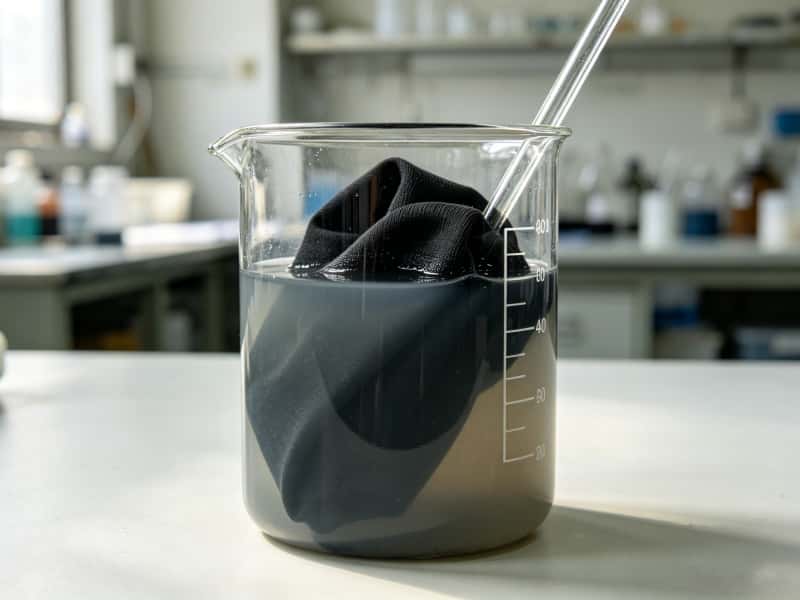
Before waterproof finishing, fabrics must complete desizing, scouring, full water washing and pre-setting to ensure no slurry residue or oil contamination on the fabric surface, with the pH value stabilized at a neutral range of 5–7. Residual impurities and unbalanced pH values will damage the cross-linking and film-forming effect of auxiliaries, resulting in uneven waterproof performance, local failure and reduced washing durability. This is the most common process defect in mass production of waterproof stretch fabric.
2. Padding Feeding
Adopt one-dip-one-pad or two-dip-two-pad technology to evenly infiltrate the fiber surface with three-proof auxiliary emulsion. The padding pick-up rate is strictly controlled at 15%–25% for chemical fiber fabrics to ensure uniform auxiliary penetration and consistent performance on both fabric sides, avoiding partial waterproof failure and weak areas on waterproof stretch fabric.
3. Pre-drying Process (Exclusive for High-standard Premium Orders)
Slow low-temperature drying is carried out at 80–110℃ to gradually evaporate internal fabric moisture. It prevents rapid surface film formation and insufficient internal penetration caused by direct high-temperature baking, effectively avoiding surface whitening, waterproof layer peeling and poor washing resistance of finished waterproof stretch fabric. This procedure can be omitted for conventional ordinary orders.
4. High-temperature Setting
Match the optimal setting temperature according to fabric materials (nylon, polyester, blended fiber, etc.) to stabilize fabric width and texture, eliminate wrinkles, and prevent fabric hardening and deformation after finishing. This step finalizes the complete three-proof finishing of qualified waterproof stretch fabric.
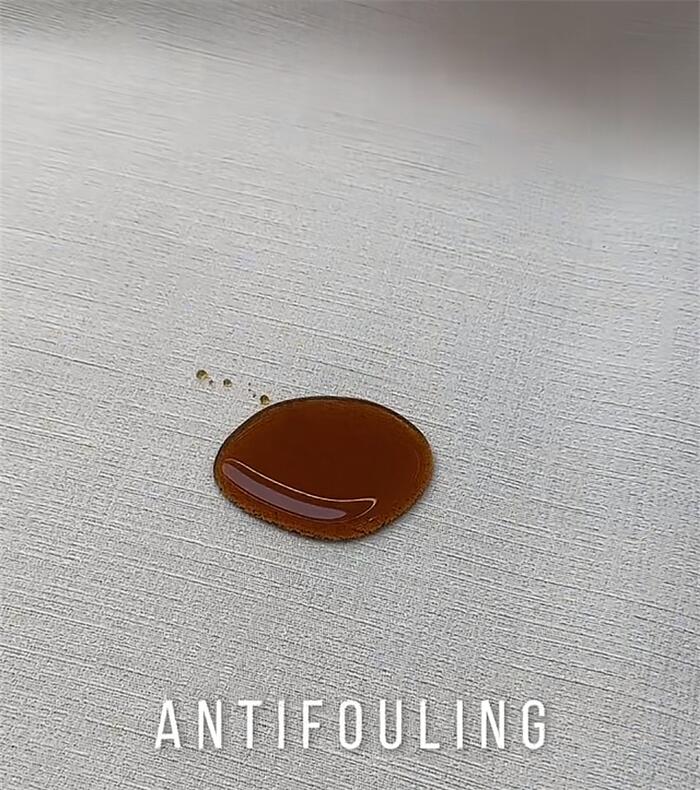
II. Core Production Principles and Formula Characteristics of C0/C6/C8 Waterproof Auxiliaries
1. C8 Long-chain Fluorinated Three-proof Auxiliary (Traditional High-performance Type)
Production Principle: Adopt perfluorinated long-chain hydrocarbon compounds as core raw materials to synthesize high-molecular fluorinated polymers via telomerization and electrolysis polymerization. The C8 long-chain molecules form a highly ordered and dense protective film on the fiber surface with strong hydrophobic and oleophobic activity, delivering excellent and stable three-proof performance for treated fabrics.
By-products & Risks: The production process inevitably produces persistent organic pollutants PFOA and PFOS. These substances are non-biodegradable with bioaccumulative toxicity, strictly restricted and banned by global regulatory authorities.
2. C6 Short-chain Fluorinated Three-proof Auxiliary (Mainstream Eco-friendly Alternative)
Production Principle: Optimize the carbon chain structure and abandon high-risk C8 long chains, adopting safe perfluorohexyl short-chain molecules for polymerization and synthesis. Modified branched structures enhance molecular arrangement stability. The production process is similar to C8, but fundamentally cuts off the generation path of PFOA and PFOS from the raw material end, making it the preferred auxiliary for export-grade waterproof stretch fabric.
By-products & Risks: No excessive PFOA or PFOS residue. Trace impurities can be completely removed via purification processes with undetectable residues in finished products, complying with international mainstream environmental regulations and certifications.
3. C0 Fluorine-free Waterproof Auxiliary (Pure Eco-friendly Zero-fluorine High-grade Type)
Production Principle: The formula is 100% fluorine-free, with core raw materials including acrylic ester, polyurethane, silicone and bio-based wax emulsion. Synthesized through emulsion polymerization and modified emulsification technology, it achieves fabric water repellency relying on high-molecular film-forming properties and hydrophobic group accumulation, suitable for environmentally friendly waterproof stretch fabric for close-fitting wear.
By-products & Risks: Zero fluorine, zero PFOA/PFOS, zero APEO, no harmful residues during production, and finished products are fully biodegradable. It represents the highest environmental protection level of current textile waterproof auxiliaries.
III. In-depth Environmental Grade Comparison of C0 / C6 / C8
Environmental performance is the core distinguishing standard of the three auxiliaries, directly determining the export qualification, brand access and testing compliance of fabrics, adapting to international authoritative certification systems such as OEKO-TEX and Bluesign, especially crucial for exported waterproof stretch fabric.
- C8 Long-chain Fluorine Auxiliary: Non-compliant with environmental standards and prohibited for foreign trade. Contains high-residue PFOA and PFOS with strong durability and biological toxicity, failing to pass European and Japanese high-end market inspections. Only applicable to low-end domestic fabrics with no environmental requirements, forbidden for branded foreign trade, maternal and infant textiles and close-fitting apparel.
- C6 Short-chain Fluorine Auxiliary: Moderately eco-friendly and mainstream for foreign trade. No harmful fluorine precipitation or excessive PFOA/PFOS residues, stably passing global mainstream environmental tests. It balances high-standard three-proof performance and environmental compliance, becoming the first choice for outdoor fabrics and export-grade waterproof stretch fabric.
- C0 Fluorine-free Auxiliary: Top-level eco-friendly with full-scenario compliance. Zero fluorine and zero toxic residues, fully biodegradable without any foreign trade environmental barriers. Ideal for maternal and infant fabrics, close-fitting apparel, high-end home textiles and high-standard eco-friendly export orders.
IV. Detailed Three-proof Performance Comparison of C0 / C6 / C8
The core three-proof capabilities include water repellency, oil resistance, stain resistance, washing durability and hand feel retention. The comprehensive performance ranking is: C8>C6>C0, which directly decides the grade and application of finished waterproof stretch fabric.
1. Water Repellent Performance (Core Basic Function)
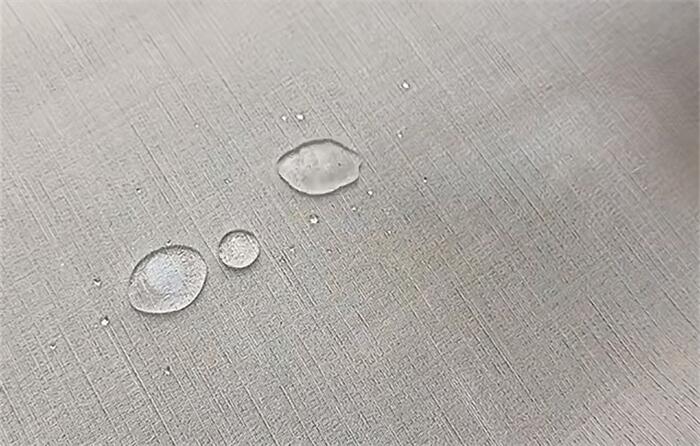
- C8: Top-tier water repellency with excellent lotus leaf effect, reaching Grade 5 national waterproof standard. It delivers outstanding dynamic waterproof performance and high hydrostatic pressure resistance, resisting short-term heavy rain and water immersion with extremely stable waterproof effect.
- C6: High-level waterproof performance close to C8. High-end modified C6 products are comparable to C8, fully meeting daily rain and outdoor commuting scenarios, only slightly inferior to C8 under extreme heavy rainfall conditions.
- C0: Basic water repellency only realizes surface water droplet rolling with no high-pressure water resistance. It is prone to water penetration under long-term immersion or high-pressure sprinkling, only suitable for daily light water repellent scenarios.
2. Oil & Stain Resistance (Differentiated Core Advantage)
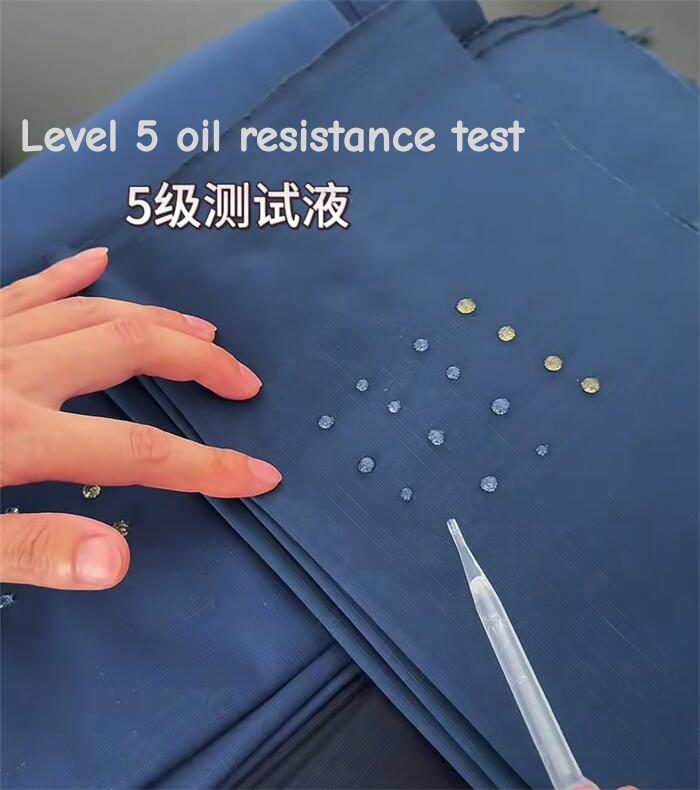
- C8: All-round three-proof performance (waterproof + oil-proof + stain-proof). It effectively resists adhesion of engine oil, edible oil, dust and mud with easy-to-clean stains and excellent long-term antifouling performance.
- C6: Complete three-proof system with excellent oil and stain resistance. Its maximum oil resistance is slightly lower than C8, but fully meets the antifouling needs of outdoor clothing, workwear and luggage fabrics, delivering the best cost performance for commercial waterproof stretch fabric.
- C0: Only single waterproof function with no oil and stain resistance. Oil stains and oily liquids can directly penetrate the fabric, unable to achieve genuine three-proof finishing.
3. Washing Durability (Core of Functional Stability)
- C8: The best washing durability, tolerating 30–50 washes with slow functional attenuation and stable long-term performance.
- C6: Excellent washing resistance. Conventional grades withstand 20–30 washes, and high-end modified C6 grades are close to C8 standards, meeting multiple washing and long-term wearing requirements of finished waterproof stretch fabric garments.
- C0: Weak washing durability, only tolerating 5–10 washes. The waterproof film falls off rapidly after repeated washing, resulting in sharp attenuation of waterproof performance and requiring secondary finishing for recovery.
4. Fabric Hand Feel & Appearance Effect
- C8: Thick film formation easily causes slight fabric hardening and dry hand feel after long-term finishing.
- C6: Thin and uniform film formation with soft and natural hand feel after finishing. It does not damage the original texture, drape and air permeability of the fabric, with no whitening or stiffness, perfectly retaining the elasticity and comfort of waterproof stretch fabric.
- C0: Requires high auxiliary dosage. Improper process control easily leads to stiff hand feel, surface whitening and residual marks on the fabric.
V. Applicable Scenarios of Three Auxiliaries (Production & Purchasing Selection Guide)
- C8 Long-chain Fluorine Auxiliary: Suitable for low-end domestic products with no environmental audit and strict three-proof requirements, such as ordinary workwear and conventional luggage fabrics; prohibited for foreign trade orders, maternal and infant products, high-end apparel and branded orders.
- C6 Short-chain Fluorine Auxiliary: Industry mainstream preferred option, suitable for outdoor jackets, high-end luggage, workwear and export functional fabrics. It perfectly balances environmental compliance and full three-proof performance, serving as the most cost-effective solution for commercial waterproof stretch fabric.
- C0 Fluorine-free Waterproof Auxiliary: Suitable for maternal and infant clothing, close-fitting knitted fabrics, shirts, home textiles and high-standard eco-friendly export orders, only for scenarios requiring pure waterproof performance without oil and stain resistance.
VI. Core Selection Summary
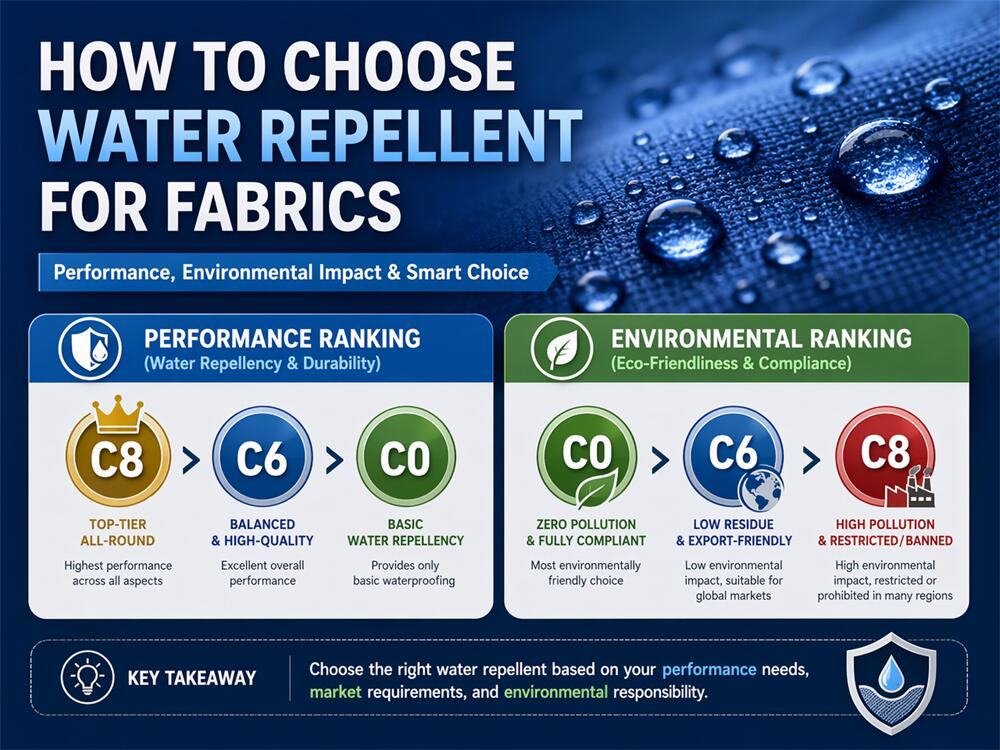
Performance Ranking: C8 (Top-tier All-round Performance)>C6 (Balanced Premium Performance)>C0 (Basic Water Repellency Only)
Environmental Ranking: C0 (Zero-pollution Full Compliance)>C6 (Low-residue Eco-friendly for Foreign Trade)>C8 (High-pollution Restricted & Prohibited)
Commercial Selection Suggestion: Choose C6 for high-end foreign trade and outdoor three-proof functional waterproof stretch fabric; choose C0 for maternal, infant and close-fitting products with strict environmental requirements; use C8 cautiously for low-end domestic products with no environmental demands.
VII. General Industry Knowledge of Fabric Water Repellent Rating
1. Test Method
Laboratory standard test: Spray 250ml distilled water on the fabric surface from a fixed height and angle for 25–30 seconds. After spraying, compare the fabric surface wetting state with standard rating cards to obtain the corresponding water repellent score and grade, which is the key detection standard for qualified waterproof stretch fabric.
2. Standard Comparison & Surface State Description (AATCC / ISO / GB)
| AATCC 22 (US Standard) | ISO 4920 / GB/T 4745 (EU/CN Standard) | Surface Wetting Description |
| 100 Points | Grade 5 (Optimal) | No water staining or wetting on the fabric surface with perfect water repellency |
| 90 Points | Grade 4 | Sparse and irregular water droplets on the fabric surface without large-area wetting |
| 80 Points | Grade 3 | Obvious wetting marks on the sprayed area |
| 70 Points | Grade 2 | Most areas of the fabric surface are wet |
| 50 Points | Grade 1 | The entire fabric surface is completely wet |
| 0 Points | Grade 0 | The fabric is fully wetted with water penetration and sinking |
3. Practical Application Significance of Rating
Fabrics reaching Grade 4 / 90 points can effectively resist light rain and temporary water splash, with water droplets rolling off quickly without penetration, qualifying as high-quality standard for functional waterproof stretch fabric.
It is worth noting that this rating only reflects the initial water repellent performance. For high-end outdoor fabrics such as jackets, post-wash waterproof grade is more valuable for reference. High industry standards require fabrics to maintain Grade 3 or above after multiple washes. Fabrics with high initial rating but rapid performance attenuation after washing have poor DWR durable water repellent performance.
Next Issue Preview: Detailed explanation of film lamination waterproof technology widely adopted for high-end outdoor functional clothing (To be updated)