I. Definition, Functions and Application Scenarios of Lamination Fabric
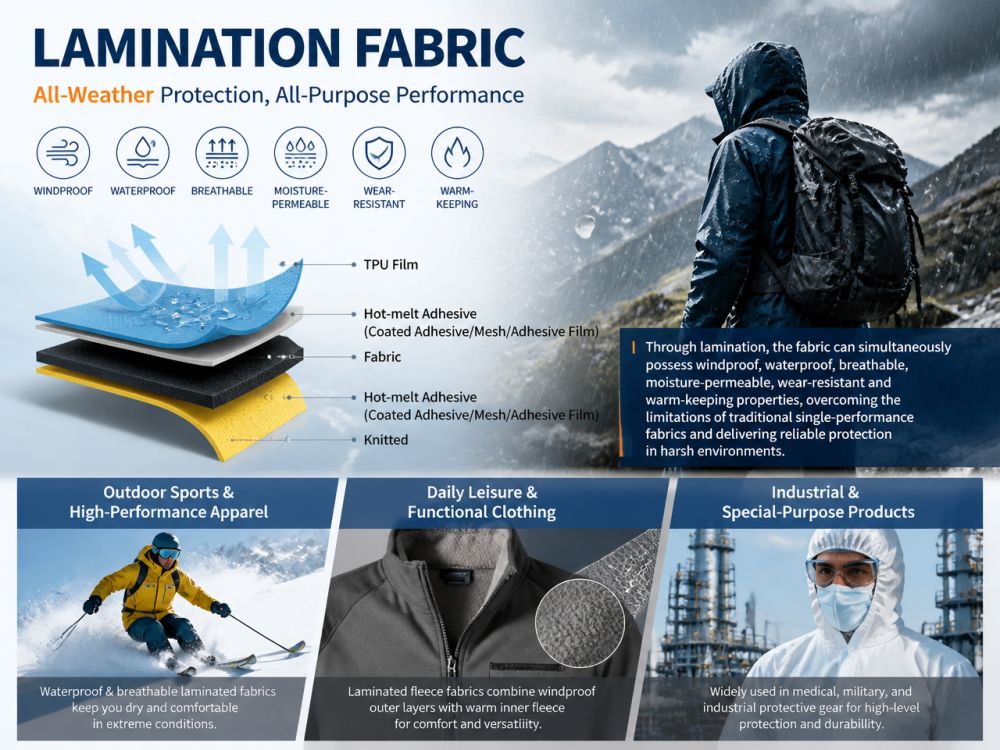
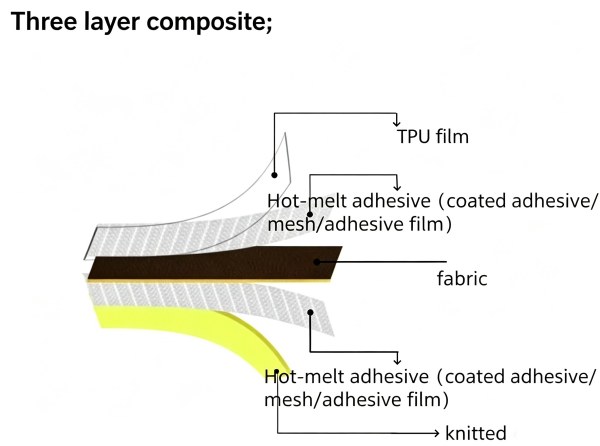
Lamination Fabric is a new type of textile material formed by bonding two or more layers of materials including outer fabric, functional membrane and inner lining fabric through adhesives and hot pressing processes. It breaks through the performance limitations of single-layer fabrics, combines the wear resistance and comfortable hand feel of base fabrics with the protective properties of functional membranes, and serves as a core raw material for outdoor functional textiles. The industry mainly adopts two-layer and three-layer lamination structures.
Its core value lies in the integration and enhancement of multiple functions. Through lamination, the fabric can simultaneously possess windproof, waterproof, breathable, moisture-permeable, wear-resistant and warm-keeping properties, making up for the functional defects of traditional single-performance fabrics. For example, ordinary cotton coats cannot withstand heavy rain, while outdoor jackets made of lamination fabrics can easily cope with severe rainy weather.
With flexible and customizable performance combinations, lamination fabrics are widely applied in various fields:
- Outdoor Sports & High-Performance Apparel: This is the core application field of lamination fabrics. Outdoor jackets, ski suits and high-end windproof coats rely on waterproof and moisture-permeable lamination fabrics to adapt to harsh weather and ensure wearing comfort.
- Daily Leisure & Functional Clothing: Laminated fleece fabrics (such as thermal underwear and outdoor coats) combine windproof outer fabrics with inner polar fleece to achieve both warmth and comfort. A typical example is 100D polyester four-way stretch fabric laminated with polar fleece.
- Industrial & Special-Purpose Products: Lamination fabrics are widely used in medical protective clothing, military equipment and industrial protective garments to meet high-standard barrier protection and durability requirements.
II. Core Component of Lamination Fabric — Functional Membrane
Functional membranes are the core components that endow lamination fabrics with waterproof and moisture-permeable functions. The three mainstream types of membranes in the market have distinct structural principles and performance differences, which directly determine the grade of lamination fabrics.
Performance Comparison of Three Types of Membranes
- PU Membrane: Polyurethane membrane. It features low cost, soft hand feel and low processing threshold, with basic waterproof and moisture-permeable properties that meet the needs of mid-to-low-end civilian products. Its disadvantages include average aging resistance, gradual attenuation of moisture permeability after long-term use, and inferior high water pressure resistance compared with TPU and PTFE membranes.
- TPU Membrane: Thermoplastic Polyurethane membrane. Compared with ordinary PU membranes, it has greatly improved wear resistance, low-temperature resistance and tensile resistance. Its water pressure resistance can easily reach 10,000mm, with excellent moisture permeability and compatibility for hot-press seamless processing, making it highly adaptable for diverse applications.
- PTFE Membrane (ePTFE): Expanded Polytetrafluoroethylene microporous membrane. Its unique microporous structure realizes the core performance of “blocking water droplets and exhausting water vapor”. It delivers ultimate waterproof and moisture-permeable performance, excellent resistance to extreme high and low temperatures and chemical corrosion, representing the top-level functional membrane in the current textile industry. The only drawback is its relatively high cost.
Industry Adoption Trends (2024-2026)
From 2024 to 2026, TPU membranes have achieved the most significant growth in market share. Driven by the booming demand for mid-range outdoor apparel and daily functional clothing, TPU membranes with balanced performance and declining costs have replaced a large number of traditional PU membrane applications and become the first choice for civilian functional lamination fabrics. PU membranes are gradually limited to low-cost products such as ordinary raincoats and simple protective supplies. Meanwhile, PTFE membranes are no longer exclusive to top-tier professional outdoor products. More and more mid-to-high-end urban outdoor apparel adopts cost-effective modified PTFE membranes to deliver flagship-level wearing experience with controlled costs.
III. Lamination Processing Methods: Solvent Glue vs. Hot Melt Glue
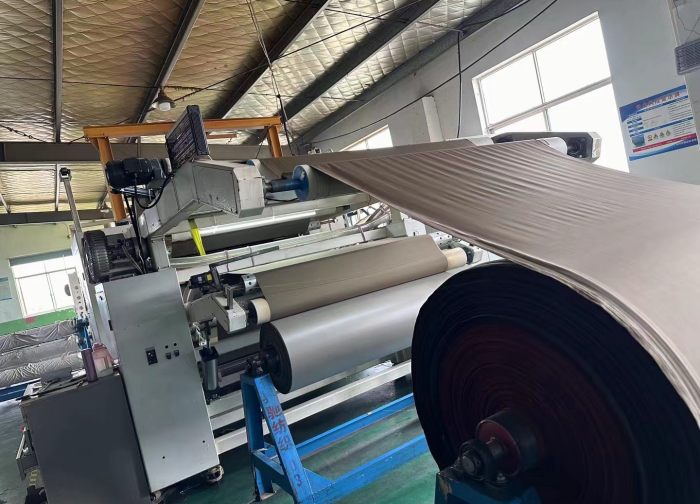
There are two mainstream bonding processes for fabric and functional membrane lamination: solvent-based glue lamination and solvent-free PUR hot melt glue lamination. The selection of process directly affects the bonding fastness, environmental protection grade and hand feel of finished lamination fabrics.
Solvent Glue vs. Hot Melt Glue Lamination Comparison
| Comparison Dimension | Solvent Glue Lamination | Hot Melt Glue Lamination |
| Working Principle | Organic solvents are used to dissolve the glue; the colloid solidifies and bonds after solvent volatilization | Thermoplastic glue (PUR, PA, etc.) is melted by heating, coated on materials, and solidified by cooling for bonding, with no solvent involved |
| Environmental Protection & Safety | Non-environmental and risky: residual volatile organic solvents may cause pungent odors. Although formaldehyde-free, solvent residues are harmful to human health | Eco-friendly and safe: no solvent volatilization and formaldehyde decomposition, compliant with OEKO-TEX and other international safety standards |
| Hand Feel & Quality | Relatively stiff hand feel; the glue layer may impair the original softness of the fabric | Soft and elastic hand feel, minimal impact on the original fabric texture, with high bonding strength and excellent washing resistance |
| Cost | Low cost, adopted by some manufacturers for cost reduction | Higher cost, with prominent returns in product performance and long-term safety |
Conclusion: Despite the lower cost of solvent glue lamination, hot melt glue lamination is currently the superior and mainstream choice in terms of consumer safety and long-term product quality. In recent years, global orders have gradually shifted to hot melt glue lamination. High-end outdoor brands and European and American export orders basically mandate PUR hot melt processes, while solvent glue lamination is only applied to low-end domestic orders and extremely cost-sensitive products.
IV. Qualification Standards of Lamination Fabrics for Outdoor Jacket Production
4.1 Chinese National Standard (GB/T 32614-2023)
GB/T 32614-2023 Outdoor Sports Clothing – Outdoor Jackets is the sole compliant national standard for outdoor jackets in China, officially implemented on April 1, 2024, replacing the old version. It serves as the core access threshold for lamination fabrics used in outdoor jacket manufacturing. The standard classifies fabrics into Grade I (Professional Outdoor Grade) and Grade II (Daily Commuter Grade). All indicators must pass specified washing tests to evaluate durability and eliminate disposable functional fabrics.
Core Functional Mandatory Indicators
- Hydrostatic Pressure (Core Waterproof Indicator): Grade I: ≥50kPa for fabric and ≥40kPa for seams before washing; ≥40kPa for fabric and ≥30kPa for seams after washing. Grade II: ≥30kPa for fabric and ≥25kPa for seams before washing; ≥20kPa for fabric and ≥15kPa for seams after washing, determining the fabric’s resistance to heavy rain and water penetration.
- Moisture Vapor Transmission Rate (Core Comfort Indicator): Grade I fabric maintains ≥6000g/(m²·24h) and Grade II fabric maintains ≥4000g/(m²·24h) before and after washing, completely solving the stuffiness and poor sweat dissipation problems of traditional waterproof fabrics.
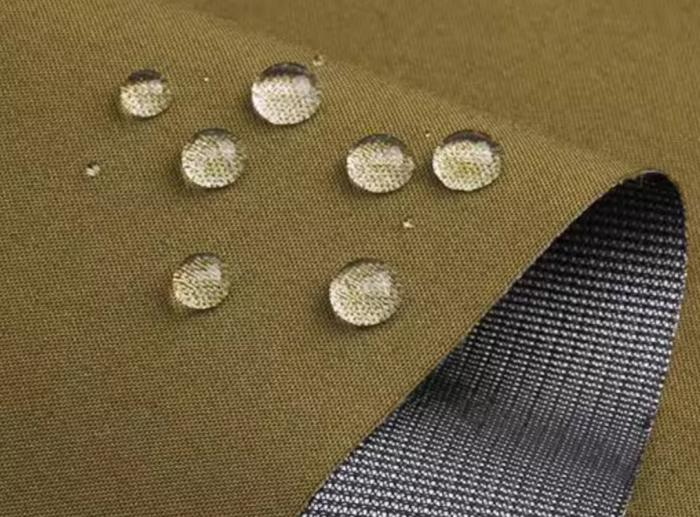
- Surface Water Repellency: Grade ≥4 before washing, ensuring excellent lotus-effect water repellency and preventing rainwater adhesion and penetration.
Safety & Environmental Protection Indicators
- Strict control of perfluorinated harmful substances: PFOS and PFOA content <1.0μg/㎡ to avoid residual risks of waterproof additives;
- Formaldehyde-free, free of carcinogenic aromatic amine dyes, no irritating solvent residues and no pungent odors;
- Compliant color fastness for washing, friction and perspiration to prevent fading and staining.
Fabric Matching Rules: Grade I professional outdoor jackets adopt ePTFE or high-permeability modified TPU membranes combined with hot melt glue lamination; Grade II daily outdoor jackets adopt conventional TPU + hot melt glue lamination fabrics. Ordinary PU + solvent glue lamination fabrics fail to meet the updated national standard due to severe performance attenuation after washing and are prohibited for qualified outdoor jacket production.
4.2 European Standard (EN 343:2019)
EN 343:2019 is the mandatory EU access standard for rainproof outdoor jackets, focusing on fabric waterproofing, moisture permeability, physical strength and weather resistance. It adopts a four-level grading system (Class 1 to Class 4), with Class 4 as the highest professional protection level for extreme outdoor environments.
Core Functional Mandatory Indicators
- Waterproof Grade (Hydrostatic Pressure): Class 1≥2000mmH₂O, Class 2≥4000mmH₂O, Class 3≥8000mmH₂O, Class 4≥13000mmH₂O; higher grades mean stronger resistance to continuous heavy rain and high-pressure water spray.
- Moisture Permeability: Tested by dedicated EU methods, high-end Class 3/4 fabrics achieve a moisture vapor transmission rate of ≥5000g/(m²·24h), balancing high waterproof performance and wearing comfort without sweat accumulation.
- Physical Mechanical Indicators: Tensile strength, tear strength and bursting strength must meet standard requirements with controllable dimensional change after washing, avoiding deformation and damage during long-term use.
- Seam Waterproof Requirement: All stitching seams must be sealed with waterproof tape, with seam waterproof performance no lower than the main fabric to prevent water leakage from stitching lines.
Environmental Protection & Safety Requirements
- Comply with REACH regulations, restricting hundreds of hazardous chemicals and prohibiting high-risk additives and solvent residues;
- Must pass OEKO-TEX Standard 100 certification with no odor, no sensitization and no harmful substance precipitation;
- Solvent residues from traditional solvent glue processes are prohibited; only solvent-free PUR hot melt glue lamination is recognized.
4.3 American Standard (ASTM Outdoor Textile Standards)
The United States has no independent dedicated standard for outdoor jackets. Product qualification is comprehensively judged based on ASTM series textile testing standards, focusing on practical wear resistance, waterproof stability and flame retardant safety, adapting to complex outdoor environments such as mountainous areas, rain and snow, and strong winds in North America. It is the core acceptance basis for high-end outdoor brands in the North American market.
Core Functional Mandatory Indicators
- Waterproof Performance: Minimum entry hydrostatic pressure ≥10000mmH₂O, ≥15000mmH₂O for high-end outdoor products; mainstream surface water repellency score ≥90 points (equivalent to Chinese Grade 4), with only sporadic water droplets after spraying.
- Moisture Permeability: Tested by ASTM inverted cup method, qualified fabric moisture permeability ≥4500g/(m²·24h), ≥6000g/(m²·24h) for high-custom outdoor products, with data fitting actual wearing ventilation experience.
- Superior Physical Durability: In accordance with ASTM D3776, ASTM D5034 and ASTM D1424 standards, strict tests are conducted on fabric weight, tensile strength, tear strength and wear resistance, requiring no peeling, delamination or damage after repeated friction and bending.
- Flame Retardant Safety: Comply with 16 CFR Part 1610 textile flame retardant standards, reaching Class 1 safety level with no flammability risks for civilian outdoor apparel.
Process & Durability Requirements
- Focus on washing durability, requiring no significant attenuation of waterproof performance, moisture permeability and bonding fastness after multiple washes;
- Prioritize TPU and ePTFE high-end membranes matched with hot melt glue lamination; zero tolerance for delamination, color migration and residue problems of solvent glue laminated fabrics;
- Fabric color fastness, UV resistance and weather resistance are superior to conventional national standards, adapting to high-frequency outdoor use in North America.
4.4 Differences Among Three Major Standards & Fabric Selection Summary
The Chinese national standard focuses on civilian adaptability and balanced washing durability with moderate thresholds and clear grading, suitable for the domestic mass outdoor market. The European standard emphasizes environmental compliance and seam sealing protection with strict chemical testing, a must for EU export products. The American standard prioritizes practical durability and extreme performance with higher physical strength and waterproof limits for high-end professional outdoor products.
Overall, ePTFE/modified TPU membrane + PUR hot melt glue lamination fabric can meet the requirements of Chinese, European and American standard systems simultaneously, serving as the most versatile and stable high-end lamination fabric solution.
V. Common Problems of Lamination Fabrics
5.1 Causes of Edge Curling During Fabric Cutting
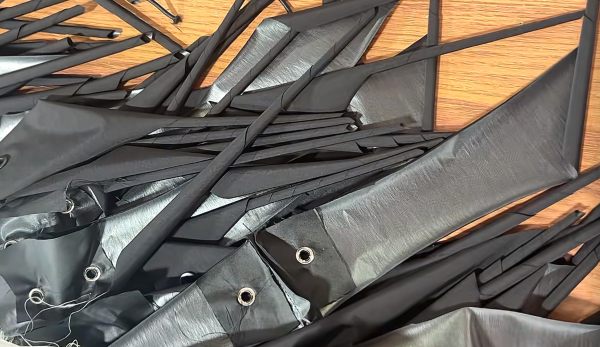
Edge curling (inward curling, outward curling, S-shaped warping) of lamination fabrics is essentially caused by mismatched shrinkage tension of multi-layer materials. The specific inducing factors are as follows:
- Excessive difference in warp and weft shrinkage among surface fabric, lining fabric and functional membrane, resulting in continuous stress release after lamination;
- Mismatched machine tension during lamination: the membrane is stretched to generate internal stress and retracts after unwinding and relaxation. Some manufacturers even increase tension deliberately to boost output meterage;
- Long-term storage of laminated fabrics without further processing and improper moisture preservation lead to hardening and retraction of the membrane;
- Rolling immediately after lamination without sufficient maturation, resulting in unreleased internal stress;
- Unmatched thickness structure: thin surface fabric matched with thick lining leads to poor structural stability.
Pre-production Improvement Solutions: Pre-shrink raw materials in advance; accurately match tension of each layer during lamination; ensure uniform temperature control; mature finished fabrics for more than 48 hours before slitting and cutting.
Post-production Remedial Solutions:
- Uncut rolled fabrics: return to suppliers for re-setting or steam pre-shrinking (additional cost: about 0.5-0.7 yuan per meter, excluding freight);
- Fully cut pieces in garment factories: use heating pads or irons to heat the cut pieces for full shrinkage of fabric and membrane.
5.2 Durability and Maintenance Methods of Lamination Fabric Outdoor Jackets
The durability of lamination fabric outdoor jackets depends not only on surface fabric wear resistance, but more importantly on interlayer bonding fastness, namely whether delamination and blistering occur under external forces such as washing and bending.
The service life of outdoor jacket lamination fabrics is determined by membrane material and lamination process:
- PUR hot melt lamination > solvent glue lamination; ePTFE > modified TPU > ordinary TPU > PU membrane;
- Daily commuting use: hot melt TPU fabrics maintain stable performance for 3-5 years; high-end ePTFE fabrics can serve more than 5 years with proper maintenance;
- Extreme outdoor scenarios, frequent machine washing and violent friction accelerate glue aging and cause irreversible blistering and delamination. Studies show that washing is the main cause of interlayer peeling strength attenuation, with the most significant strength loss occurring in the first few washes.
Maintenance Suggestions:
- Follow washing labels: strictly comply with the washing instructions on garment labels. Most functional outdoor jackets require neutral detergent and gentle washing mode.
- Avoid dry cleaning and high temperature: dry cleaning solvents and high-temperature ironing will damage the glue layer and membrane structure.
- Restore DWR water repellency: when the fabric surface DWR treatment fails (water no longer rolls off in beads), restore the lotus effect with special water-repellent spray or detergent to prevent outer fabric water saturation and impaired air permeability.
- Dry thoroughly: air dry in a cool and ventilated place after washing to ensure complete volatilization of moisture in the interlayer.
5.3 Effect of Solvent Glue Lamination on Fabric Color Fastness
Solvent glue lamination negatively affects fabric color fastness, which is a common industry risk in practical production:
- Solvent Erosion Effect: Organic solvents used in solvent glue processes may dissolve or migrate fabric dyes, especially unstable non-ionic dyes, causing fabric fading or interlayer staining and reducing finished product color fastness;
- Hot Press & Chemical Reaction: The hot pressing procedure during lamination and chemical reactions between glue components and dyes may lead to color deviation and color spotting;
- Prevention Method: Adopting solvent-free hot melt glue lamination fundamentally avoids solvent-induced color fastness risks, which is why this process is favored by high-end brands.
VI. Summary of Lamination Fabrics
Lamination fabrics are the core carriers of outdoor functional textiles. Their overall performance is determined by three key factors: functional membrane selection, lamination bonding process and base fabric matching. In terms of market trends, TPU membrane + PUR hot melt glue will remain the mainstream solution for mid-range products; ePTFE lamination fabrics are expanding steadily in the professional outdoor sector; traditional solvent glue and PU membrane lamination fabrics are gradually limited to low-end markets.
In fabric procurement and garment development, manufacturers should not only focus on waterproof and moisture-permeable indicators, but also predict potential process risks such as cutting curling, washing delamination and color fastness fluctuation. Matching appropriate membrane materials and lamination processes according to terminal application scenarios, price positioning and export environmental standards can balance product quality, service life and production costs.
VII. Appendix: Official Standard Inquiry Sources & URLs
All performance indicators and regulatory requirements mentioned in this article are fully sourced from official authoritative standard institutions of China, Europe and the United States. All data is verifiable, compliant with international inspection standards, and can be used for foreign trade certification, factory inspection and product qualification proof.
7.1 Chinese National Standard
GB/T 32614-2023 Outdoor Sports Clothing – Outdoor Jackets
Official full-text inquiry URL: https://openstd.samr.gov.cn/bzgk/std/newGbInfo?hcno=056E83DB3398D4A496472DE9FB69CFE0
7.2 European Standards & Regulations
EN 343:2019 Protective clothing – Rain protection
Official CEN inquiry URL: https://standards.cen.eu/dyn/www/f?p=204:110:0::::FSP_STD_ID:742795
REACH Regulation Official Database: https://echa.europa.eu/reach-legislation
OEKO-TEX Official Certification Platform: https://www.oeko-tex.com
7.3 American ASTM Standards & Regulatory Sources
Official ASTM Standard Homepage: https://www.astm.org/
ASTM D3776 (Fabric weight test): https://www.astm.org/Standards/D3776.htm
ASTM D5034 (Tensile strength test): https://www.astm.org/Standards/D5034.htm
ASTM D1424 (Tear strength test): https://www.astm.org/Standards/D1424.htm
16 CFR Part 1610 (Textile flammability standard): https://www.ecfr.gov/current/title-16/part-1610