1. Definition of Qualified UV Protection Fabrics and Testing Standards of GB, EU and US Standards
1.1 Core Qualification Definition of UV Protection Fabrics
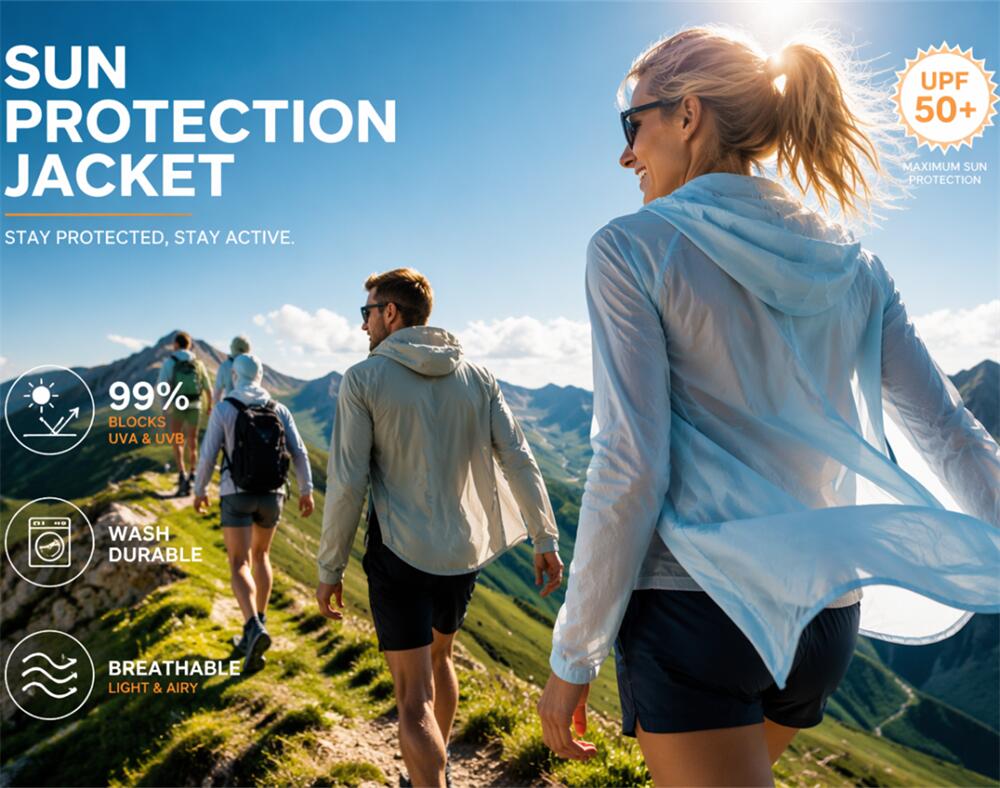
UPF (Ultraviolet Protection Factor) is the core indicator for evaluating the ultraviolet resistance of UV protection fabrics. It represents the overall ultraviolet blocking capability of fabrics. The industry’s qualification logic is based on three physical principles: ultraviolet reflection, absorption and shielding, which effectively reduce the penetration rate of UVA and UVB, and lower the risks of sunburn, tanning and skin photoaging.
1.2 Chinese National Standard (GB/T 18830-2009)
Domestic testing of UV protection fabrics uniformly follows GB/T 18830-2009 Textiles — Evaluation of ultraviolet protective properties. It serves as the authoritative quality inspection basis for outdoor and sun-protective apparel launched in the Chinese market with rigorous and practical assessment thresholds.
Dual qualification criteria:
1. Fabric ultraviolet protection factor: UPF>40;
2. Average UVA transmittance: T(UVA)AV<5%.
Grade classification: 40<UPF≤50 is marked as UPF40+; UPF>50 is marked as UPF50+. UPF50+ is the highest sun protection grade in China, blocking more than 98% of ultraviolet rays.
1.3 European Standard (EN 13758-2)
The EU market implements EN 13758-2 for UV protection fabrics, which applies to the entry inspection of European outdoor garments and sun-protective textiles. Its judgment logic is highly consistent with the Chinese standard.
Dual qualification criteria:
1. Fabric ultraviolet protection factor: UPF>40;
2. Average UVA transmittance:T(UVA)AV<5%.
The European standard places greater emphasis onperformance stability after washing. It requires that the UPF value of UV protection fabrics shall not decay significantly after repeated washing and friction, prohibiting disposable sun-protective textiles from entering the European market.
1.4 American Standard (AATCC 183 / ASTM D6603)
The United States adopts a dual standard system: AATCC 183 specifies the basic testing methods, while ASTM D6603 defines protection grades with more detailed classification for diversified application scenarios.
US standard protection grade classification:
1. UPF<15: No UV protection capability; UV-resistant labeling is prohibited.
2. UPF 15-24: Good UV protection, suitable for daily mild sun exposure.
3. UPF 25-39: Excellent UV protection, suitable for regular outdoor scenarios.
4. UPF≥40: Superior UV protection, reaching the professional qualification threshold for formal UV protection fabric labeling.
Core features of the US standard: It does not enforce unified UVA transmittance values. Instead, it focuses on comprehensive UV protection stability under actual wearing conditions, covering dry and wet states, friction resistance and washing durability.
1.5 UV STANDARD 801 — More Stringent Global Testing Standard
This standard breaks the limitation of testing only new and dry fabrics. It fully simulates actual wearing conditions including stretching, wetting (sweating or swimming), abrasion and repeated laundering, and adopts a stronger solar spectrum for testing. Only products that maintain the declared UPF value under such extreme simulation can obtain this certification, representing more durable and reliable UV protection performance of UV protection fabrics.
2. Principles, Advantages and Disadvantages of Three UV Protection Fabric Processes
Currently, the UV resistance of UV protection fabrics is mainly realized through three mainstream processes:yarn-modified type, auxiliary-finished type and coating type. The three technologies differ greatly in principles, hand feel, air permeability, washing resistance and cost, matching sun-protective products of different positioning.
2.1 Yarn-Modified (Original Yarn Modification) UV Protection Process
Process principle: A physical permanent sun protection technology. During the fiber spinning stage, inorganic UV shielding factors (zinc oxide, titanium dioxide, etc.) are blended into the yarn, and the fiber cross-section structure is optimized. Each yarn is endowed with inherent UV resistance from the source through physical ultraviolet reflection and absorption, without secondary chemical finishing.
Core advantages: Permanent UV protection function with excellent washing and friction resistance. The UPF value remains stable and compliant after more than 100 machine washes. The fabric retains complete fiber pores with excellent air permeability, soft and skin-friendly hand feel, no stiffness or heaviness, zero chemical residue and eco-friendly performance.
Core disadvantages: Complicated spinning process, high equipment and technical thresholds, and high raw material cost, leading to higher pricing of end products.
2.2 Auxiliary-Finished (Post-Finishing) UV Protection Process
Process principle: A chemical post-finishing technology. After fabric weaving, organic UV-resistant auxiliaries are attached to the fabric surface through padding, drying and setting procedures, filling fiber gaps to absorb and block ultraviolet rays and rapidly endow fabrics with UV protection performance.
Core advantages: Mature and simple process, low mass production cost, fast delivery, compatible with ordinary fabric modification, rich in colors and styles, and cost-effective for mass-market sun-protective apparel.
Core disadvantages: Non-durable UV protection. Auxiliaries only adhere to the fabric surface and fall off rapidly after 10-20 washes, resulting in significant UPF attenuation. Low-quality auxiliaries easily block fiber pores and slightly reduce air permeability; the UV protection function will basically fail after long-term repeated washing.
2.3 Coating-Type UV Protection Process
Process principle: A dense functional protective film (black glue, silver glue, color glue, etc.) is coated on the fabric surface. The coating achieves high-level UV protection through strong ultraviolet reflection and absorption, serving as a traditional high-strength sun protection process.
Core advantages: Extreme UV protection effect with high UPF ceiling, easily reaching UPF50+ and blocking more than 99% of ultraviolet rays. Suitable for harsh scenarios such as intense outdoor sun exposure and field operations, and compatible with most fabric substrates.
Core disadvantages: Obvious defects in comfort and durability. The coating completely seals fabric pores, greatly reducing air permeability and moisture permeability and causing stuffy wearing experience. The fabric feels stiff and heavy, prone to whitening, cracking and peeling. It has extremely poor washing resistance, and the UV protection performance fails completely once the coating is damaged after washing.
2.4 Comprehensive Comparison of the Three Processes
| Comparison Dimension | Yarn-Modified UV Protection | Auxiliary-Finished UV Protection | Coating-Type UV Protection |
|---|---|---|---|
| UV Protection Durability | Permanent, resistant to 100+ washes | Short-term valid, attenuates after 10-20 washes | Poor, easy cracking and peeling after washing & failure |
| Hand Feel & Comfort | Soft, skin-friendly, lightweight and non-irritating | Basically soft with negligible impact | Stiff, heavy and non-fitting |
| Air & Moisture Permeability | Excellent, complete pores, dry and breathable | Good, slight pore blocking with minor impact | Poor, fully sealed pores, stuffy wearing feeling |
| UV Protection Ceiling | Stable UPF50+ | Regular UPF40+ | Ultra-high UPF50+, strongest protection |
| Cost & Positioning | High-end, professional outdoor sun-protective apparel | Low-cost, mass-market daily sun-protective apparel | Medium-low, disposable high-intensity sun protection supplies |
3. Core FAQ of UV Protection Fabrics
3.1 Will the hand feel and air permeability deteriorate after adding UV protection function?
Not all UV protection fabrics have reduced comfort. The actual performance depends entirely on the manufacturing process.
- Yarn-modified UV protection fabrics: Almost no loss in hand feel and air permeability. UV shielding factors are embedded inside the yarn without blocking fabric pores or changing the original fiber structure, maintaining lightweight and soft texture and all-day dry comfort.
- Auxiliary-finished UV protection fabrics: Slight and negligible impact. High-quality UV auxiliaries form an ultra-thin adhesive layer with little influence on fabric softness and air permeability; only low-grade inferior auxiliaries cause slight stiffness and poor ventilation.
- Coating-type UV protection fabrics: Obvious performance deterioration. The compact coating completely seals breathable pores, resulting in poor air and moisture permeability, stiff and heavy hand feel, and stuffy wearing experience in summer.
Purchasing Suggestion: On the premise of qualified UPF value, prioritize yarn-modified UV protection fabrics or mature auxiliary-finished products.
3.2 Can UV protection fabrics be compounded with water-repellent and quick-dry functions? Will compounding affect UV protection performance?
Multi-functional compounding is feasible but requires professional technical support.
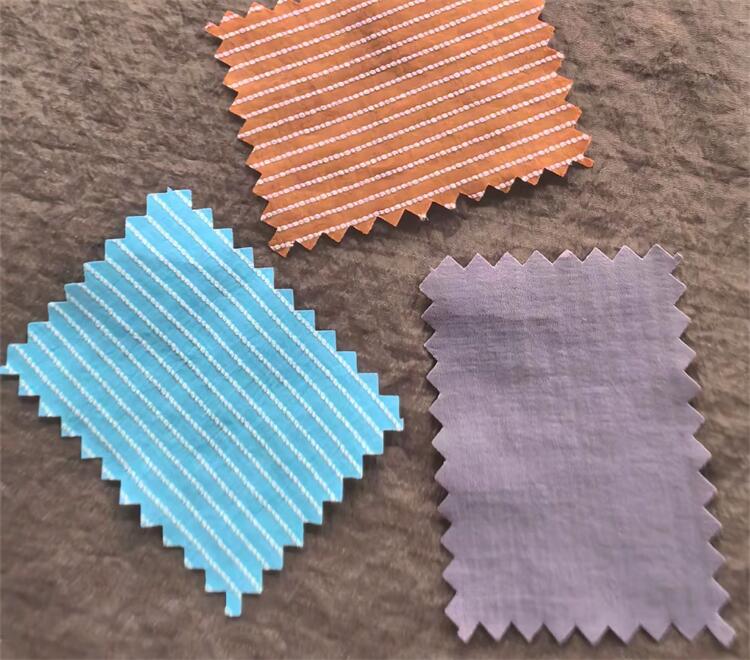
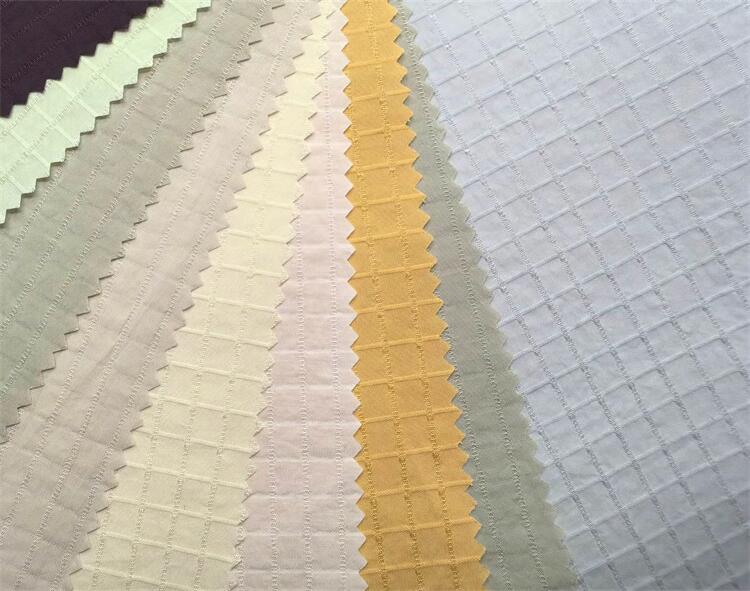
Mature composite functional UV protection fabrics are widely applied in the industry. For example, 30D ultra-elastic grid outdoor fabrics integrate UV resistance, cool touch and moisture quick-dry functions for high-end outdoor garments.
Potential risks of multi-functional compounding:
- Auxiliary antagonism: Different functional chemicals (such as water repellent and hydrophilic quick-dry agent) may have conflicting properties, weakening each other’s effects.
- Process damage: Multiple high-temperature setting and coating procedures may damage the attached UV-resistant layer.
- Durability inconsistency: Different functions have different washing resistance, resulting in embarrassing situations where quick-dry performance remains while UV protection fails.
Purchasing Suggestion: Require suppliers to provide complete test reports of composite functional fabrics instead of simply piecing together single-function data.
3.3 Is a higher UPF value always better? Avoid blind pursuit of extreme values
Industry consensus: Higher UPF does not mean better performance. Balanced qualification, comfort and durability are the optimal standards, and blind pursuit of ultra-high UPF is a consumer misunderstanding.
In terms of protection effect: UPF40+ blocks more than 97.5% of ultraviolet rays, and UPF50+ blocks more than 98%. The actual protective difference between the two is almost indistinguishable in daily commuting and outdoor scenarios, fully coping with summer strong sunlight and long-term exposure.
In terms of comfort and durability: Ultra-high UPF (>60, 80) is realized by thickening fabrics, increasing coating weight and dense auxiliary filling, which directly sacrifices air permeability, softness and lightness, causes stuffy and stiff wearing experience, and accelerates functional attenuation after washing.
Consumers should avoid pursuing extreme nominal values and focus on the comfort and durability of UV protection fabrics. The national standard only authorizes the highest label of UPF50+, and the market hype of UPF100+ or UPF2000+ is unsubstantiated marketing gimmick. UPF40+ fully meets daily commuting protection, and UPF50+ satisfies long-term outdoor exposure. Many ultra-high UPF products on the market sacrifice basic air permeability for virtual high parameters, leading to poor wearing experience. Premium UV protection fabrics always balance qualified protection and comfortable wearing performance.
3.4 Influence of fabric color and grammage on UV protection performance
Color and grammage are important auxiliary factors affecting the basic UV resistance of UV protection fabrics under the same process conditions.
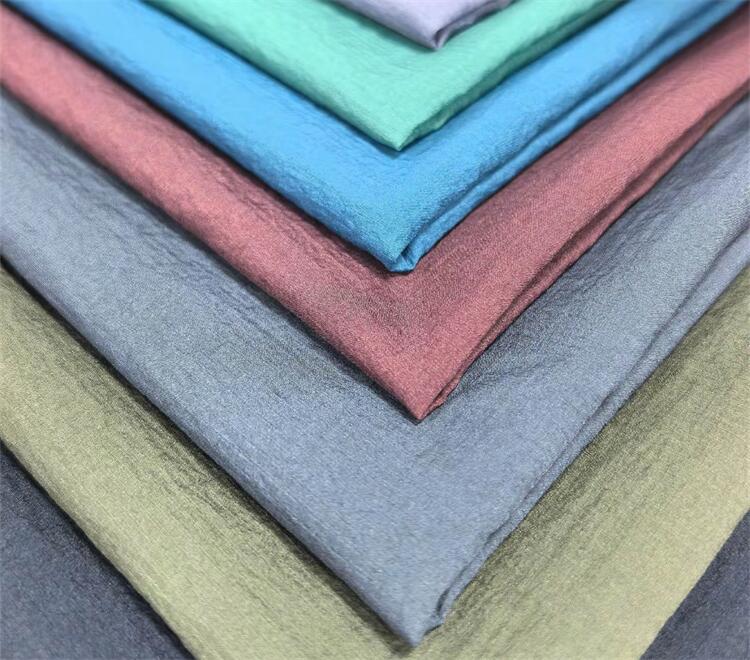
- Fabric color: Dark colors provide better UV protection than light colors. Black, navy and dark gray efficiently absorb ultraviolet rays and reduce penetration; white, beige and light pink have higher light transmittance and lower UPF values under the same process. However, dark fabrics absorb more heat with higher summer body temperature, forming a trade-off between protection and heat sensation.
- Fabric grammage: Higher grammage means thicker fabrics and denser fiber arrangement, increasing UV penetration resistance and improving protection performance. Lightweight low-grammage fabrics have larger pores and higher light transmittance with weaker basic UV resistance. 50-100gsm is recommended as the optimal substrate grammage for UV protection fabrics.
Supplementary Explanation: Color and grammage are only auxiliary influencing factors and cannot replace functional finishing processes. Ordinary thick dark cotton fabrics without UV treatment still fail UPF tests; while lightweight yarn-modified UV protection fabrics can stably reach UPF50+ even in light colors and low grammage.
4. Key Selection Guidelines for UV Protection Fabrics
The core value of UV protection fabrics is to achieve long-term and professional ultraviolet shielding through scientific processes. In terms of global testing standards, Chinese and European standards share the same qualification threshold of UPF>40 and UVA transmittance<5%, while American standards adopt refined grading to adapt to diversified scenarios, serving as key bases for fabric export and quality inspection.
Three core principles for selecting UV protection fabrics are summarized as follows:
4.1 Confirm Qualification Threshold
UPF>40 and UVA transmittance<5% are the universal qualified line worldwide. Products without clear official execution standards on labels are not recommended.
4.2 Select Appropriate Technical Route
Yarn-modified UV protection fabrics have the best durability and hand feel, the first choice for high-end products; auxiliary-finished fabrics are cost-effective with flexible application but require strict verification of washing resistance; coating-type fabrics have poor air permeability and durability, not recommended for close-fitting scenarios.
4.3 Return to Essential Performance
UPF50+ is already excellent enough for daily and outdoor use. There is no need to pursue inflated nominal values. The real competitiveness of qualified UV protection fabrics lies in wearable comfort, stable effectiveness after repeated washing and long-term practicality, rather than extreme data gimmicks.