When sourcing Twisted Nylon 4‑Way Stretch Fabric, most purchasing disputes, production reworks and after-sales losses stem not from fundamental fabric quality defects, but from hidden detail issues prevalent in the industry. Many buyers only focus on basic parameters such as price, weight and width, while overlooking core risks like insufficient yardage, substandard color fastness, head-to-tail color variation and uneven selvedge tension. These issues eventually lead to a chain of problems including garment production rework, finished product scrappage, negative brand reviews and order losses.
This article explains common problems in nylon 4-way stretch fabric sourcing, their root causes, practical identification methods and solutions in order of importance, rated by star level ★. It helps buyers accurately avoid pitfalls, reduce production costs and mitigate order losses. At the end of the article, we also introduce the standardized quality control system of Mifu Fabric to address key concerns of buyers.
1. Insufficient Fabric Yardage — ★★★★★
Insufficient fabric length is the most direct cause of economic loss in sourcing. Some unethical sellers deliberately short yardage, or production oversights at factories can also result in quantity discrepancies for buyers who pay for full yardage, directly increasing order costs. It is a critical issue that requires top priority verification in procurement.
1.1 Root Causes
Nylon 4-way stretch fabrics have high elasticity and extensibility, and are commonly delivered in rolls in the industry. When unrolled and laid flat on a cutting table, the fabric naturally retracts, which easily leads to yardage disputes. There are two main scenarios:
- Deliberate short yardage by sellers: Some low-price suppliers under-deliver fabric, selling rolls with only 97 actual meters labeled as 100 meters. When buyers discover the shortage after use, sellers often excuse themselves by claiming differences in measurement methods.
- Short yardage due to production oversight: This can happen even with honest sellers. Excessive tension during fabric rolling forcibly stretches the highly elastic nylon 4-way stretch fabric. For example, an elastic nylon fabric that stretches from 50cm to over 60cm may be labeled 100 meters at delivery, but only measures 95 meters when relaxed, and ends up at only 92 meters when fully laid flat on the cutting table — an invisible loss of 3 to 8 meters.
This issue most often leads to disputes between suppliers and buyers: buyers complain about short yardage based on actual usage, while sellers verify no shortage based on factory labeled length, leaving both sides unable to reach agreement.
1.2 Solution for Verifying Actual Yardage: Weight-Length Cross-Check Method
No complex equipment is needed. By converting between fabric weight, width and length, you can accurately verify the actual yardage and completely eliminate disputes. The operation is as follows:
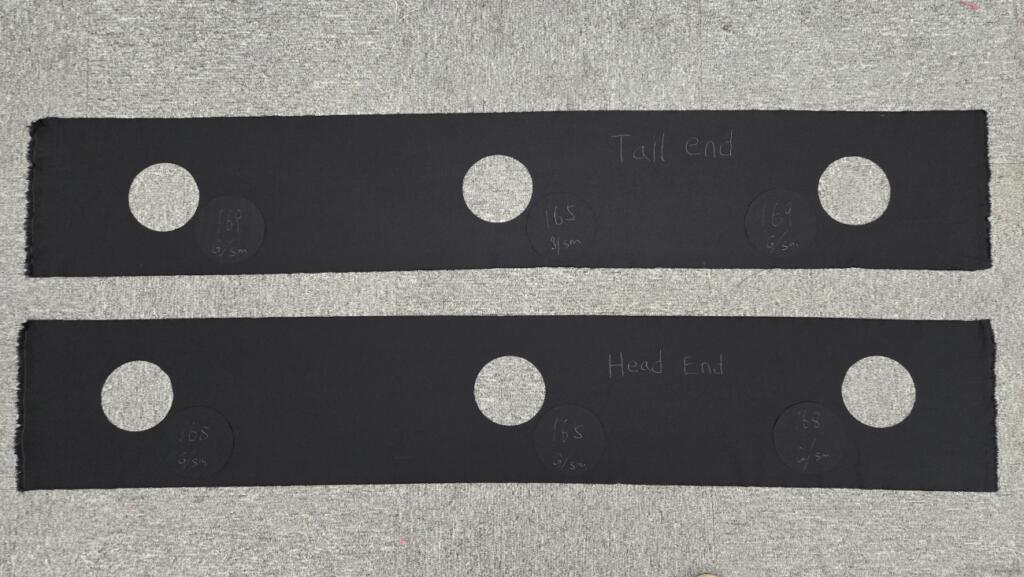
- Sampling: Measure the fabric weight (gsm) at three points across the width on both the head and tail ends of the roll to avoid local weight deviation.
- Averaging: Calculate the average of the three weight measurements to get the standard fabric weight.
- Conversion formula: Average weight (gsm) × Fabric width (m) × Labeled length (m) = Standard total weight of the fabric (g).
- Verification: After deducting the weight of the paper tube and packaging, weigh the entire fabric roll. If the actual weight is lower than the calculated standard weight, it is 100% confirmed that the yardage is short, with no room for dispute.
Practical example: For a roll of nylon 4-way stretch fabric labeled 100 meters long and 1.5m wide, with edge weights of 169gsm and middle weight of 165gsm, the average weight = (169 + 169 + 165) ÷ 3 = 167.6gsm. Standard weight = 167.6 × 1.5 × 100 = 25140g (approx. 25kg). Any actual weight below 25kg confirms short yardage.
2. Substandard Color Fastness — ★★★★
Color fastness is a key indicator that determines end-product after-sales performance and brand reputation. Fabric fading and color transfer directly lead to negative reviews, returns and mass after-sales compensation for finished garments, making it a key quality check for brand orders and export orders.
2.1 Industry Standard Color Fastness Requirements
When sourcing nylon 4-way stretch fabrics, color fastness must be verified strictly by color shade, with no vague standards:
- Light-colored fabrics: Color fastness must reach grade 4 or higher.
- Medium to dark fabrics: Color fastness must be no lower than grade 3.5.
- High-saturation colors (dragon fruit pink, bright orange, royal blue, bright red, etc.): These are high-risk colors for fading, and test reports alone are far from sufficient.
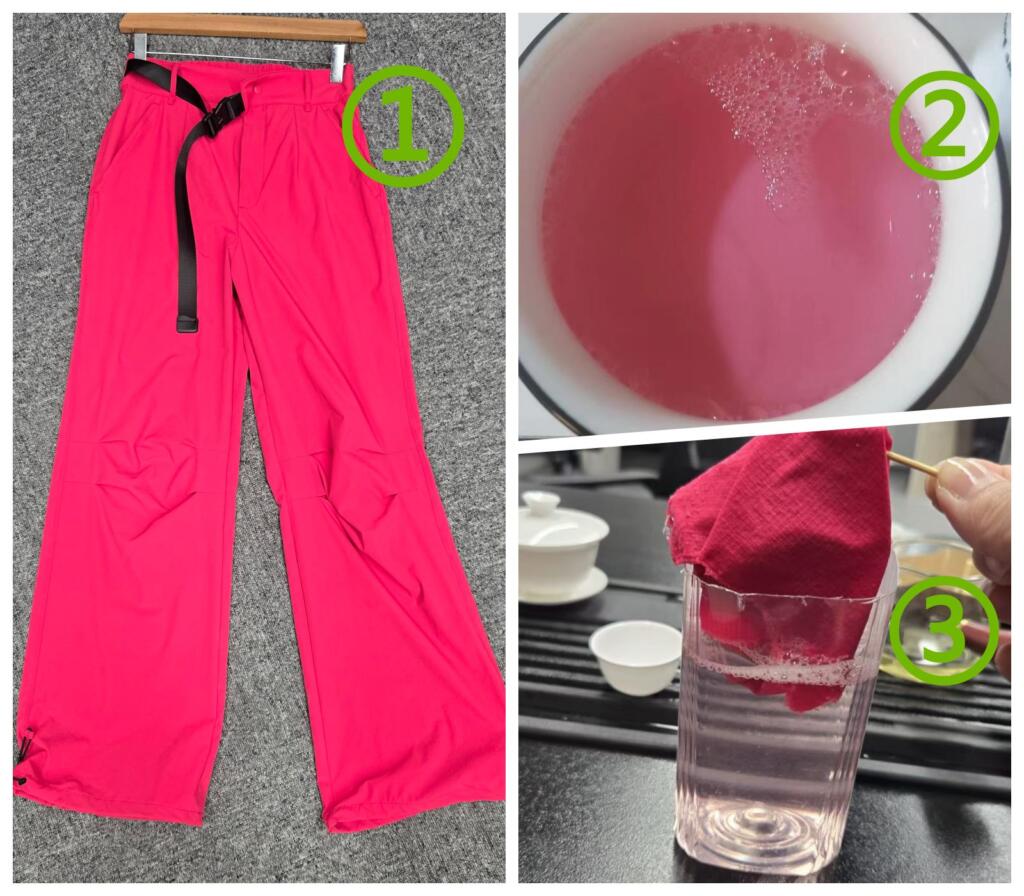
Picture ① shows the brand‑made sample garment style.
Picture ② shows the non‑conforming item with poor color fastness, which received a complaint from the end‑customer.
Picture ③ shows the high‑color‑fastness nylon 4‑way‑stretch fabric ordered by the brand from Mifu Fabric.
2.2 Pitfall Avoidance Solution
For high-saturation high-risk colors, in addition to requesting third-party color fastness test reports, it is necessary to simulate real end-user scenarios and conduct secondary soap wash tests. Production can only proceed after confirming no fading, color transfer or discoloration, eliminating end-market after-sales risks at the source.
3. Head-to-Tail Color Variation — ★★★★
Head-to-tail color variation is a highly overlooked hidden problem. It is usually not discovered until the end of the sewing process, when large quantities of fabric have already been used and semi-finished garments are nearly complete. This creates double sunk costs of fabric waste + labor hours, with extremely high rework and scrap losses.
3.1 Root Causes
This problem is particularly common with low-priced fabrics. For brand orders and high-end orders where a quality premium is paid, the occurrence of head-to-tail color variation essentially means the supplier has not implemented standardized shipping quality control procedures.
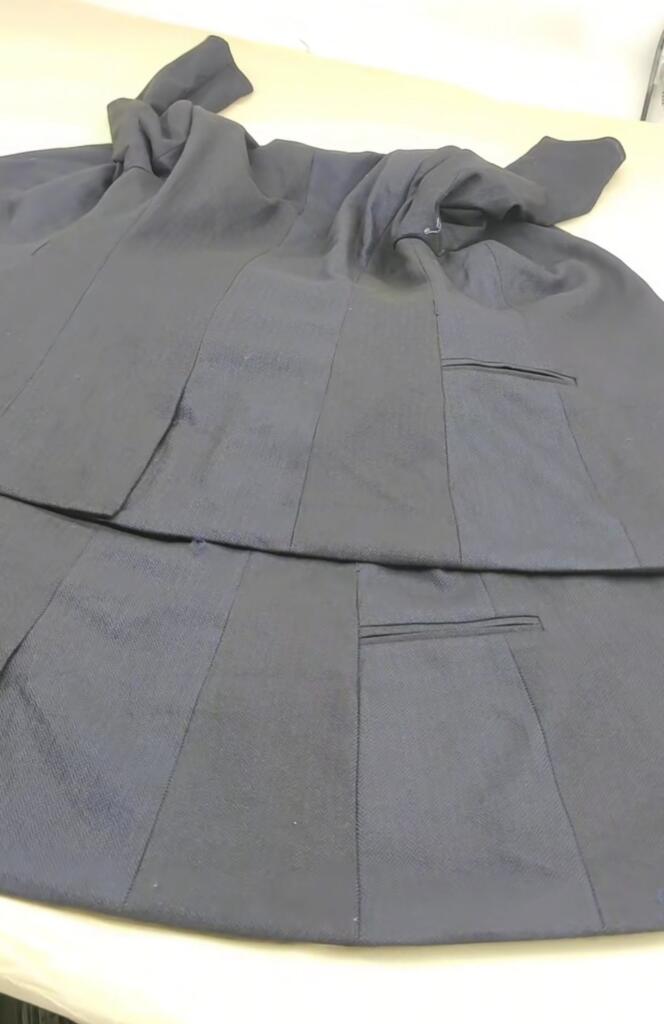
3.2 Remedial Solutions (Only Two Options)
- Option 1: Reorder and reproduce: Only applicable to orders with sufficient lead time. It requires repurchasing fabric and reworking production, incurring both fabric and schedule costs.
- Option 2: Professional color touch-up: The mainstream industry remedy. Specialists use acrylic paint spraying to reduce visible color differences. However, touch-up is charged per piece, is very costly, and cannot fully restore the original color, leaving quality defects.
3.3 Preventive Solution at Source
Formal nylon 4-way stretch fabric suppliers cut full-width swatches from each roll and compare colors uniformly before shipping to screen out defective fabrics. For high-requirement customers, it is common practice to request suppliers to send swatches in advance. After the buyer’s quality control confirms color consistency, the supplier arranges shipment, completely eliminating the risk of head-to-tail color variation.
4. Uneven Selvedge Tension (Tight/Loose Selvedge) — ★★★
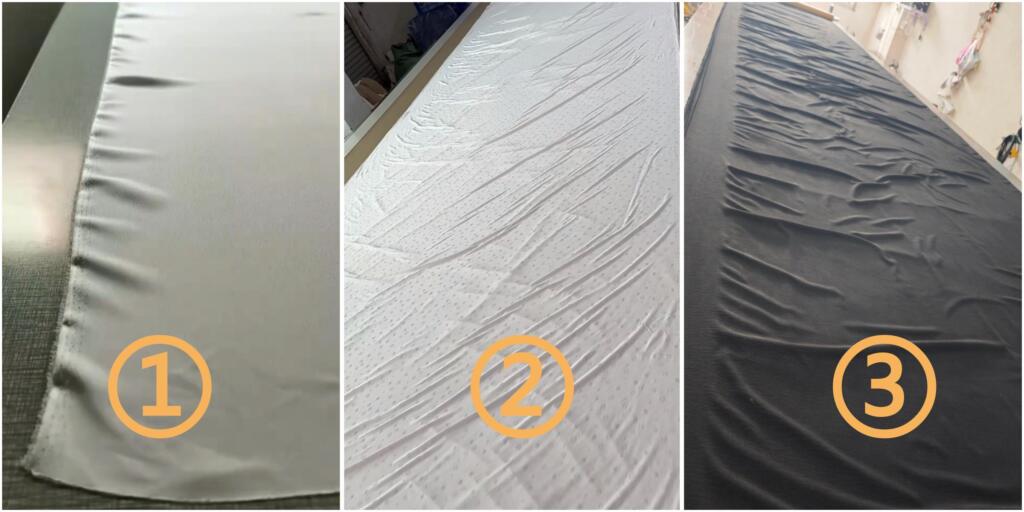
Uneven selvedge tension is mostly discovered during the cutting stage. Uneven tension on the left and right edges of the fabric causes misaligned cutting, skewed pattern pieces and fabric waste. In severe cases, it directly disrupts the entire production schedule and delays order delivery.
4.1 Root Causes
- 90% of cases: Mismatched left and right tension parameters during the fabric finishing process, resulting in uneven selvedge tightness, skewed weft and bowed weft.
- 10% of cases: Fabric is rolled directly after high-temperature finishing without full cooling, creating a hot-inside/cold-outside state. Uneven spandex shrinkage then induces selvedge tension defects.
4.2 Targeted Solutions
- Mild tight selvedge issues: ① High-temperature steam pre-shrinking to allow the fabric to fully retract and restore stretched selvedge structure; ② Cut small notches along the selvedge every 15cm to release internal fabric stress and correct tension deviation. – Applicable to the situation in Picture ①、②
- Severe uneven selvedge issues: Cannot be remedied on site. The fabric must be returned to the dye house, re-soaked and held at temperature for several hours to allow full retraction, then re-finished. If the fabric has been exported overseas or produced at a remote sewing facility, there is no remedy and it must be scrapped directly. – Applicable to the situation in Picture ③
5. Mifu Fabric’s Sourcing Solutions for the Above Issues
5.1 How do you ensure I receive full-yardage nylon 4-way stretch fabric?
A: Mifu Fabric uses loose winding throughout the process to prevent the highly elastic fabric from being stretched. After inspection, each roll is weighed to verify yardage accuracy. We inspect at 101 meters and label the roll at 100 meters — meaning 1 extra meter is provided for every 100 meters ordered. With triple verification, we guarantee accurate yardage without exception.
5.2 Do you test color fastness before shipping Nylon 4‑Way Stretch Fabric?
A: Yes. We are even more stringent on color fastness than our customers, ensuring fading issues are resolved before fabric leaves the factory. We also provide third-party color fastness test reports from the China National Textile Association (CNTA). We have mature production experience in color fastness improvement. You can read this article for more details – Boost Colorfastness of Spandex Core-spun Fabrics Sol.5
5.3 How do you prevent color variation issues?
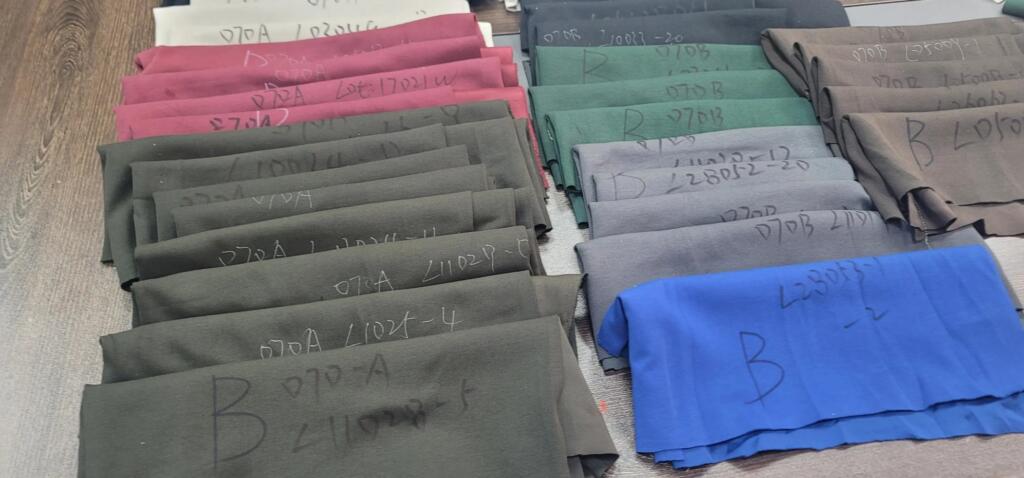
A: We actively remove head and tail sections with uneven weight and color deviation during production. All finished fabrics go through roll-by-roll swatch comparison for color consistency before shipping to eliminate head-to-tail and roll-to-roll color variation. If obvious color variation occurs due to our quality control oversight and causes economic loss to the customer, we promise full compensation.
5.4 How do you prevent uneven selvedge tension?
A: During the swatch color inspection step, we simultaneously check for finishing defects, focusing on skewed weft, bowed weft and selvedge tension issues — the two main causes of uneven selvedges. With years of mature experience in nylon 4-way stretch production, we know the product characteristics well and never roll fabric while it is still hot.
6. Rare but High-Impact Hidden Risks
In addition to the common issues above, there are low-probability, high-risk hidden problems with nylon 4-way stretch fabrics. These issues are not easily detected during inspection or receipt, and mostly only surface during ironing, pressing, storage, or even after delivery.
6.1 Nylon Fabric Yellowing
Fabrics treated with inferior softeners during finishing have poor aging resistance and gradually oxidize and yellow over long-term storage. Second, humid, hot and poorly ventilated storage conditions, or prolonged stacked storage where fabric is under pressure, can also cause oxidation — this commonly occurs during ocean freight. Light, off-white and beige nylon 4-way stretch fabrics are the most prone to yellowing.
Consequences: The fabric appears normal in color upon receipt, but gradually yellows partially or fully after cutting, garment making and pressing, resulting in inconsistent color across the same batch of garments and visible shade differences. It cannot be remedied by washing or color touch-up, and can only be scrapped in bulk.
6.2 Single-Setting Process Risk in Nylon 4‑Way Stretch Fabric
Some low-price suppliers omit the secondary precision setting process to cut production costs and speed up delivery, performing only one rough setting pass. Single setting cannot fully release internal fabric stress, and the shrinkage difference between spandex and nylon fibers is not fully balanced, leaving large amounts of hidden internal tension in the fabric — a semi-finished state of “surface compliance, internal instability”.
Consequences: Fabrics with single setting have extremely poor dimensional stability. After garment pressing, washing, high-temperature ironing or pressurized storage, they are highly prone to secondary shrinkage, distorted fit, local wrinkling and uneven surface texture. Garment shaping fails and sizing deviates, resulting in entire batches failing flatness and drape standards and being unfit for delivery. It also significantly increases cutting waste and rework costs, and almost always fails inspection for high-end workwear, outdoor apparel and export orders.
6.3 Substandard Iron Shrinkage Risk
Fabrics are not tested for high-temperature iron shrinkage before leaving the factory, with non-standard setting temperatures, line speeds and tension parameters. Many factories only test wash shrinkage and ignore high-temperature iron shrinkage, which is essential for garment production.
Consequences: During normal garment pressing, fusing and high-temperature setting processes, the fabric undergoes irregular shrinkage and uneven local shrinkage, leading to garment size deviation, inconsistent body/sleeve lengths, distorted fit, zipper rippling and seam twisting. The size pass rate of finished garments drops sharply, large quantities of defective products have to be reworked or scrapped, and production schedules are severely disrupted — one of the most troublesome hidden production defects for factories.
6.4 Curling After Lamination of Nylon 4-Way Stretch, Causing Sewing Difficulties
This problem mainly stems from mismatched shrinkage and tension between the base fabric and the laminated film, plus inadequate pre-setting of the fabric. Nylon 4-way stretch itself has high elasticity and active internal stress. If the fabric is not fully stress-relieved and tension-controlled before lamination, there will be a mismatch in expansion coefficient between the fabric base and the film layer. In addition, uneven adhesive coating thickness and non-standard lamination temperature parameters will further aggravate inward curling and edge warping.
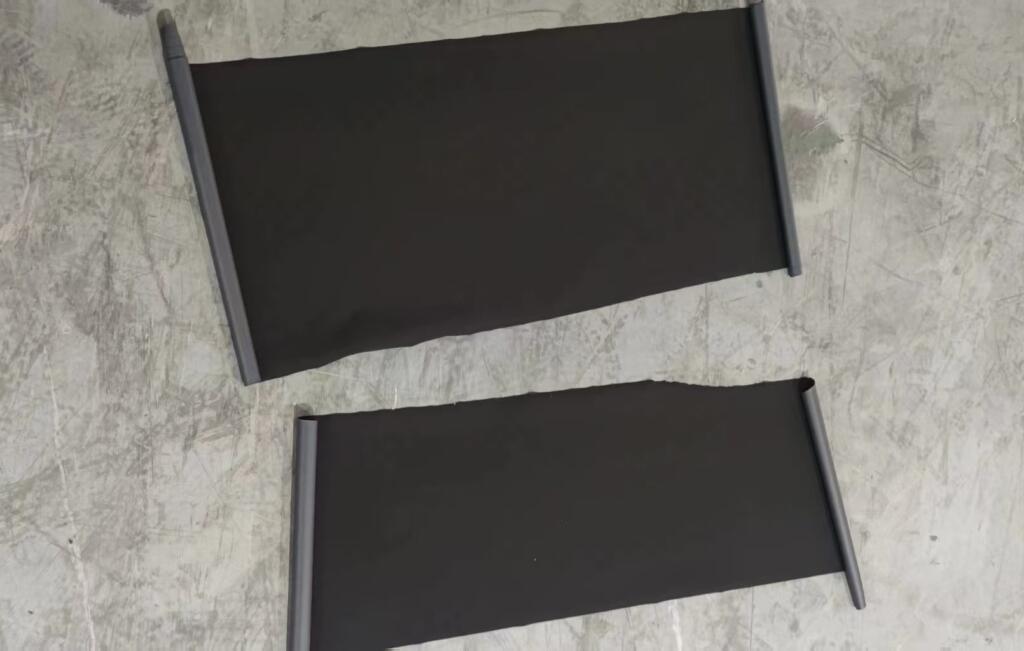
Consequences: Severe appearance defects after lamination, with continuously curled edges that cannot lie flat, directly causing sewing misalignment, skewed seams, uneven tape application and crooked stitching in garment factories. Workers have to repeatedly pull and straighten the fabric manually, greatly reducing cutting and sewing efficiency and significantly increasing labor costs and rework rates. Severely curled fabric cannot be properly stitched or bonded
6.5 “Shine Marks” on Twisted Nylon 4‑Way Stretch Fabric
Root cause: The twisted nylon four-way stretch fabric, processed through a high-twist technique, boasts high yarn twist, strong fiber cohesion, and a tight, crisp surface. However, the surface fibers of the fabric are tightly packed and exhibit greater rigidity. During dyeing, high-frequency friction in the dyeing vat and dragging during the assembly line can cause local yarn compression and slippage, leading to fiber lodging and forming irreversible shiny reflective marks, commonly known in the industry as “Shine Marks”. This issue is particularly prevalent in high-twist, fine denier, and high-density nylon four-way stretch fabrics.
Consequences: The fabric surface appears uniform and flawless upon flat inspection at receipt, but when viewed at an angle under different lighting, local shiny streaks, bright marks and patchy sheen differences become visible, creating uneven light and dark across the fabric. Shine marks are permanent defects that cannot be repaired by washing or pressing.
7. Conclusion — Mifu Fabric’s Sourcing Recommendations
The core logic of avoiding pitfalls in nylon 4-way stretch fabric sourcing lies not in after-the-fact remedies, but in pre-production quality control and detailed inspection. Issues like insufficient yardage, substandard color fastness, head-to-tail color variation and uneven selvedges may seem like minor defects, but they actually trigger a chain reaction of cost losses, production delays, after-sales compensation and brand damage.
Mifu Fabric specializes in high-quality nylon 4-way stretch fabrics. Our product range covers deniers from 20D to 200D and weights from 60gsm to 320gsm. High Colorfastness, Stable Dimension and Super Elasticity are our standard processes for nylon 4-way stretch fabric production.
Check — How will we handle your orders for high-spec woven stretch fabrics?