

I. Basic Order Information
General Overview: This review focuses on an anomaly case in the mass production of dyed four-way stretch fabric. The overall order had high quality requirements and strict process standards. Specific detailed parameters are as follows:
- Fabric Specification: 75D*150D Plaid Polyester Four-Way Stretch
- Total Order Quantity: 16,500 meters
- Production Colors: Black, Navy, Dark Grey (Dark shades for four-way stretch dyeing, making color difference control challenging)
- Quality Standards: High colorfastness standards per US specifications, super-strong fluorine-free waterproof function, finished product resistance to washing ≥ 10 times.
- Processing Technology: Outsourced to a partner dyeing mill, using overflow/airflow dyeing process, standard for high-end four-way stretch dyeing.
II. Complete Event Timeline and Root Cause Analysis
General Overview: This high-standard four-way stretch dyeing order adopted synchronous head sample trial production and bulk production preparation. The prolonged overseas sample confirmation cycle led to long-term storage of undetermined dyed fabrics, resulting in batch surface defects with major rework risks.
For this high-requirement four-way stretch dyeing order, the mill followed standard procedure by conducting a head sample trial run while simultaneously preparing for bulk production. After the head sample dyeing process was completed, the on-site merchandiser strictly followed operating procedures, cut a 3-5 meter qualified sample, brought it back to the company for filing, and handed it to the sales team to send to the customer for confirmation.
As the customer was a domestic trading intermediary, the sample needed to be re-sent to the end customer overseas for confirmation. The overseas confirmation process was cumbersome and slow to approve, causing the head sample color confirmation cycle for this four-way stretch dyeing to take up to 20 days, far exceeding the standard confirmation cycle of under 7 days.
During the 20-day waiting period for confirmation, the finished fabric rolls, which had been dyed but not yet undergone post-finishing stentering, were stored stacked at room temperature in the dyeing mill’s raw material storage area. At the time, during the transition from spring to summer, the humidity in the mill’s storage area was relatively high. The unstented four-way stretch fabric fibers were in a loose, open state. Residual dyes and printing auxiliaries on the fabric surface were in prolonged contact with air and moisture, leading to continuous oxidation reactions.
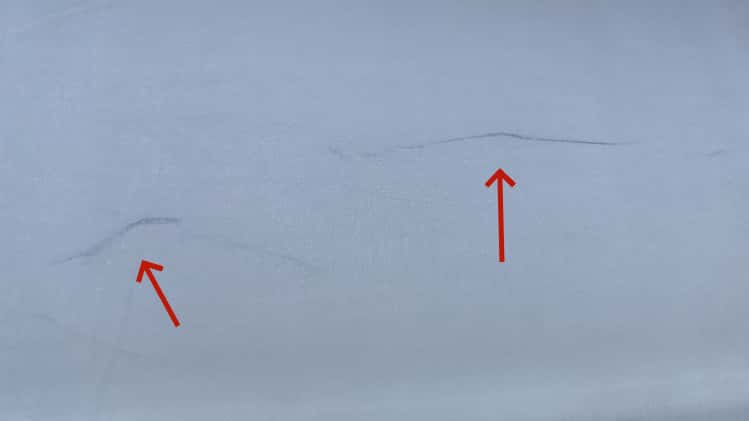
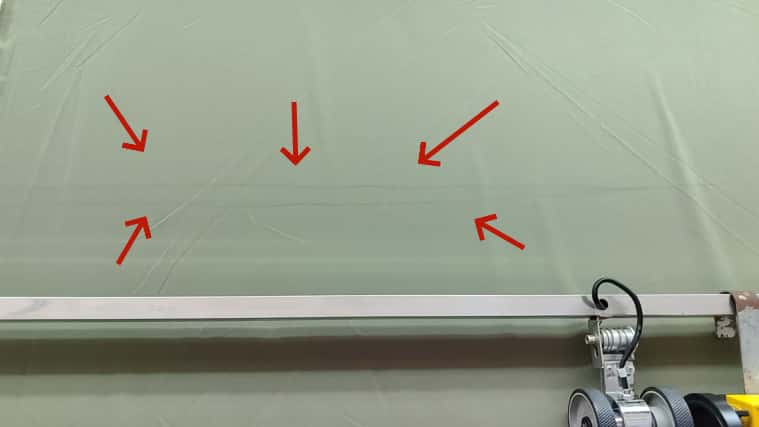
When the final color sample confirmation notice was received from the customer after 20 days, and the mill started the post-finishing stentering process, a full on-site inspection revealed batch-quality defects across the entire lot of dyed four-way stretch fabric, including air marks, alkali spots, and irregular white patches.
The mill’s technical team assessed the process: This order was for dark-colored four-way stretch fabric with mandatory high colorfastness and fluorine-free waterproof requirements. If traditional re-dyeing/reductive soaping repair processes were used, while potentially temporarily removing surface defects, it would very likely cause color light shift or color deviation for the dark-colored fabric. This would require re-sending samples for secondary confirmation, delaying production and delivery, and carried significant risks of rejection by the end customer or batch rework/scrap.
Summary: The core cause of the quality problem is the mismatch between the long sample confirmation cycle and the storage tolerance of undetermined dyed four-way stretch fabric. Delayed post-finishing treatment leads to oxidative deterioration of the fabric surface, and conventional rework processes have uncontrollable quality risks.
III. On-Site Emergency Repair Plan (Low-Cost, Practical Operation)
General Overview: Aiming at common defects such as alkali spots, air marks and white patches caused by long-term storage of four-way stretch dyed fabric, targeted low-cost and color-protective emergency repair measures were formulated for different defect situations and fabric attribute requirements, which are highly operable in workshop production.
1.Treatment for Minor Alkali Spots
For four-way stretch dyed fabric with only slight alkali bloom on the surface but no obvious marks, directly send it back to the dyeing machine for a simple light water rinse process without adding any auxiliaries. This has virtually no impact on the base color or color light, is efficient to process, and carries zero color difference risk.
2.Treatment for Fabric Stored Long-term in High-Temperature Season:
During summer’s high temperature and humidity, four-way stretch dyed fabric stacked for just 3-5 days is prone to auxiliaries precipitating and weather whitening. The rolls must be disassembled and placed into dyeing trucks, then fully soaked in clean water until the fabric is completely saturated and the auxiliaries are fully dissolved.
3.Differentiated Stentering Repair:
For four-way stretch dyed fabric with fluorine-free waterproof function, after soaking, it needs to be re-dewatered and then sent for stentering. For the same fabric without waterproof requirements, after soaking, it can be directly sent for stentering, which completely eliminates air marks and residual white patches on the fabric surface.
Summary: The classified repair plan avoids the high risk of color deviation caused by traditional reductive soaping, balances production cost and finished product quality, and effectively solves the quality problems of long-stored dyed four-way stretch fabric.
IV. New Long-term Corrective Actions for the Workshop (Mandatory for All Types of Four-Way Stretch Dyeing Orders)
General Overview: Based on the quality loss caused by delayed head sample confirmation of four-way stretch dyeing orders, standardized mandatory management rules have been upgraded to eliminate similar batch risks from the source of production.
Drawing lessons from this major defect incident caused by the delay in confirming the head sample for four-way stretch dyeing, the company has updated standardized production control rules for all outsourced and in-house four-way stretch dyeing orders, to be strictly implemented by all personnel and across all processes:
Core Regulation: For all four-way stretch dyeing head samples, after they are removed from the dyeing machine, regardless of whether the customer has returned confirmation comments, and regardless of whether the order has waterproof or high colorfastness requirements, the mill must complete low-temperature pre-drying and pre-stentering within 5 days.
This step will slightly increase costs for water, electricity, equipment, and labor, but it fundamentally solves the problems of oxidation and auxiliary precipitation caused by prolonged storage of four-way stretch dyed fabric. It completely avoids batch defects like alkali spots, white patches, and air marks, preventing subsequent chain-reaction quality problems such as re-dyeing/repair requiring re-sampling and confirmation, color deviation, and delivery delays. It significantly reduces the production risks and after-sales costs associated with four-way stretch dyeing orders.
Summary: The new pre-stentering process mechanism sacrifices a small amount of production cost in exchange for stable batch quality, effectively avoiding hidden dangers such as defective rework and delivery delays caused by uncontrollable external sample confirmation cycles.
V. Core Process Knowledge Points and Job Requirements
General Overview: Combined with the actual abnormal case of four-way stretch dyeing, the standardized process specifications and post responsibility requirements are sorted out, which are incorporated into the daily workshop training system to standardize operation and prevent risks.
1.Customized Dyeing Process
The overflow/airflow four-way stretch dyeing process must strictly match customer quality requirements. For four-way stretch orders with US-spec high colorfastness and waterproofing, a reductive soaping step must be added to thoroughly remove surface floating color and residual chemical auxiliaries. This is a core process to ensure the finished quality of dyed four-way stretch fabric.
2.Fabric Storage Standards:
Four-way stretch dyed fabric that has undergone reductive soaping can be wrapped tightly as whole rolls in nylon film. Under normal temperature and humidity conditions, it can be stored safely for 7-12 days without staining or weathering issues. Four-way stretch dyed fabric that has not undergone reductive soaping must never be stored for long periods, as it is highly prone to irreversible defects such as back-staining, weather whitening, and uneven air marks due to uneven moisture/drying.
3.Color Fixation Principle:
After being heated and squeezed in the dyeing machine, the fibers of four-way stretch fabric are in a loose state, allowing the dye liquor to penetrate and dye thoroughly. The fabric must undergo high-temperature baking/curing via the stenter to quickly lock the dye molecules, stabilizing the color light and ensuring the finished product meets colorfastness standards. The dye stability of four-way stretch dyed fabric that is not stented in time is extremely poor, making it highly susceptible to subsequent color change or defects.
4.Job Performance Requirements:
An excessively long confirmation cycle for the head sample is a frequent risk point for four-way stretch dyeing orders. On-site merchandisers must proactively assess the likely confirmation duration, coordinate in advance with the company’s sales team and the dyeing mill’s production manager. Once it is estimated that the confirmation cycle will exceed 7 days, the pre-drying/pre-stentering contingency plan should be triggered immediately to proactively avoid hidden risks related to re-dyeing, color deviation, and delivery delays for four-way stretch dyed fabric.
Summary: Standardized dyeing processes, scientific storage specifications and proactive post risk judgment are the three key guarantees for the stable quality of four-way stretch dyeing orders, which must be strictly implemented in daily production.