1.Market Matures Rationally, Demand From Emerging Markets Grows
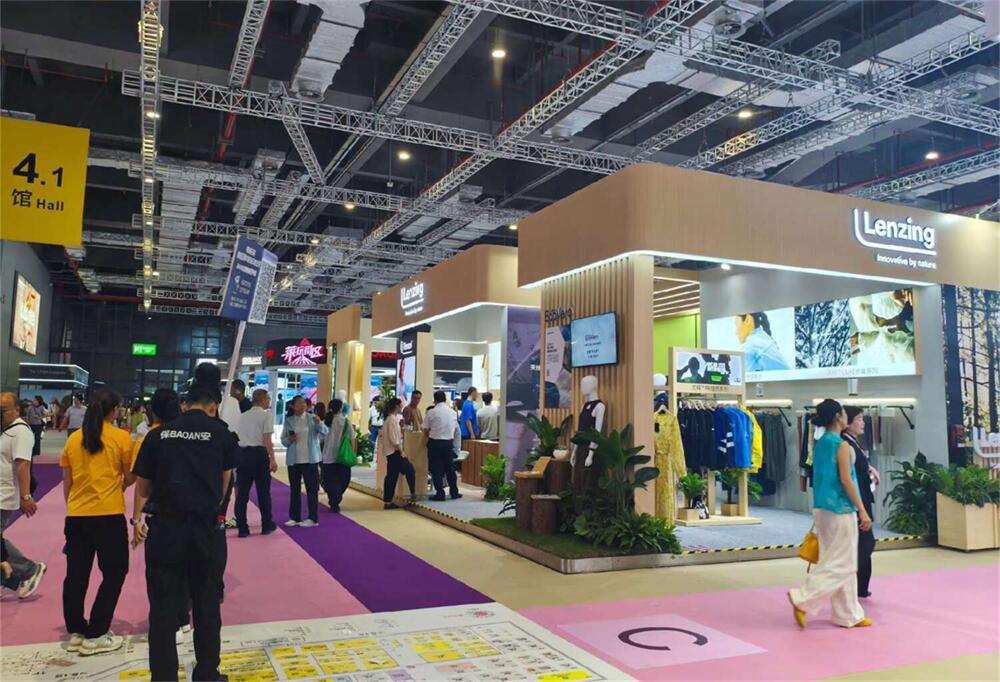
I arrived at noon on day one, deliberately skipping the morning rush after hearing “the whole industry chain is here this year.” I walked straight in — no queues anywhere. Exhibitors were plenty; visitors were not.
Is that good or bad? The market is clearly cooling into rationality, and with so many channels for industry exchange today, shows are no longer the only source of information. Yet two details stood out: far more young faces, both visiting and exhibiting; and plenty of international buyers — not from Europe or the US, but from India, Pakistan, and Russia, browsing fabric by the batch.
We in this industry love to say, “I don’t want my children to go into textiles.” But as one generation fades, a younger one rises. New blood keeps this industry alive.
One disappointment: the trend zone — traditionally the essence and weathervane of the show — offered little beyond clichés, just piles of fabric stacked as high as they’d go.
2.Full-Chain Product Upgrading, Chemical Fiber Sector Sees Diverse Innovation
Day two was busier, especially in the fiber and yarn halls. Natural fibers — cotton, wool, linen, silk — all showed genuine iteration and upgrades. The synthetic segment was a “hundred flowers blooming” moment of functional innovation. Trendy directions still await market validation; may the tide leave the truly capable standing.
What really struck me, though, was the transformation of sales formats:
Yarn booths used to be a few cones plus brochures. This year, a yarn maker’s booth showcased an entire collection of fabrics made from its own yarns — whole series, not samples. Fabric mills have universally moved to garment samples, and some booths outshone the fashion counters in shopping malls: stylish samples, solid workmanship, coherent identity, polished design.
This is the market forcing the supply chain to change — and it’s a smart move: it lets downstream customers visualize how a product lands in real applications. A yarn is no longer a cone; it’s a touchable fabric. A fabric is no longer a swatch; it’s a wearable garment. Once products become tangible, communication costs drop and order conversion rises. This trend is irreversible and will only deepen in sophistication.
3.Irreversible Shift in Sales Model: From Selling Products to Delivering Solutions
On the final day, everything I’d seen connected into a single thread: Forward Integration — a company proactively extending into its downstream links. What we’re witnessing — fabric mills producing garment samples, even setting up private-label operations for apparel brands — is a lightweight, scenario-based form of it.
The logic is clear: move your product one step downstream, make it instantly legible to customers, lower their decision threshold, and build differentiation along the way.
Yes, it’s a move made under pressure — the market is brutally competitive. But reframe it: turning pressure into drive and learning power is precisely the capability that lets you survive long-term in this rainforest-like ecosystem. Textiles isn’t a sunset industry; it’s a rainforest — complex enough that there’s always a niche for a new species.
After three days, my biggest takeaway: this industry is changing the way it lives — from selling materials to selling solutions, from waiting for buyers to walking toward them.
My deepest respect to everyone still developing, still marketing, still going. See you at next year’s show.