

I. Order Basic Information & Quality Standards
Overview: This batch represents a mass production order for outdoor functional nylon climbing fabric. The overall order volume is large, with stringent elasticity requirements and high colorfastness demands. It is a high-parameter production order for outdoor nylon stretch fabric, highly sensitive to dyeing pH, temperature ramping curves, and pretreatment cleanliness.
Fabric Specification: 160D Nylon Climbing Fabric (90% Nylon + 10% Spandex)
Core Quality Requirements:
- High Colorfastness: Meets high standards for washing and light fastness required for outdoor fabrics.
- High Elasticity Performance: Fabric stretch standard requires stretching from 50cm to 64cm, with stable elastic recovery and no localized elasticity failure.
- Zero Defects on Fabric Appearance: No bubbling, no spandex breakage, shrinkage rate after heat setting/washing meets standards.
Section Summary: This order is for high-elasticity, high-colorfastness outdoor functional nylon climbing fabric. The process has a low tolerance for error, with requirements for the dye system, pH control, and pretreatment cleanliness far exceeding those for ordinary nylon/spandex stretch fabrics.
II. Production Anomaly Phenomenon (Problem Origin)
Overview: The entire order was produced in four colors using the same process, same machinery, and same procedure. In the end, only the Khaki color exhibited batch quality defects, while the other colors were all qualified. This is a classic case of a color-specific anomaly caused by “dye system compatibility + process detail control.”
After the entire 60,000 meters of nylon climbing fabric completed the full dyeing and stentering production process, the mill’s final inspection revealed the following abnormal conditions:
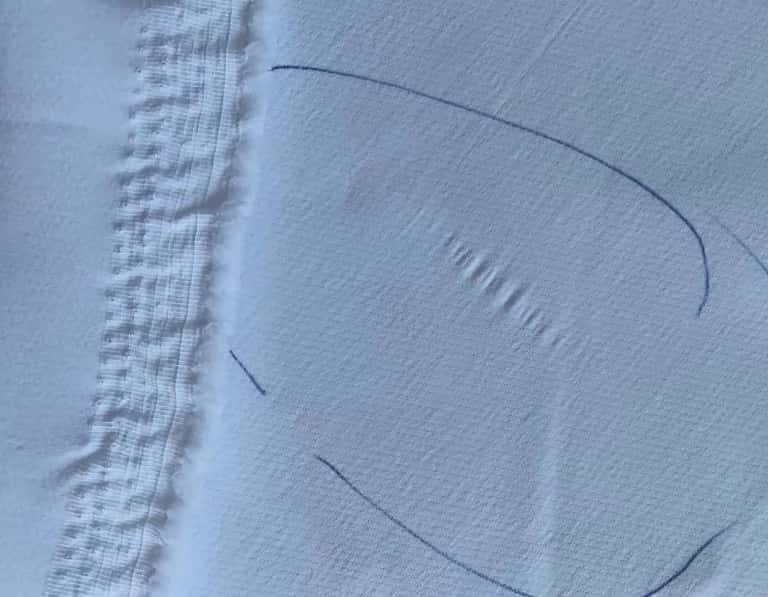
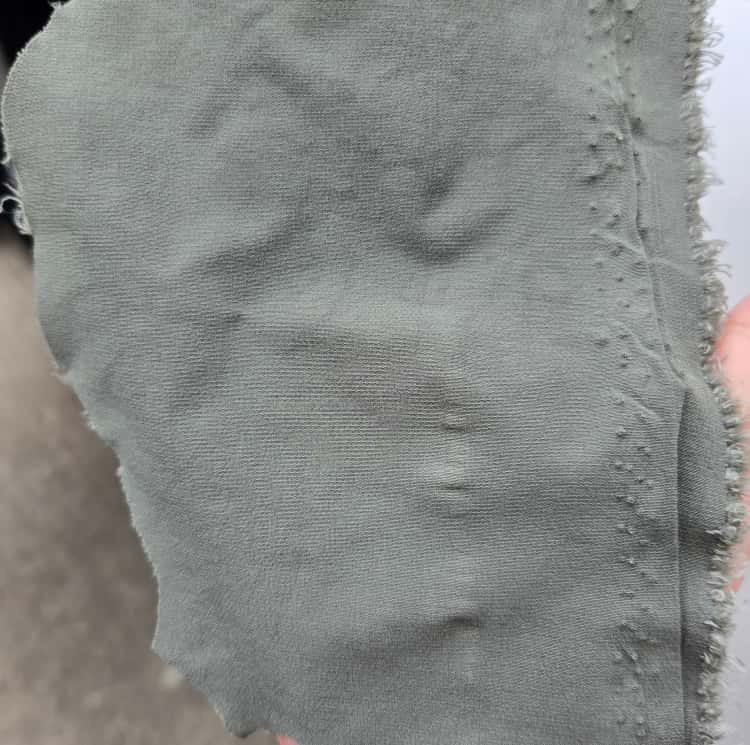
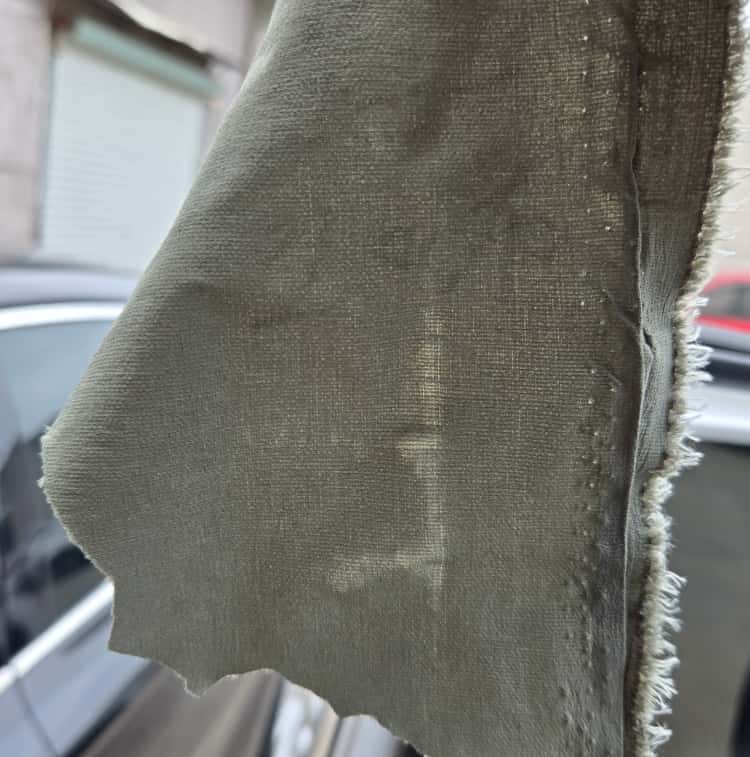
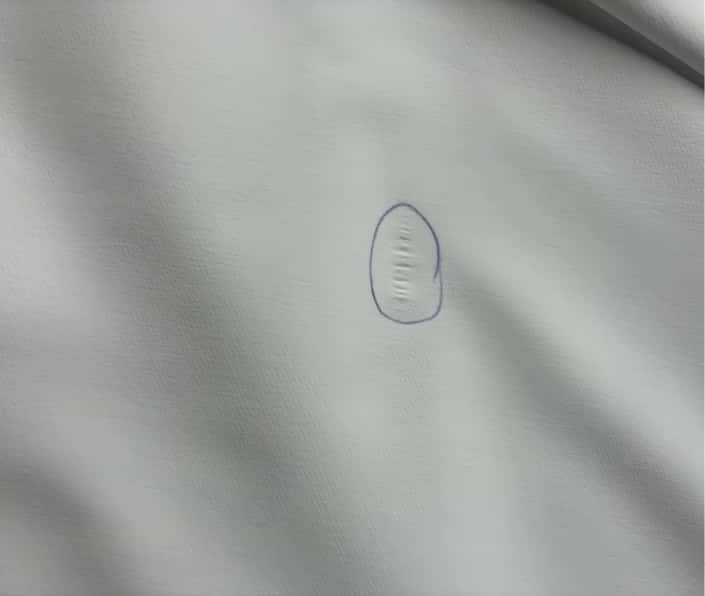
- Khaki Fabric: Over 50% of the fabric surface showed localized bubbling, spandex filament melting/breakage, and loss of elasticity. The fabric had small blisters, loose sections, uneven hand feel (tight and loose areas), making it unsellable.
- Light Gray, Navy, Black: The fabric surfaces were smooth, elasticity was uniform, with no bubbling or filament breakage. All indicators were completely normal.
Despite using a uniform process for all four colors, only one color exhibited batch defects. The preliminary judgment was that the issue was not with the equipment or general pretreatment process, but a targeted defect caused by a mismatch between the dye components and the dyeing conditions.
Section Summary: This anomaly is a typical case of color-selective defects. General process issues were ruled out, and the core cause was identified as a mismatch between the dye used for dyeing and the pH/temperature conditions during the dyeing process.
III. Original Standard Production Process Used
Overview: In the initial phase of this order, the industry-standard mature process flow for nylon climbing fabric was used. The process was complete and the procedures were standard, but no specific parameter adjustments were made for the high-colorfastness yellow dye system, ultimately leading to quality risks.
The initial mass production adopted the standard process flow for stretch nylon climbing fabric:
Open-width pretreatment → Cold pad batch → Pre-shrinking → Dyeing → Dewatering & Opening → Finished Stentering
Because the customer explicitly required high wash fastness, the dyeing mill conventionally used medium-acid dyes to achieve the fastness targets.
Characteristics of the Medium-Acid Dye Process:
- Medium-acid dyes for blue, yellow, red, and orange shades generally contain high levels of cobalt metal components.
- These large-molecule dyes have very strong adsorption affinity for fibers, can stably increase wash fastness to Grade 4 or above, meeting the high standards for outdoor fabrics.
- They are extremely sensitive to the dyeing machine’s pH and temperature ramp rate. The standard process window requires strict pH control within the weakly acidic range of 5–7.
- The stronger the acidity of the dye liquor, the faster the dye uptake rate, resulting in an extremely low tolerance for process errors.
Section Summary: While medium-acid dyes offer significant advantages in fastness, they require extremely high precision in process conditions. Any imbalance in pH or inadequate cleaning can easily trigger damage to the spandex in nylon climbing fabric.
IV. Root Cause Analysis (Core Trigger)
Overview: Through step-by-step process tracing and review, the root cause was finally identified as “insufficient dyeing machine cleaning leading to excessive residual alkali on the fabric surface,” which, combined with the catalytic nature of the cobalt-based yellow dye, ultimately caused spandex hydrolysis, melting, and bubbling.
Step-by-step tracing on the workshop floor showed that parameters for open-width pretreatment, cold pad batch, pre-shrinking, and stentering were all within normal ranges. The anomaly appeared only in the dyeing stage.
In an effort to increase output and shorten production time, the operator shortened the cleaning duration, and lowered the cleaning temperature and pressure during the dyeing machine cleaning stage before dyeing. This resulted in residual alkali not being thoroughly rinsed from the machine, ultimately leading to excessive alkali content in the greige fabric fibers and a high pH on the fabric surface.
Core Principle Explaining Why Only Khaki Had Problems:
Cobalt-containing medium-acid dyes, under high-alkali, high-heat, high-humidity conditions, produce a strong catalytic effect, significantly accelerating the hydrolysis, softening, and melting of spandex filaments. Among the four color shades, Khaki has a very high proportion of yellow and orange components, resulting in a much higher cobalt metal content compared to black, gray, and navy. Therefore, it is most sensitive to residual alkali. Conversely, the dye formulas for black, gray, and navy have low proportions of yellow/orange components, leading to a weak catalytic reaction, hence no defects appeared.
Other similar risk factors include:
- Incomplete effluent discharge during pretreatment, leaving residual alkaline auxiliaries on the fabric surface.
- Non-standard acetic acid ratios, disrupting the pH system of the dye.
- Mixing neutral dyes and weak-acid dyes, causing pH range confusion.
Section Summary: The root cause of this defect was human error – rushing to increase production speed, leading to incomplete machine cleaning and alkali residue on the fabric. This, combined with the catalytic nature of the cobalt-heavy yellow dye system, ultimately resulted in the batch anomaly of spandex breakage and fabric bubbling on the nylon climbing fabric.
V. Final Corrective Process Plan (Fundamental Solution)
Overview: Replace the high-risk, high-cobalt medium-acid yellow dye with a low-cobalt weak-acid dye system. Complement this with optimized fixation and stentering processes. Accept a slight increase in cost to achieve fabric stability and meet high colorfastness standards, completely eliminating the risk of spandex hydrolysis.
1. Dye System Replacement
Switch to low-cobalt or cobalt-free weak-acid dyes for the Khaki shade. These dyes have extremely low metal content and are less likely to catalyze reactions under pH-imbalanced conditions, effectively protecting the spandex from hydrolysis and melting. They also significantly improve the color saturation and brightness of bright shades like yellow, army green, and red.
Drawback: Conventional weak-acid dyes have a base fastness of only Grade 2.5 or higher, unable to directly meet the customer’s high fastness requirements; thus, post-process reinforcement is necessary.
2. Complementary Process Upgrades & Reinforcement
- Optimize the fixation process in the dyeing machine, using specialized fixing agents to enhance wash and light fastness, compensating for the inherent fastness weakness of weak-acid dyes.
- Adjust the finished stentering process, adopting a low-temperature stentering mode to reduce damage to the spandex and dye system under high-temperature, humid conditions.
- Standardize the dyeing machine cleaning process, strictly prohibiting any reduction in cleaning temperature, pressure, or duration to prevent residual alkali on the fabric.
Section Summary: Through the combined process of “low-cobalt dye replacement + reinforced fixation + low-temperature stentering,” the problem of spandex melting and bubbling specifically on yellow shades of nylon climbing fabric was completely resolved within a controllable cost increase, while still meeting the customer’s high colorfastness quality standards.
VI. Summary of General Hidden Risks for Similar Nylon/Spandex Fabrics (Preventive Experience)
Overview: Based on this anomaly, two common high-frequency hidden risks for nylon-covered spandex woven fabrics are summarized. These can be used for workshop-wide training and proactive risk avoidance.
1. Risk of Spandex Melting Due to Residual Oil/Grease
The production of nylon-covered spandex requires adding 3%–6% textile oil/lubricant. Spandex itself is hydrophobic and sensitive. Production relies on alkaline penetrants and surfactants for deoiling. If deoiling during pretreatment is incomplete, the high temperature of pre-stentering will directly cause the oil to carbonize, leading to spandex melting and localized bubbling.
2. Risk of Spandex Aging/Hydrolysis Due to Prolonged Fabric Storage
Long storage periods for greige fabric can cause the oil and moisture inside the spandex to deplete, leading to fiber dehydration and stiffening. Residual alkaline auxiliaries can erode the fabric over the long term, accelerating spandex hydrolysis and embrittlement. This issue can be proactively identified before production through hand feel assessment and checking the pre-shrinking condition.
Section Summary: Quality issues with nylon/spandex fabrics often originate from “incomplete deoiling, excessive residual alkali, and prolonged storage aging.” When combined with incompatibility of the dye system for stretch fabrics, this can easily trigger batch functional defects.
VII. Case Summary & Production Lessons Learned
Overview: This production anomaly is a classic example of a preventable batch accident caused by “human error cutting process corners + incompatibility with the specific color’s dye characteristics.” It provides important process references for high-fastness outdoor stretch nylon climbing fabric production.
The defective fabric from this 60,000-meter order fully demonstrates that for high-colorfastness outdoor stretch nylon climbing fabric, one cannot solely rely on high-fastness dyes. The process must be customized based on the fabric’s color characteristics, metal components, pH conditions, cleaning standards, and stentering temperature. Yellow/orange dye systems with high cobalt content are extremely sensitive to residual alkali, making them high-risk colors for spandex breakage and bubbling on nylon climbing fabric.
Workshop production cannot blindly pursue output by compressing fundamental cleaning steps. Machine cleanliness and fabric pH are core control points for producing stretch nylon climbing fabric. By implementing the improved solution of “switching to low-cobalt dyes + reinforced fixation + low-temperature stentering,” subsequent production runs of the same color shades have not experienced spandex melting or bubbling defects, validating the stability of the modified process.