Preface
To improve the colorfastness of woven stretch fabrics, the key is to address the poor dyeability of spandex fibers and the volatilization of dyes during the high-temperature setting process required for elastic fabrics. Meticulous control throughout the dyeing and finishing stages is essential.
Because stretch fabrics contain spandex—which has a much lower dye uptake than the main fibers (such as nylon or polyester)—this is the primary cause of “white exposed” spandex after washing and poor staining fastness.
Drawing on industry experience and technical data, the following production details are recommended to achieve high colorfastness.
1. Weaving Stage: Ensure Proper “Covering”
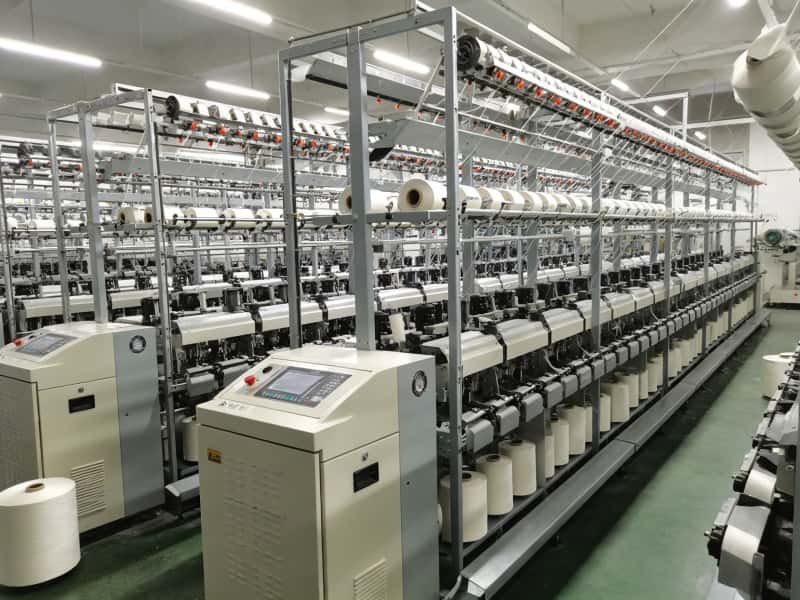
This is the most fundamental step. Use nylon or polyester drawn textured yarn (DTY) to fully cover the spandex (currently, there are also filament FDY products twisted to cover spandex, but these filament stretch fabrics hold a smaller market share).
- Function: To completely wrap the spandex yarn, preventing it from being exposed on the yarn surface.
- Effect: During dyeing, the dye only contacts the easily dyeable nylon or polyester. This prevents the spandex—which has poor dyeability—from being directly exposed, which would otherwise lead to exposed white spandex on the fabric surface and poor colorfastness of the spandex when washed or abraded. (Note: Dyeable spandex fiber products are now available, though at a slightly higher cost than ordinary spandex.)
2. Pre-treatment: Achieve Thorough “Cleaning”
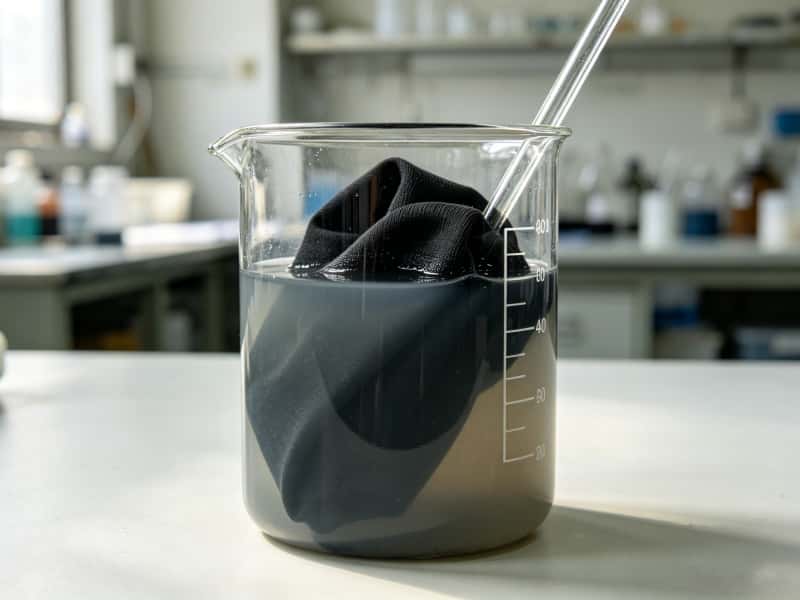
Before dyeing, it is essential to thoroughly remove residual oils, lubricants, and sizing agents from the fiber spinning and weaving processes. These impurities hinder dye adsorption and are a common cause of uneven dyeing (color spots/flowers) and reduced colorfastness.
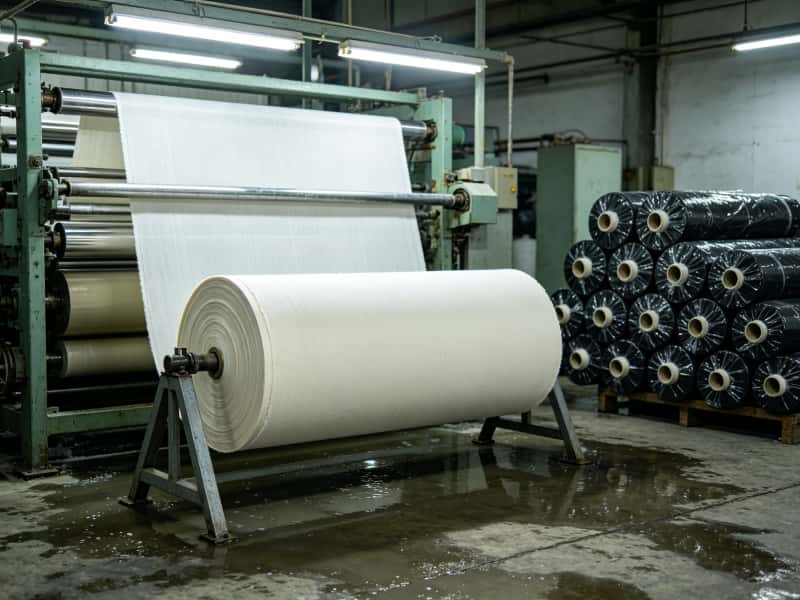
- Recommended Process: Use a cold pad batch (CPB) process combined with open-width desizing. This is more energy-efficient than conventional scouring in a dyeing machine and causes less damage to the fabric surface (conventional machine scouring can lead to chafing and crease marks).
- CPB Formulation Reference: Caustic soda, along with a de-oiling agent and a scouring agent. Pile at room temperature for 24-48 hours, then wash thoroughly and prepare for pre-setting.
3. Dyeing Stage: Achieve Precise “Coloration”
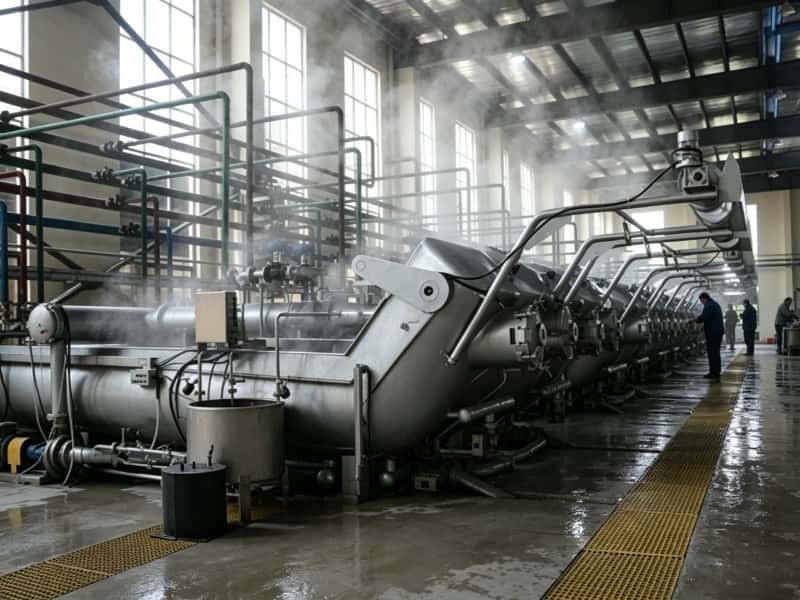
- Nylon Stretch Fabrics (Most Common): Use acid dyes for low-temperature dyeing. The dyeing temperature should be 100-110°C. These dyes offer a wide color range and bright shades, with high affinity for nylon—they are the foundation for ensuring colorfastness.
- Polyester Stretch Fabrics: Use a high-temperature, high-pressure dyeing process with disperse dyes. The dyeing temperature should generally be 120-130°C.
- Process Control: Strictly control the heating rate during dyeing (too rapid heating can cause uneven dye dissolution, leading to dye spots/flowers). Also control the holding time (insufficient holding time can cause “crow’s feet” crease marks on the fabric surface).
4. Post-treatment: Achieve Thorough “Washing and Protection”
This is a critical step for improving fastness. It involves a three-step process: strong washing + preventing back-staining + effective dye fixing.
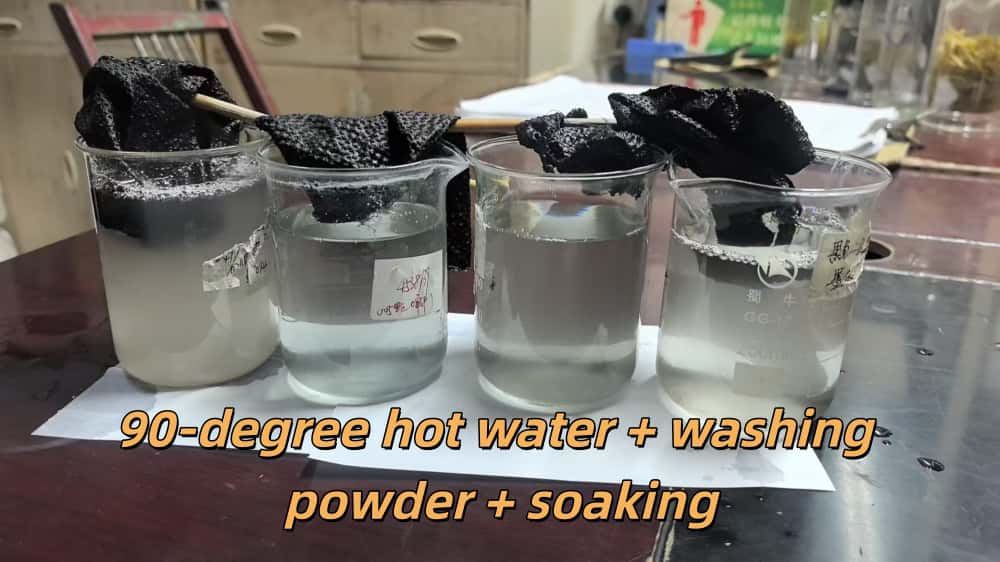
- Thorough Soaping: After dyeing polyester stretch fabrics, a high-temperature soaping process is necessary to remove unfixed “surface dye” from the fiber surface. A small amount of sodium hydrosulfite can also be used for reduction cleaning. Disperse dyes themselves are not completely water-soluble; sodium hydrosulfite reduces them to water-soluble “leuco forms,” thereby improving colorfastness.
- Acid Dye Fixing: During the holding phase, use an acid dye-fixing agent to form a protective film on the fiber surface, sealing the dye. This significantly improves various fastness properties, including washing and perspiration fastness.
5. Setting Stage: Avoid “High-Temperature Damage”
Excessively high setting temperatures can harden the spandex, cause it to lose its elasticity, or even melt it, thereby destroying the fiber structure and affecting the stability of the fixed dye.
- Nylon/Spandex: Conventional literature suggests setting temperatures of 185-190°C.
- Polyester/Spandex: Conventional literature suggests setting temperatures of 190-195°C.
However, these conventional temperatures mentioned in most references have already been superseded by our production practice. The above two conventional methods only yield average or poor colorfastness for spandex elastic fabrics.
We have now improved the process with the following scheme, which provides more stable dimensional stability (heat setting shrinkage) and better colorfastness.
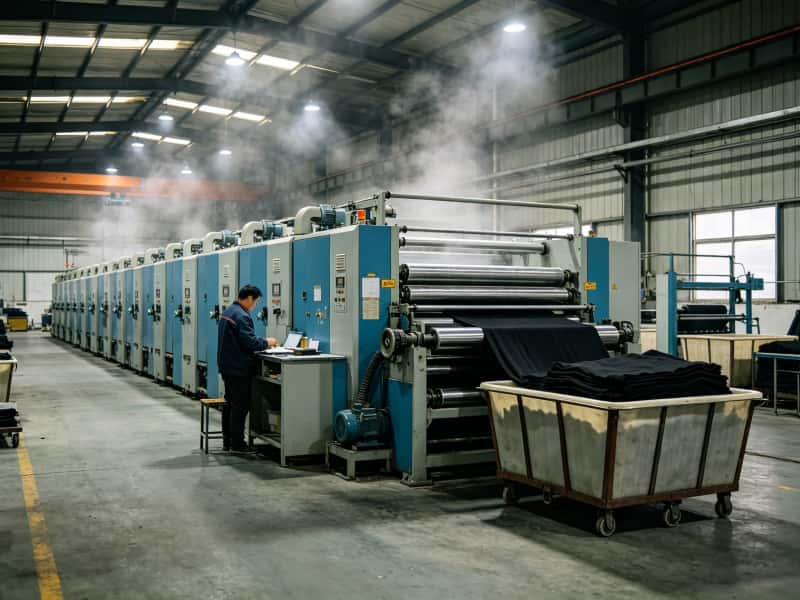
- Nylon/Spandex: Pre-setting at 210-220°C; Final setting at 150-160°C.
- Polyester/Spandex: Pre-setting at 200-210°C; Final setting at 140-150°C.
- Setting Speed: Should be determined on-site based on the number of oven chambers and the specific airflow/air volume of the stenter frame being used.
Final Summary
Is your stretch fabric made of nylon, polyester, or another fiber? The dye and fixing agent systems vary significantly depending on the fiber. Please provide the specific composition of your fabric for the best possible recommendations.