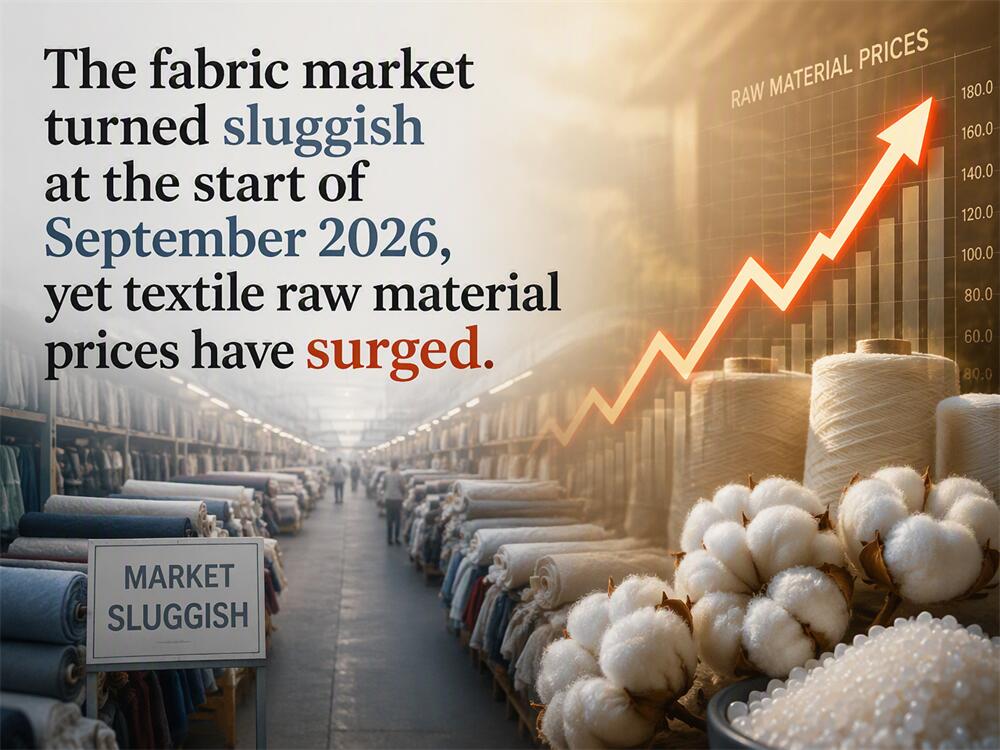
Raw materials up, raw materials down — textile mills are idle either way. What’s next?
📈 Geopolitical tensions continue to drive global oil prices higher, pushing up costs across the entire synthetic fiber supply chain. Cost pressure is mounting steadily.
What makes it far more painful is the classic two-way squeeze: upstream raw material costs keep rising, but downstream buyers are holding firm on existing prices — and even pushing for further cuts. Raise prices and you lose customers. Hold prices and you take losses. This is the daily reality for textile manufacturers right now.
Many peers are asking: will this raw material hike feed through to fabric prices? My take: partially, yes — but it will be a gradual, measured process, not a sharp spike.
Three core factors support this view:
① Cost side ⚙️ With no clear de-escalation in geopolitical tensions, oil will remain elevated. Higher raw material costs are a hard structural reality, not a short-term blip.
② Demand side 📦 We have entered the traditional “Golden September, Silver October” peak period. Fall-winter restocking from terminal brands is rolling out progressively, providing solid seasonal demand support.
③ Supply side 📉 Prolonged cost inversion has forced multiple mills to halt production, tightening overall market supply. Once low-priced legacy inventory is fully depleted, higher raw material costs will inevitably pass down the chain.
⚠️ A word of caution though: we still have more than four months until year-end, so there remains room for market volatility. Don’t gamble on a massive price surge. Cost transmission takes time; a modest, step-by-step uplift is the most likely outcome.
🤔 One counterintuitive trend keeps coming up in conversations: When raw material prices fell, mills shut down. Now that prices are rising, mills are still shutting down. What’s the logic?
It actually makes perfect sense when you break it down: ▫️ Falling prices = shutdowns The commodity market has always bought into rallies, not dips. When raw materials drop day after day, no one dares to stock up. Fabric produced today is worth less tomorrow. The more you produce, the more you lose. It makes more sense to idle lines and work through existing stock.
▫️ Rising prices = shutdowns Higher input costs directly push up production expenses, but downstream orders remain soft and buyers refuse to accept price increases. It’s a classic cost inversion: you lose money on every meter you produce. In this scenario, less loss equals profit.
Put simply, it’s not that mills don’t want to run production — they’re caught between a rock and a hard place. Running means taking on both loss and inventory risk. Idling at least only carries fixed costs like rent and labor.
Every major swing in raw material prices triggers another round of industry consolidation. Low-price players with weak risk tolerance will gradually be weeded out. Those with solid cost control, stable customer bases and strong operational fundamentals will be the ones that survive the cycle.
The more volatile the market, the less you should bet on big swings. Steady, prudent operations always win long-term.
What’s production utilization looking like at your operations right now? Do you think this cost hike will fully pass through to fabric prices? Share your perspective in the comments.